Police Investigation Concludes Transphobic Stickers Do Not Constitute Criminal Offence
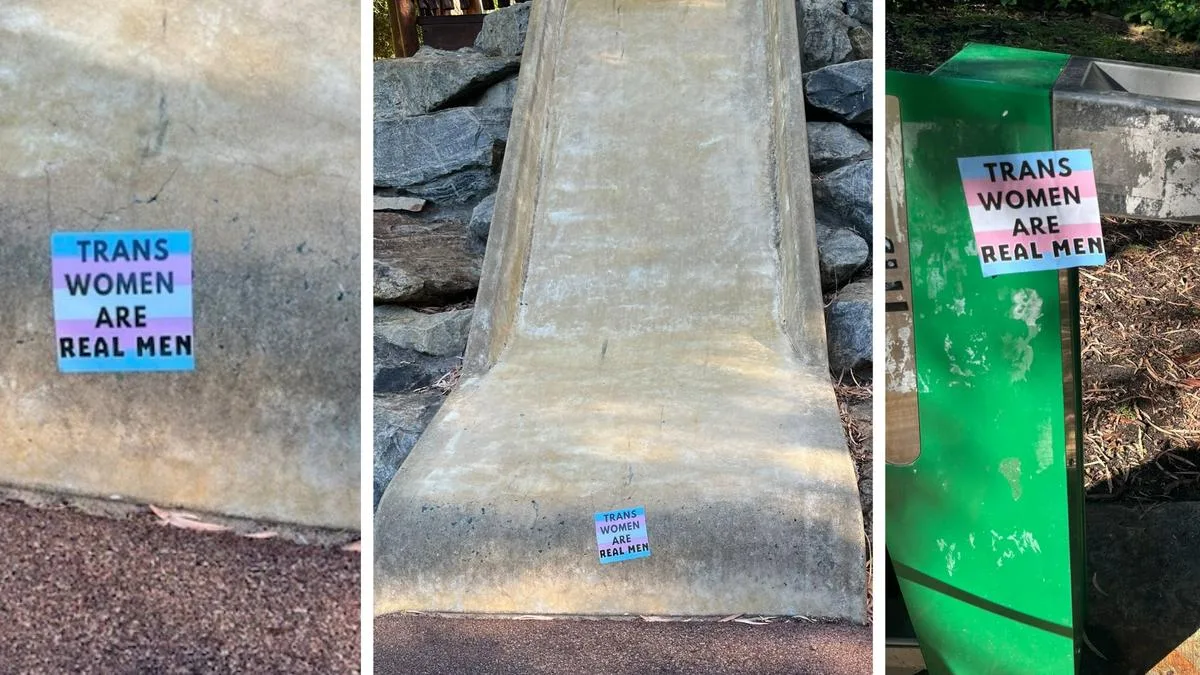
Western Australia police have officially closed their investigation into a series of transphobic stickers discovered at multiple playground locations in Subiaco, determining that the messages do not meet the legal threshold for a hate crime. The decision has sparked significant discussion about potential gaps in current legislation regarding targeted harassment in public spaces.
Incident Details and Police Response
The controversial stickers bearing the message "trans women are real men" first appeared late last year across various public areas in Subiaco, including a playground situated along Bagot Road. This particular location forms part of the Theatre Gardens adjacent to Subiaco Primary School, raising immediate concerns about the appropriateness of such material in spaces frequented by children and families.
Since the initial discovery, two additional reports emerged at the beginning of this year, prompting the City of Subiaco to escalate the matter to both Crime Stoppers and a specialised WA Police taskforce. After thorough examination, authorities announced last week that their inquiries had concluded with a determination that the stickers did not constitute a criminal offence under current legislation.
A WA Police spokesperson clarified their position: "This matter has been fully investigated and while the content of these stickers does not meet the criteria for a criminal offence, we acknowledge that some members of the public may have been offended."
Legal Thresholds and Community Concerns
Police explained that for such material to be classified as a hate crime under existing laws, it would need to explicitly "incite, urge or threaten violence" against individuals or groups. Since the stickers, while offensive to many, did not cross this specific legal boundary, authorities determined they fell outside criminal prosecution parameters.
Transfolk WA chief executive officer Sam Gibbings expressed deep concern about the investigation outcome, highlighting what she perceives as a significant legislative shortcoming. "Targeted harassment in playgrounds shouldn't be allowed," Ms Gibbings stated emphatically. "We will continue working to ensure public spaces are welcoming for the entire community."
Impact on Vulnerable Communities
Ms Gibbings described the placement of these stickers in children's play areas as particularly concerning and potentially predatory. "It makes you wonder what they are trying to achieve. Are they attempting to berate parents? Are they trying to scare children?" she questioned. "Either way, when you resort to tactics like this in a playground, you have clearly lost the moral argument."
The Transfolk WA leader further elaborated on the damaging effects such messages can have, particularly on younger members of the transgender community. "For trans youth, the hurt is real," she explained. "It makes them feel unsafe in their own neighbourhoods and signals that their existence is up for debate."
Ms Gibbings characterised the stickers as deliberately divisive, noting they attempt to "import a loud, aggressive culture war-style of politics that doesn't reflect how most of us interact in real life."
Broader Context and Community Resilience
Despite observing an increase in what she described as "blatant vandalism" in recent years, Ms Gibbings emphasised that such actions originate from a "small, radicalised fringe trying very hard to maintain relevance." She expressed confidence that most Australians maintain fundamentally respectful attitudes toward others.
"We know most people in Australia believe in treating others with dignity and respect, and we need to call out this hateful behaviour," Ms Gibbings asserted. "A few stickers in a park can't compete with that level of genuine community love."
The incident has prompted renewed discussion about how communities can best respond to expressions of prejudice while balancing legal frameworks with community wellbeing standards.