Iran Defies Trump's Strait of Hormuz Ultimatum Amid Escalating Military Tensions
Iran is unlikely to comply with US President Donald Trump's 48-hour ultimatum to reopen the Strait of Hormuz, despite threats to obliterate the country's power plants, according to a former Navy SEAL. With less than 24 hours remaining on the deadline, tensions are intensifying, as Iran has vowed to target US-linked energy, technology, and infrastructure if any strikes proceed.
Former US Navy SEAL Predicts Iranian Response
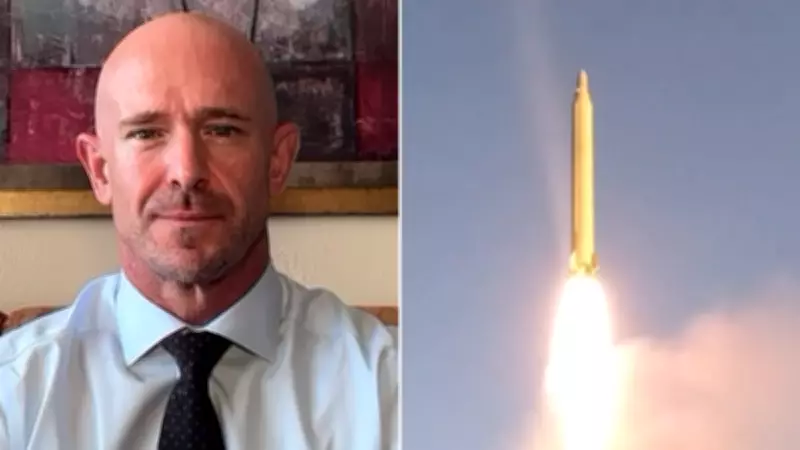
Michael Sarraille, a former US Navy SEAL and Recon Marine, stated on Monday that he does not expect Tehran to back down, even after reports indicate the US has degraded up to 90 percent of Iran's military infrastructure. "Given the two intermediary ballistic missiles they just launched at Diego Garcia, there is very likely a response that will come from Iran within 24 hours," Sarraille warned.
He emphasized that while much of Iran's military capability has been weakened, the threat is far from over. "This systematic attrition, the air power overhead continuing to identify those targets is pivotal over the next few weeks to ensure that they have no strike capabilities," Sarraille explained. "This has to be an ongoing operation, regardless of what President Trump is messaging with the wars winding down."

Concerns Over Critical Infrastructure and Missile Capabilities
Mounting concerns also focus on Iran potentially targeting its own critical infrastructure, such as Kharg Island, which handles approximately 90 percent of the country's oil exports. Sarraille noted that while this is possible, it is unlikely because the island serves as Iran's "financial jugular." "Could they destroy their own oil infrastructure to prevent the US from seizing Kharg Island? They absolutely could. But that will hit their cash register," he said.
New questions have emerged regarding Iran's missile capabilities following an attempted strike on the remote US-UK military base of Diego Garcia in the Indian Ocean. Reports indicate two ballistic missiles were launched toward the base, located about 4,000 kilometers from Iran. One reportedly malfunctioned mid-flight, while the other was intercepted or failed to reach its target.
"If you look at those two missiles fired, one fell short. It malfunctioned, which means the technology is off, and the other was easily intercepted by the US Navy," Sarraille commented. Despite the failed strike, analysts highlight that the distance alone is significant, potentially signaling Iran's efforts to extend the range of its missile systems beyond previously stated limits.
Global Implications and Wake-Up Call for Allies
The attempted attack coincides with increasingly aggressive rhetoric from Iran, warning that "parks, recreational areas, and tourist destinations" could be targeted globally. Sarraille asserted that this situation should act as a wake-up call for NATO nations, especially as global energy markets remain on edge.
He urged allies to begin contingency planning and prepare to support efforts to reopen the Strait of Hormuz, a critical chokepoint for global oil supply. The escalation follows Trump's direct ultimatum, in which he warned that the United States would strike Iran's power infrastructure if the Strait is not fully reopened within 48 hours.
"If Iran doesn't FULLY OPEN, WITHOUT THREAT, the Strait of Hormuz, within 48 HOURS from this exact point in time, the United States of America will hit and obliterate their various POWER PLANTS, STARTING WITH THE BIGGEST ONE FIRST!" Trump declared. In response, Iran has hit back, warning it is prepared to close the strait indefinitely if such attacks proceed.