Cruise Ships Stranded in Middle East After US-Israeli Strike on Iran Escalates Tensions
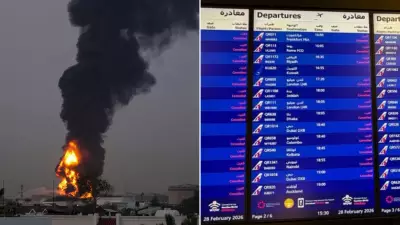
In the wake of a joint US-Israeli military strike on Iran this past Saturday, cruise ships remain immobilized across the Middle East as escalating regional conflict forces major cruise lines to cancel departures and keep vessels securely docked in port. While it might seem logical for these floating resorts to simply set sail for safer waters, the reality is far more complex and dangerous.
Why Cruise Ships Cannot Just Sail Away
Currently, numerous cruise ships are anchored at key ports including Doha in Qatar, as well as Abu Dhabi and Dubai in the United Arab Emirates. All scheduled sailings have been abruptly cancelled due to the heightened peril in the Arabian Gulf, Gulf of Oman, and particularly the Strait of Hormuz. For instance, the MSC Euribia, carrying over 5,000 passengers, is stranded in Dubai with all voyages suspended.
Thousands of passengers are effectively confined onboard while authorities, ship operators, and insurance providers meticulously evaluate whether it is safe to proceed. In many cases, remaining stationary is actually the safer option compared to attempting a hasty departure. Additionally, flight alternatives for passengers and crew are severely limited, as regional airspace closures and airport disruptions have rendered air travel unsafe, leaving everyone onboard without a clear timeline for evacuation.

The Critical Chokepoint: Strait of Hormuz
One of the primary obstacles is the Strait of Hormuz, a narrow and strategically vital waterway that links the Persian Gulf with the Gulf of Oman and the Arabian Sea. Nearly all large vessels exiting Gulf ports must navigate this passage to reach open ocean. However, the current risk level is exceptionally high.
Iran's Revolutionary Guards have issued stark public warnings, declaring the strait effectively closed and threatening to attack any ships attempting to pass. Ebrahim Jabari, a senior adviser to the commander-in-chief of Iran's Islamic Revolutionary Guard Corps, stated to Iranian state media, "The strait is closed... If anyone tries to pass, the heroes of the Revolutionary Guards and the regular navy will set those ships ablaze."
A European Union naval official has corroborated that vessels in the Gulf have received radio warnings explicitly stating that "no ship is allowed to pass the Strait of Hormuz." While such warnings may not alter international law, they create substantial operational hazards. Maritime authorities from nations like Greece and Malaysia have also issued advisories urging vessels to avoid the strait and surrounding waters due to threats from missiles, drones, and electronic interference.
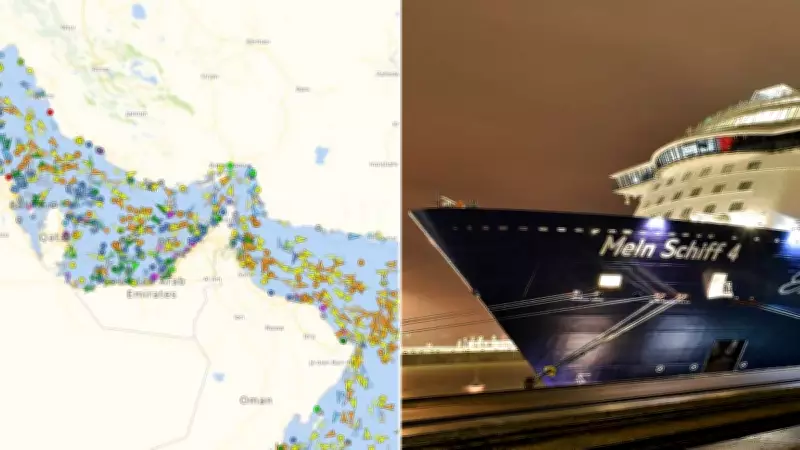
Reports indicate that GPS and ship identification systems in the region are being jammed or disrupted, significantly increasing the risk of collisions or groundings in the congested channel. Maritime tracking data reveals that traffic through the Strait of Hormuz has already plummeted as vessels slow down, divert routes, or turn back entirely.
Logistical Hurdles for Cruise Ship Departures
Departing from port is not a spontaneous action for a cruise ship. Each sailing requires a series of coordinated steps, including clearance from port authorities, guidance from harbour pilots, assistance from tugboats for manoeuvring, confirmed time slots for traffic coordination, a secure navigational plan for the entire route, fuel calculations, supply checks, and coordination with the next destination port. These processes are now severely hampered by the volatile conditions.
Authoritative Responses and Insurance Realities
The United Nations' International Maritime Organization, the global body overseeing maritime safety, is closely monitoring the situation and has advised companies to avoid transiting the affected region whenever possible. The IMO Secretary-General emphasized, "No attack on innocent seafarers or civilian shipping is ever justified... companies should exercise maximum caution." Industry groups, such as the International Chamber of Shipping, have echoed this sentiment, prioritizing seafarer safety and recommending avoidance of high-risk waters.

Even if a ship could technically sail, insurance barriers may prevent it. Major marine insurers, including Gard, Skuld, NorthStandard, and the London P&I Club, have formally cancelled war-risk coverage for vessels operating in Iranian and Persian/Arabian Gulf waters, effective from March 5, 2026. War-risk insurance protects against damage or liability from conflict, attacks, or terrorism. Without this coverage, shipowners face immense financial and legal risks if a vessel is damaged, seized, or hit. Premiums for any remaining cover have skyrocketed, making it impractical for cruise operators to sail uninsured through a militarized chokepoint.
Cruise Line Statements and Passenger Experiences
Cruise companies have unequivocally stated that their decisions are grounded in safety and operational realities. MSC Cruises, one of the world's largest operators, has cancelled departures for the MSC Euribia in Dubai and advised passengers to remain within the cruise terminal area for safety, while providing free Wi-Fi to maintain communication. Similarly, TUI Cruises has paused departures for ships in the region, with the Mein Schiff 4 docked in Abu Dhabi and the Mein Schiff 5 in Doha. Passengers on these vessels are not permitted to disembark, shore excursions have been cancelled, and even private balcony use is restricted, leading some to describe the experience as being trapped in a "golden cage."
Celestyal Cruises, a Greek boutique line, also has two vessels affected—the Celestyal Journey in Doha and the Celestyal Discovery in Dubai—with sailings cancelled and passengers instructed to shelter onboard, staying indoors and away from windows. The Cruise Lines International Association highlights that cruise ships adhere to rigorous regulatory standards and crisis management plans designed to prioritize the safety, security, and health of guests and crew during disruptions like geopolitical unrest.
Ultimately, while repositioning might seem like a straightforward solution from an external perspective, in a geopolitically sensitive region, lifting anchor and rushing off could expose passengers and crew to far greater dangers, underscoring the complex challenges faced by the maritime industry in times of conflict.