Middle East Crisis: Iran-Israel-US Conflict Escalates, Sparking Fears of Regional War
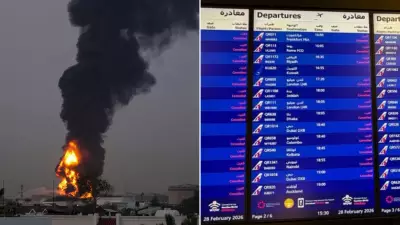
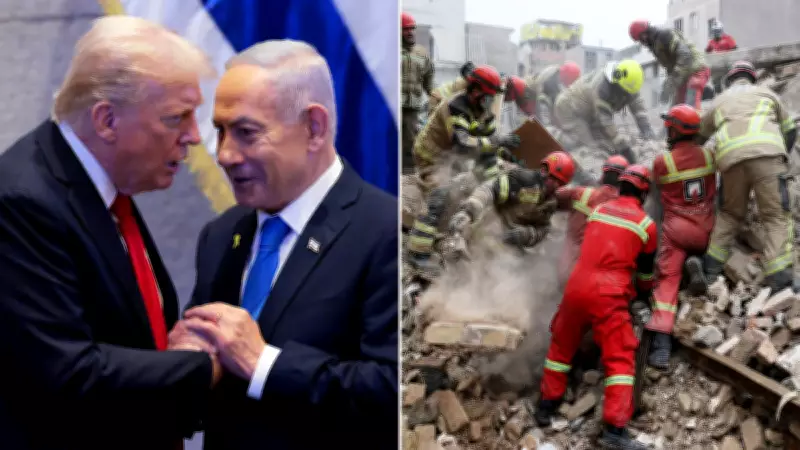
The rapidly intensifying conflict involving Iran, Israel, and the United States has ignited widespread fears that the Middle East could be entering one of its most perilous phases in decades. Missile and drone strikes have proliferated across the Gulf region, air defence systems have been activated in multiple nations, and global oil markets are already reacting to the mounting instability with significant volatility.
Decades of Tension Culminate in Current Escalation
The latest escalation followed coordinated strikes inside Iran targeting military infrastructure and nuclear facilities, which triggered retaliatory actions across the region and drew numerous countries into the confrontation. While the violence may appear sudden, experts assert that this crisis has been building for many years, rooted in long-standing geopolitical rivalries.
UNSW International Relations associate professor Srinjoy Bose emphasised that the current conflict reflects a protracted effort by the United States and Israel to exert pressure on Iran. "I think what we are witnessing is the culmination of decades' worth of the Netanyahu administration and the American political establishment attempting to force Iran to comply politically and militarily," Bose explained. "At the extreme end of that spectrum is regime change, or at least compelling the Iranian regime to alter its behaviour."

Much of this pressure has centred on Iran's nuclear ambitions and its influence across the Middle East through allied armed groups. However, the origins of the confrontation extend much further back in history.
Historical Roots: From the 1953 Coup to Modern Mistrust
For many Iranians, the modern standoff traces back to a pivotal moment in 1953. At that time, Iran was led by democratically elected prime minister Mohammad Mosaddegh, who moved to nationalise the country's oil industry, challenging Western control over a critical regional resource. Later that year, Mosaddegh was overthrown in a coup orchestrated by the US and Britain, restoring the shah of Iran, Mohammad Reza Pahlavi, to power. The shah ruled for over two decades with strong Western backing.
Bose highlighted that this intervention left a profound legacy, shaping how many Iranians perceive Western policies. "This cannot be stressed enough—the 1953 coup helped concretise the mistrust between these two nations," he said. "There is continuity between that event and contemporary efforts, such as those under Trump, to achieve regime change through external force." This perception of foreign interference has persistently influenced Iranian politics.
Revolution, Hostages, and Sanctions: Escalating Hostilities
The relationship deteriorated further in 1979 when widespread protests against the shah's rule erupted across Iran. Years of political repression, economic inequality, and resentment toward Western influence culminated in the Iranian Revolution. The monarchy collapsed, and cleric Ruhollah Khomeini returned from exile to establish the Islamic Republic, transforming Iran from a US ally to a nation defined in opposition to American influence.
Later that year, tensions escalated dramatically when Iranian students stormed the US embassy in Tehran, taking dozens of American diplomats hostage in a standoff that lasted 444 days, becoming a defining crisis of the Cold War era. Bose noted, "The revolution and the subsequent hostage crisis have coloured and shaped Iran-American relations ever since."
In the early 2000s, tensions intensified as Iran pursued nuclear capabilities, prompting sweeping economic sanctions from the US and its allies. Bose added, "Many of Iran's socioeconomic problems can be traced to these crippling sanctions, which Iran views as illegitimate violations of its sovereignty, further deepening mistrust."

Iran's Reliance on Proxy Forces and Regional Involvement
Over the past two decades, Iran has expanded its influence across the Middle East through alliances with armed groups and militias, such as Hezbollah in Lebanon and networks in Iraq, Syria, and Yemen. Israel and Western governments argue that Iranian support destabilises the region. Bose explained, "This strategy stems from the asymmetry in power between Iran and its rivals—Iran cannot match the military might of nuclear powers like the US and Israel, so it relies on proxy groups to extend influence and drain resources through non-conventional means."
As the conflict has intensified, Iranian missile and drone attacks have spread across several Gulf states. Bose pointed out that many targets are tied to American military infrastructure. "The majority of targets attacked by Iran are US strategic assets, including air bases, naval facilities, and intelligence infrastructure hosted by Gulf countries partnered with the US," he said. From Tehran's perspective, these sites become legitimate targets if used to attack Iran.
Iran has also targeted oil infrastructure across the Gulf, a high-risk strategy that could disrupt global energy markets, international commerce, and economies worldwide. The Persian Gulf exports a significant share of global oil and liquefied natural gas, so any sustained disruption could drive up fuel prices and increase inflation far beyond the region.
A New Gulf War: Analysts Warn of Prolonged Conflict
With attacks now involving multiple countries across the region, some analysts believe the scale of the conflict resembles previous major wars in the Middle East. Bose stated, "We are witnessing what is effectively the third Gulf War." Unlike the first Gulf War in 1991 and the second in 2003, which centred on Iraq, the current confrontation focuses on Iran and its regional alliances, stretching across nations hosting American bases or aligned with Washington and Israel.
Even if immediate fighting subsides, Bose warns that the damage to regional relationships could shape Middle Eastern politics for years. "Gulf states will not easily forget Iran's attacks, and Iran will not forget that these states host American military assets used against it. This cycle of violence is unlikely to abate soon," he concluded.