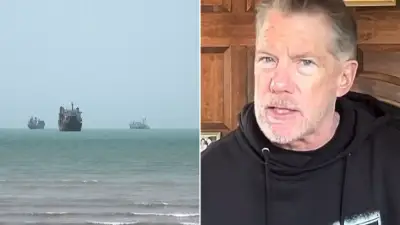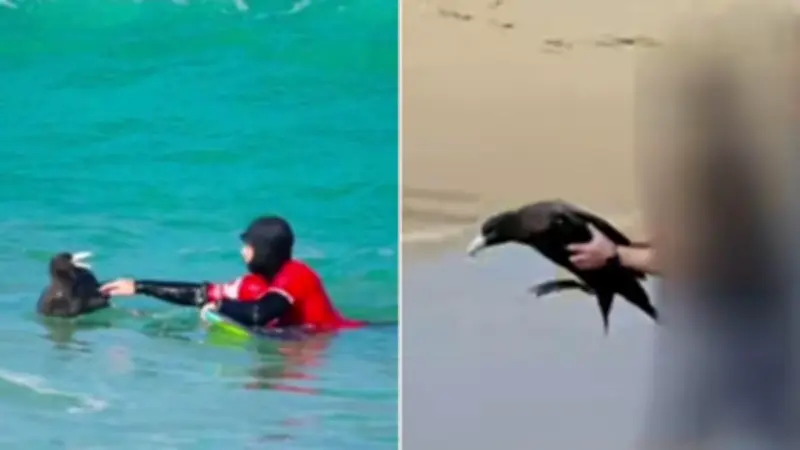
A South Australian bodyboarder has recounted the frightening moment he almost became the victim of a bite from a seabird later confirmed to be carrying the highly contagious H5N1 bird flu strain. Aaron Brand, 39, was competing in a bodyboarding competition at Knights Beach in Port Elliot on June 14 when the distressed southern giant petrel flew into the break zone.
Disoriented bird attacks bodyboarder
Brand described the bird as disoriented and unaware of its surroundings. “It just was disorientated, didn’t really know what it was doing ... trying to take a little snap at me and luckily missed,” he told 7NEWS. The bird was knocked back by waves before washing ashore. Locals initially thought the bird had a leg injury and appeared confused and tired.
Well-known surfer Anthony Rowland was also present and helped move the sickly bird out of the rough surf. “Not many alarm bells went off until it was getting pummelled in the break for a while,” he said. The bird was later picked up by a local who moved it away from the waterline, and it was eventually collected by wildlife rescuers.

Confirmed third H5N1 case in Australia
Two weeks after the incident, the same bird tested positive for the highly infectious H5 bird flu, marking the third case of H5N1 in Australia. The two earlier cases were detected in Western Australia. A week earlier at the same South Australian beach, an unidentified man was bitten by a bird.
While it is possible for humans to catch bird flu, authorities emphasize that close contact with an infected bird—such as touching—is required for transmission. The flu is a respiratory virus that spreads to other birds via close contact.
Precautions and lockdowns
As of Friday, no positive cases had been reported in South Australia’s commercial poultry sector. Three other birds, including two deceased birds, have tested negative for the virus. Authorities have taken all precautions, placing the wildlife rescue centre that took in the bird on June 14 into lockdown.
Veterinary clinics are on high alert, with one suspending admissions of wildlife patients. West Coast Vets based in Forrestdale, Perth stated: “Due to the recent detection of highly pathogenic avian influenza (H5N1 Bird Flu) in wildlife near Esperance, and in accordance with current biosecurity recommendations, our clinic will no longer be accepting wildlife patients until further notice. This measure has been implemented to help protect our staff, clients, patients, wildlife carers, and the broader community from the potential spread of disease. If you find sick, injured, or orphaned wildlife, please do not bring the animal to our clinic. Instead, please contact the appropriate wildlife service for advice and assistance.”
Government response and public advice
SA Premier Peter Malinauskas confirmed the state’s first case of H5 was recorded in a migratory southern giant petrel found at Knights Beach on the Fleurieu Peninsula on June 14. “I know this news will be concerning for many people, particularly our poultry producers, wildlife carers and communities across our state, but I want to reassure South Australians that we are well prepared and responding quickly,” he said. “Importantly, this detection is limited to a migratory bird that is not native to Australia. There have been no detections in commercial poultry flocks, captive birds or other birds in South Australia at this stage.”
The advice is for bird and cat owners to keep their animals indoors and for chicken owners to ensure their aviaries are protected from wild animals.