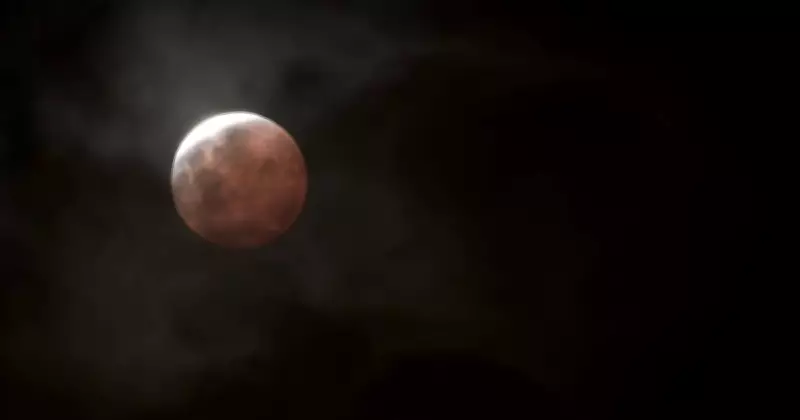
Total Lunar Eclipse Blood Moon Not Expected Again Until 2029
A total lunar eclipse, often referred to as a Blood Moon, has recently graced the night skies, offering a spectacular display for astronomy enthusiasts and casual observers alike. This celestial phenomenon, where the Earth aligns perfectly between the Sun and the Moon, casting a reddish hue on the lunar surface, will not be visible again until 2029, making it a rare and memorable event for those who witnessed it.
Details of the Recent Eclipse
The eclipse occurred when the Moon passed through the Earth's shadow, resulting in a dramatic transformation of its appearance. During the total phase, the Moon took on a deep red or copper color, earning it the nickname Blood Moon. This effect is caused by sunlight filtering through the Earth's atmosphere and scattering blue light, while red light is bent toward the Moon. The event was visible from various parts of Australia, with clear skies allowing for optimal viewing conditions in many regions.
Observers reported that the eclipse lasted for several hours, with the total phase spanning approximately an hour. Many people gathered in parks, backyards, and observatories to watch the spectacle, using telescopes, binoculars, or simply their naked eyes. The rarity of such events adds to their allure, as total lunar eclipses do not happen frequently and are often spaced years apart.

Why the Next One Is So Far Away
The next total lunar eclipse of similar magnitude is not expected until 2029 due to the complex orbital mechanics of the Earth and Moon. Lunar eclipses occur when the Moon's orbit brings it into the Earth's shadow, but this alignment is not common because the Moon's orbit is tilted relative to the Earth's orbit around the Sun. As a result, total lunar eclipses are infrequent, with gaps of several years between occurrences.
This specific eclipse was part of a series known as a tetrad, but future eclipses in this cycle will not produce the same Blood Moon effect until 2029. Astronomers note that while partial lunar eclipses may happen more often, total eclipses with the characteristic red glow are much rarer and highly anticipated by the scientific community and public alike.
Impact and Observations
The recent eclipse has sparked increased interest in astronomy and space events across Australia. Educational institutions and astronomy clubs organized viewing parties and provided information sessions to explain the science behind the phenomenon. Social media was abuzz with photos and videos shared by amateur astronomers, showcasing the stunning visuals of the Blood Moon against the night sky.
Experts emphasize that such events are not only beautiful but also valuable for scientific research. They allow astronomers to study the Earth's atmosphere and lunar surface in unique conditions. For instance, the red color can provide insights into atmospheric particles and pollution levels. Additionally, eclipses serve as a reminder of the dynamic nature of our solar system and inspire curiosity about the universe.
As we look ahead to 2029, skywatchers are already marking their calendars for the next opportunity to witness a total lunar eclipse. Until then, partial eclipses and other astronomical events will continue to offer glimpses into the wonders of space, but the Blood Moon remains a standout spectacle that captures the imagination of people worldwide.