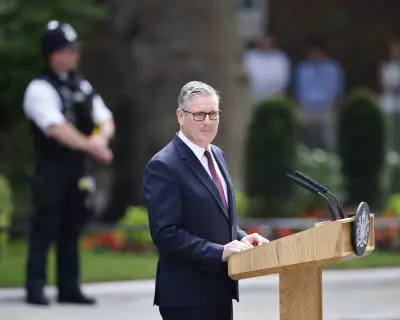

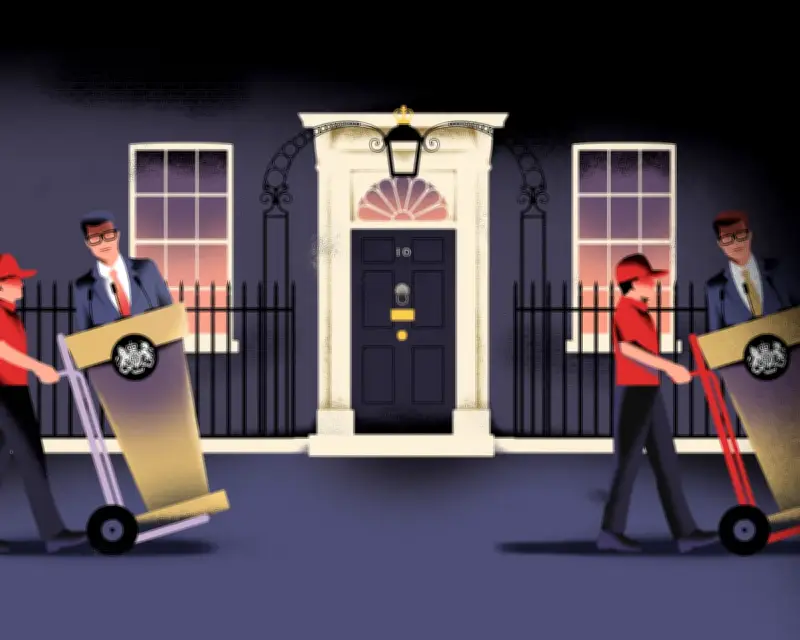
Andy Burnham has been sworn in as the United Kingdom's new prime minister, a development that has confounded the rightwing press and many political commentators who had written off his chances. The former mayor of Greater Manchester secured a decisive victory in the Labour Party leadership contest, following the resignation of his predecessor.
A Surprise Ascension
Burnham's rise to the top job was not widely predicted. The rightwing press, in particular, had been skeptical of his prospects, often portraying him as a figure from the past. Yet, his campaign resonated with a broad coalition of voters, including those in traditional Labour heartlands and former Conservative strongholds. According to a recent YouGov poll, Burnham's approval rating among the general public stands at 62%, a figure that has taken many by surprise.
In his first speech as prime minister, Burnham outlined a vision focused on social justice, economic reform, and a reassertion of British sovereignty in a globalized world. He emphasized the need to “build a country that works for everyone, not just the privileged few.”

Challenging the Narrative
The rightwing press had long dismissed Burnham as a “career politician” lacking the charisma to lead. However, his tenure as mayor of Greater Manchester, where he oversaw significant improvements in public transport and housing, provided a tangible record of achievement. “The press wrote me off because they don't understand the mood of the country,” Burnham said in an interview with the BBC. “People are tired of the same old politics. They want someone who will stand up for them.”
His victory has sparked a debate about the role of the media in shaping political outcomes. Critics argue that the rightwing press underestimated Burnham's appeal, particularly among younger voters and those in the North of England. A study by the Reuters Institute for the Study of Journalism found that coverage of Burnham in the rightwing press was overwhelmingly negative, with 78% of articles portraying him in an unfavorable light.
Policy Priorities
Burnham's first acts as prime minister include a pledge to reverse austerity measures introduced by previous governments. He has announced a £50 billion investment in public services, including the National Health Service and education. Additionally, he plans to introduce a new “Green New Deal” aimed at creating thousands of jobs in renewable energy.
On the international stage, Burnham has signaled a more independent foreign policy, seeking to strengthen ties with European allies while maintaining a distance from the United States' current administration. “We will be a reliable partner, but we will not be a vassal state,” he declared.
Reactions and Challenges
The rightwing press has reacted with a mixture of scorn and grudging respect. The Daily Mail ran a headline reading “Burnham's Britain: A Return to the 1970s?” while The Sun warned of “higher taxes and more red tape.” However, some commentators have acknowledged the scale of his achievement. “Whether you agree with him or not, Burnham has pulled off one of the most remarkable comebacks in modern political history,” wrote a columnist in The Times.
Burnham faces significant challenges, including a divided party, a struggling economy, and a skeptical international community. Yet, his supporters remain optimistic. “Andy has always been underestimated,” said a Labour MP. “He will prove the doubters wrong again.”