

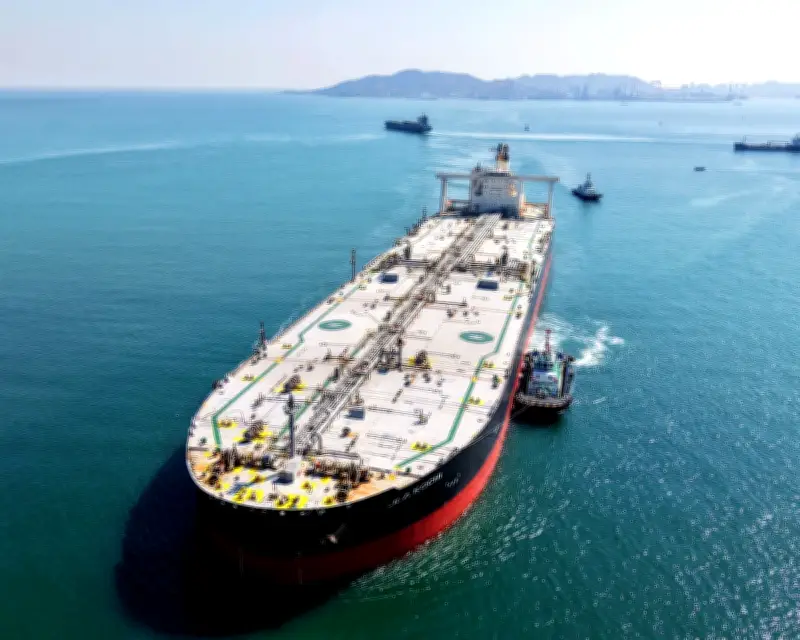
Oil prices fell sharply on Monday, driven by growing expectations that a potential peace agreement between Iran and the United States could lead to the reopening of the Strait of Hormuz, a critical chokepoint for global crude shipments.
Market Reaction
Brent crude, the international benchmark, declined by more than 3% to trade below $72 a barrel, while West Texas Intermediate (WTI) fell by a similar margin to around $68 a barrel. The drop marked the biggest single-day decline in weeks, as traders priced in the possibility of increased supply from the Middle East.
The Strait of Hormuz, located between Iran and Oman, handles about a fifth of the world's oil consumption. Its closure in recent months due to heightened tensions had pushed prices higher, with Brent briefly touching $80 a barrel in May.

Diplomatic Breakthrough
The price slump followed reports that Iran and the US are close to a preliminary deal that would ease sanctions in exchange for curbs on Iran's nuclear program. A key component of the agreement is the resumption of safe passage through the strait, which Iran had threatened to block in retaliation for US sanctions.
Analysts said the deal, if finalized, could add up to 1 million barrels per day to global markets, helping to offset production cuts by OPEC+ and easing inflationary pressures.
Broader Economic Implications
Lower oil prices are welcome news for central banks battling inflation, particularly in the US and Europe, where energy costs have been a major driver of price rises. However, the decline poses a challenge for oil-exporting nations like Russia and Saudi Arabia, which rely on high prices to fund their budgets.
Investors will now focus on the formal signing of any agreement, with US Secretary of State and Iranian officials expected to meet in Vienna later this week.