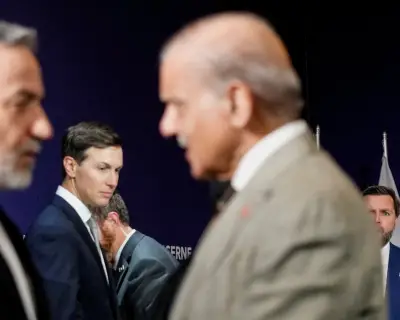
The United States and Iran have entered a fresh round of hostilities, trading accusations over the interpretation of a recently signed Gulf security memorandum. The dispute threatens to unravel a fragile ceasefire in Lebanon and disrupt vital shipping lanes in the Strait of Hormuz.
Conflicting Interpretations Spark Crisis
According to diplomatic sources, the memorandum, signed in May 2026, was intended to de-escalate tensions and promote maritime security in the Persian Gulf. However, both nations now claim the other has violated its terms. US State Department spokesperson Ned Price stated that Iran has misconstrued the agreement to justify aggressive naval maneuvers near commercial vessels. “Iran’s actions are a clear breach of the spirit and letter of the memorandum,” Price said during a press briefing on Monday.
Iran’s Foreign Ministry spokesman Nasser Kanaani countered that the US is using the memorandum as a pretext to maintain a military presence in the region. “The United States seeks to impose its own interpretation through force, undermining the sovereignty of regional nations,” Kanaani asserted in a statement published by state media.

Impact on Lebanon Ceasefire
The escalating dispute has cast a shadow over the fragile ceasefire in Lebanon, which was brokered by the UN and regional powers in April. The ceasefire, which ended months of cross-border clashes between Israel and Hezbollah, relied on tacit understandings between Washington and Tehran. Analysts warn that the current rift could embolden hardliners on both sides and reignite hostilities.
“The Lebanon ceasefire is the first casualty of this renewed tension,” said Dr. Lina Khatib, director of the Middle East Institute at SOAS University of London. “Without US-Iran coordination, the risk of a new conflict is high.”
Strait of Hormuz at Risk
The Strait of Hormuz, a chokepoint for about 20% of the world's oil supply, is again in the spotlight. Iranian Revolutionary Guard Corps vessels have reportedly conducted “unsafe and unprofessional” maneuvers near US Navy and commercial ships, according to the US Fifth Fleet. Iran claims it is enforcing its territorial rights under the memorandum.
Oil prices have already ticked up by 3% since the dispute escalated, with traders fearing supply disruptions. “Any closure of the Strait would have immediate global economic repercussions,” noted energy analyst Sara Vakhshouri of SVB Energy International.
Diplomatic Efforts Underway
European and Gulf mediators are scrambling to salvage the memorandum. French President Emmanuel Macron spoke with both US President Joe Biden and Iranian President Ebrahim Raisi over the weekend, urging restraint. “We cannot afford another crisis in the Gulf,” Macron’s office said in a readout of the calls.
Meanwhile, the UN Security Council is scheduled to hold an emergency session later this week. Russia and China have called for a return to the 2015 nuclear deal framework as a basis for resolving differences, a move the US has rejected.
Regional Reactions
Saudi Arabia and the United Arab Emirates have expressed concern, urging all parties to adhere to the memorandum. “The stability of the Gulf is a shared responsibility,” said Saudi Foreign Minister Prince Faisal bin Farhan. In contrast, Hezbollah leader Hassan Nasrallah praised Iran’s “resistance” against US “bullying,” raising fears of a new front opening in Lebanon.
Israel, which has remained publicly silent, is reportedly conducting contingency planning with the US military. Israeli defense officials told local media that they are prepared for any scenario.