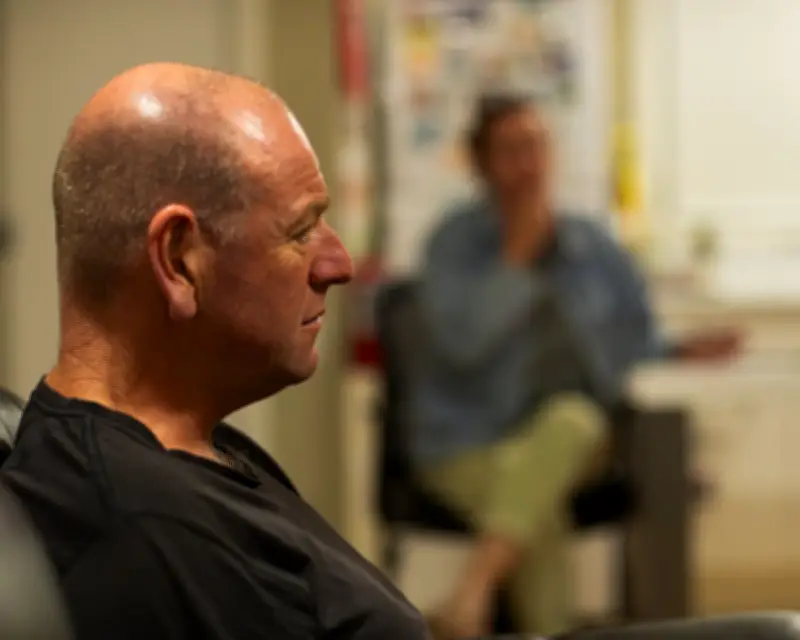
Dane Waites, a man with profound autism, severe intellectual disability, and bipolar disorder, has lost critical support services after the National Disability Insurance Agency slashed his funding by $50,000 over two years. The cuts followed a compensation payout from the Catholic church for historical sexual abuse he suffered at Churinga Special Residential School in the 1990s.
Compensation Leads to Funding Cuts
In 2021, Waites received a confidential settlement from St John of God after suing the church for the abuse. Shortly after, the NDIA applied a "compensation reduction amount," a mechanism designed to prevent double-dipping when participants receive court payouts that cover services already funded by the NDIS. This resulted in a $25,000 reduction to his plan in 2023 and another $25,000 in 2024.
Waites' mother, Junee Waites, 83, argues the compensation was specifically for the abuse, not his lifelong disabilities. "You do not have to be Einstein to realise the Catholic church does not pay out for lifelong disabilities," she said. "The compensation from the Catholic church did not come to Dane because of his disabilities."

Impact on Daily Life
The cuts have left Waites unable to afford key support services that enabled him to live independently. His family can no longer afford respite care, and he cannot pay for daily activities that help him cope with his conditions. Waites, a champion athlete and former NDIS advocate, expressed his distress in a handwritten letter to the Administrative Review Tribunal: "I need the NDIS to finish. It is not their money."
The Australian Lawyers Alliance has repeatedly advised the government that survivors of historical child abuse should be exempt from compensation recovery. Shaun Marcus, a past ALA national president, stated: "Public policy should be that we exclude these types of claims from recovery... A victim of child sexual abuse should not be subject [to compensation recovery] at all."
Complex and Opaque Process
The NDIA's calculation method is complex and opaque, even for lawyers. The agency assumes how much of a settlement covers lost earnings versus past and future care, but fails to account for legal fees or compensation for pain and suffering. Financial adviser Jane Campbell, a former personal injury lawyer, noted that the yearly reduction is based on a "number no greater than remaining life expectancy," leading to unpredictable outcomes. "This is the other thing that is really causing people concern," she said.
Campbell added that clients increasingly question whether suing is worthwhile, given the stress and legal fees, only to see the settlement effectively transferred to the government. "They say 'maybe we should never have sued'. That question is being asked more and more."
Fighting Back Through the Tribunal
Waites and his mother have taken their case to the Administrative Review Tribunal, arguing that the NDIA incorrectly classified his disability and miscalculated the compensation reduction amount. An NDIA spokesperson declined to comment, citing the ongoing proceedings.
The battle has taken a toll on both Waites and his mother. "I am so very tired of fighting for my son’s right to have a [good] quality of life, self-esteem, dignity, a sense of security to live as independently as possible with appropriate support," Junee said. Waites, who once toured New South Wales promoting the NDIS, now feels betrayed. In his letter to the tribunal, he wrote: "Mum and I toured NSW helping families feel good about the NDIS. I don’t feel happy about the NDIS now."
Broader Implications
Waites' case highlights a systemic issue affecting tens of thousands of NDIS participants facing cuts due to federal cost-saving measures. The confusion and fear he experiences are shared by many others in similar situations.
For support, contact Kids Helpline on 1800 55 1800, Bravehearts on 1800 272 831, or Blue Knot Foundation on 1300 657 380.