

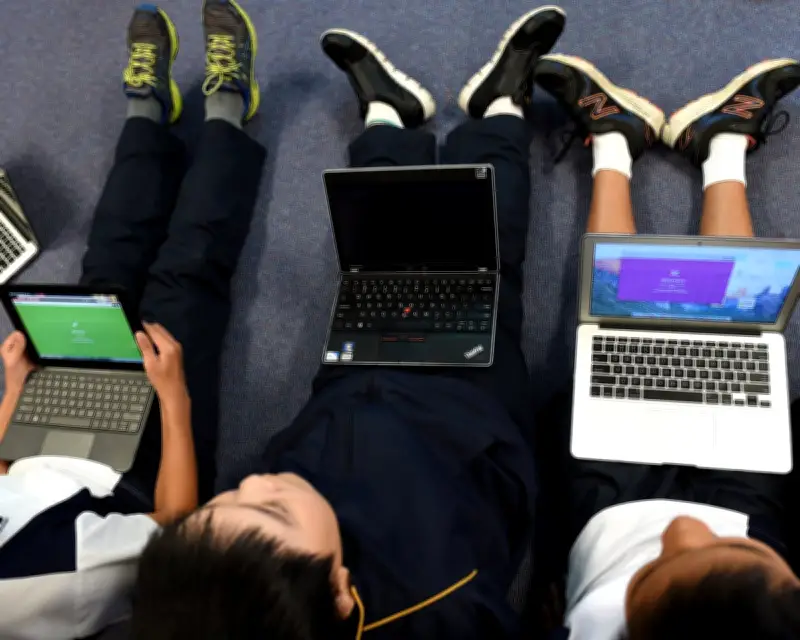
The Victorian education department has introduced a new policy restricting screen use in schools to a maximum of two hours per day. This directive, announced on Monday, applies to all government schools across the state and aims to address concerns about excessive screen time among students.
Policy Details
Under the new guidelines, students from prep to Year 12 will be limited to a total of two hours of screen time per day for educational purposes. This includes the use of laptops, tablets, and interactive whiteboards. The policy does not apply to students with specific learning needs or those using assistive technology.
Education Minister Natalie Hutchins stated that the decision was based on growing evidence linking prolonged screen use to negative effects on children's physical health, including eye strain, poor posture, and reduced physical activity. The policy also aims to enhance face-to-face interaction and traditional learning methods.

Implementation and Exemptions
Schools are required to implement the policy from the start of the 2027 school year. They will need to design timetables that balance screen-based activities with offline learning. Exemptions may be granted for students with disabilities or special educational needs, and for subjects like digital technology that require more screen time.
Teachers have expressed mixed reactions, with some welcoming the move to reduce screen dependency, while others worry about the feasibility of delivering curriculum content within the two-hour limit. The Australian Education Union has called for additional resources to support the transition.
Reactions and Implications
Parent groups have largely supported the policy, citing concerns about children's screen use at home. However, some tech advocacy organizations argue that digital literacy is essential for future careers and that the policy may hinder students' technological skills.
The Victorian initiative follows similar measures in other states, including South Australia and Tasmania, which have implemented guidelines for screen time in schools. The move also aligns with recommendations from the World Health Organization on limiting screen time for children.
The department will review the policy after two years to assess its impact on student learning outcomes and well-being.