Historian Alan Atkinson challenges Pauline Hanson's call for a 'monocultural society,' arguing that Australia has never been monocultural. Multiculturalism, he says, has always been part of the nation's fabric, from the First Fleet to the present day.
The Myth of Monocultural Australia
Atkinson writes that multiculturalism—multiple cultures within a single nation-state—has always existed in Australia. He points out that pluralism, a broader concept encompassing different languages and legal traditions, is deeply embedded in Judeo-Christian ways of life, even hinted at in the parable of the Good Samaritan. The British Empire itself was a pluralist arrangement from the 1760s onward, incorporating diverse languages and legal systems in Quebec, southern Africa, and elsewhere.
First Fleet Diversity
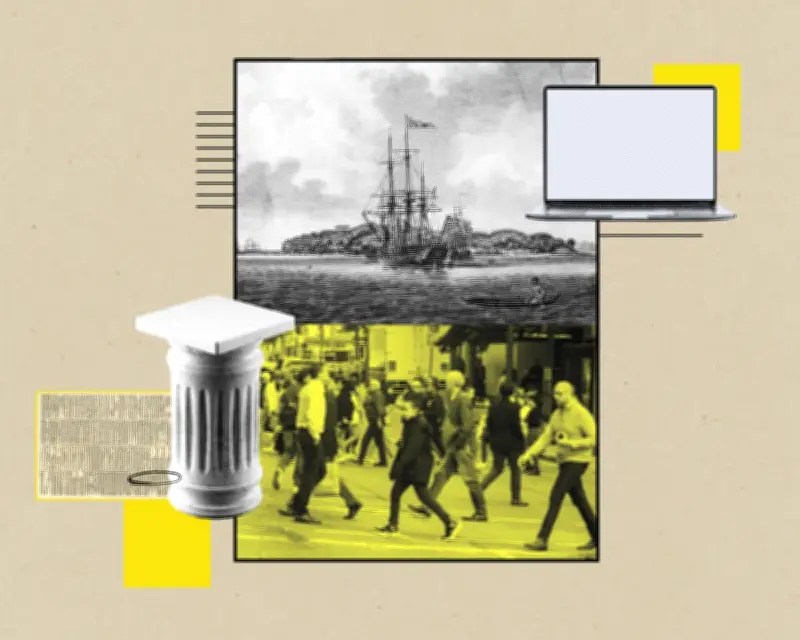
The First Fleet in 1788 was enormously diverse. English and Irish were separate nationalities, with many Irish speaking Gaelic, and Highland Scots also speaking Gaelic. The fleet included 11 Africans and about 40 people from continental Europe—France, Germany, the Netherlands, Portugal, Norway, and Sweden. Governor Arthur Phillip was instructed to find Pacific Islander women to balance the male convicts, though he rejected the idea fearing their misery.

Colonial Seaports as Multicultural Hubs
Colonial capitals were seaports, and merchant ships brought men from ports worldwide. Bustling seaports were inherently multicultural, and authorities valued diversity for its economic benefits. Leading colonists like the Macarthurs employed a Chinese carpenter and Greek vinedressers for their distinctive skills. Diversity was seen as core to free enterprise, fostering experimentation and contest of ideas.
Backlash and White Australia Policy
In the late 1800s, enthusiasm for diversity waned. In Queensland, working men objected to Chinese cooks and market gardeners. In northern NSW, white storekeepers resented Chinese competition, though townspeople preferred Chinese shops. The White Australia policy of the 1900s suppressed multiculturalism until its virtues were rediscovered.
Modern Suspicion of Pluralism
Atkinson notes that Australians today are deeply suspicious of pluralism, as shown by the No vote in the 2023 Indigenous Voice referendum. Yet multiculturalism remains part of the national identity. 'Like it or not, it is part of the way we are,' he concludes.