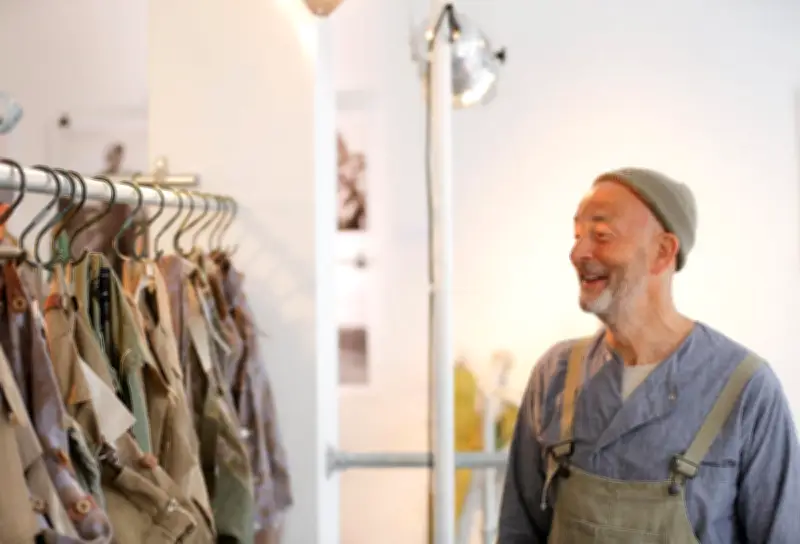
Nigel Cabourn, the influential British menswear designer who drew inspiration from military kit, workwear and expeditionary gear, has died at the age of 76. Cabourn, who described himself as "a big giant sieve of history" that he turned into clothes, leaves behind a legacy of practical yet stylish garments that anticipated the fashion world's shift toward utilitarian aesthetics.
From Curtains to Catwalks
Cabourn's career began in 1969 when, as a 20-year-old fashion student at Newcastle College of Art and Industrial Design, he started a company called Cricket. Lacking materials, he made the first Cricket-label jacket by hand from his mother's curtains. The label quickly gained traction, attracting the attention of Paul Smith, who stocked Cricket in his Nottingham store in 1973 and helped it enter London shops.
Cabourn's designs were youthful and wearable, featuring soft zip-up jackets and wide loon pants. He insisted he designed clothing, not fashion, and began exhibiting at trade fairs from 1973, building a reputation for Cricket's informal tailoring in quality cloth.

Vintage Inspiration and Archive Building
In 1978, Paul Smith gave Cabourn an old RAF jacket with a complex button placket, telling him, "Nige, you should make army jackets like this." This sparked Cabourn's passion for vintage clothing. Over his lifetime, he amassed an archive of 4,000 practical garments and 3,000 books on military, expeditionary and work wear. He spent up to four months each year scouring the world for rare pieces, from a First World War leather coat to a smock from Edmund Hillary's 1958 polar expedition.
This knowledge transformed his creations. He reworked a 1950s USAF flight jacket into the SV4, a bright, zipped blouson manufactured in Newcastle and first worn by local football fans. The SV4 became an international sensation, though the label was declared bankrupt in 1984 due to cashflow problems.
Japanese Market and Global Success
Cabourn had attracted Japanese buyers since 1979, when wholesaler Sam Segure placed an order worth £250,000. Despite the bankruptcy, Japanese customers supported his sensibility, allowing him to launch a store in Japan. He now has 16 outlets there. His first London store, styled like his Newcastle HQ—an old drill hall in Jesmond—opened in Covent Garden in 2014.
Cabourn remained loyal to his native north-east. Born just outside Scunthorpe to John and Edith, both Post Office workers, he later moved to Peterlee, County Durham. At 17, he went to college in Newcastle, joking he chose fashion for the high female-to-male ratio, but the real draw was mastering technical skills.
Textile Connoisseurship and Collaborations
Cabourn became a connoisseur of both traditional fabrics—Harris Tweed, Japanese selvedge denim, cashmere—and technical ones like Ventile cotton, developed for downed RAF aircrew in World War II. After 1984, he advertised minimally and grew the business at his own pace, reaching an annual turnover of £10 million from Japanese licences, his Authentic label, workwear brand Lybro, and Army Gym sportswear.
He collaborated with over 30 major companies, including Fred Perry, where the theme was tennis champion Perry's lesser-known table tennis prowess. Cabourn enjoyed boxing, climbing and table tennis himself.
Personal Life and Legacy
Cabourn married Janet Bell in 1987; she was the firm's PR. She and their children, Sophie, Ben and Lucy, survive him. Sophie works for the company and a few years ago bought online for £20 the first jacket her father sewed from curtains. It now resides in the vintage archive.
Cabourn's influence on menswear is profound. He anticipated the fashion world's move toward extreme practicality, with blue-collar workwear joining military and expeditionary gear. The fashion industry copied him from the 2010s, to the annoyance of his longtime devotees. His designs, rooted in purpose and history, remain timeless.