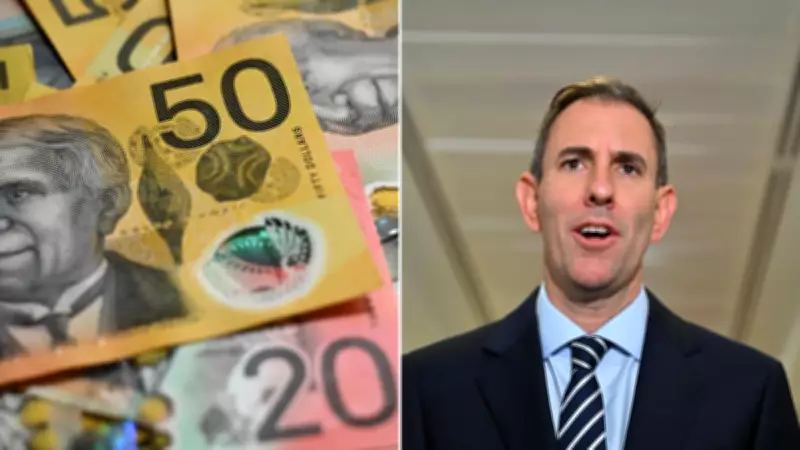
Australians hoping for immediate relief in next week's federal budget may need to look beyond headline sweeteners, as economists caution that some measures could take years to make a meaningful difference.
As Treasurer Jim Chalmers prepares to deliver the budget, the government faces growing pressure to provide relief that Australians will actually notice. From fuel prices and tax offsets to housing and healthcare, experts say the real test will be whether the budget eases pressure without exacerbating inflation.
Fuel and Energy
Fuel and energy costs are expected to be major focal points, particularly as Middle East instability pushes global oil prices higher and strains inflation. While fuel excise cuts and energy rebates are politically visible, economists are divided on their long-term effectiveness.

Dr. Ralf Steinhauser, senior research fellow at the Australian National University's Tax and Transfer Policy Institute, noted that petrol prices are often "felt" more intensely because they are constantly visible. "The way they advertise on every corner, in the way that we have used them in the car while we're driving, think about them and think about where we get our next top-up at a good price, these are very much visible to people," he said.
Steinhauser warned that broad fuel excise cuts are often poorly targeted and do little to address Australia's deeper dependence on imported fuel. "It's basically giving it to everyone, no matter if they're driving a lot for work or very little, no matter if they have a big car that's taking up a lot of fuel … or if they're driving a small car for these long distances to a job that's paying them the minimum wage," he argued.
He called for the budget to focus on longer-term measures that reduce household dependence on imported fuel, such as household batteries, rooftop solar, and electric vehicle incentives, which could help lower long-term energy costs and improve resilience against future global fuel shocks.
Tax Cuts, Offsets, and Cash Relief
Household relief measures are expected to dominate the budget, with speculation around tax offsets, rebates, and other measures. Reports suggest the government is considering a $200 to $300 offset for working Australians. Steinhauser said measures that immediately increase take-home pay are more likely to be noticed than tax relief delivered later through annual returns. "So the equivalent would be to reduce their tax burden on their income right away, but it would be something that needs to show up ideally through the pay cheque immediately rather than at the end of the year when you do your tax returns," he said.
He pointed to earlier lump sum payments during the global financial crisis as an example of support that low-income Australians largely spent on essentials. However, some economists warn that broad cash handouts risk adding to inflationary pressure if too much money enters the economy too quickly.
University of New South Wales Emeritus Professor Peter Swan said reducing government expenditure would have a greater long-term impact on inflation than temporary handouts. "What I would like to see is a massive reduction in expenditure," he said. Swan argued that rising government expenditure has contributed to inflationary pressure and warned that further cash handouts risk worsening the problem. "That's going to add significantly to government debt and put higher pressure on inflation. But it's not going to do much for those recipients of that money," he said.
Despite this, Commonwealth Bank economists said delayed and targeted relief measures are helping limit short-term inflationary pressure.
Housing and Rental Pressure
Housing affordability is expected to be a key battleground in the budget, with mounting pressure to address rising rents and home ownership barriers. However, economists warn that many housing measures take years to filter through to households.
Steinhauser said that while housing announcements often generate political attention, renters hoping for immediate relief are unlikely to see rapid changes. "I think the best you can probably hope for is that in the medium term, rents will no longer go up, and so we'll plateau for a while. But I wouldn't expect a drop in rental prices as an immediate consequence of any of these high-level measures that the federal government can put in place," he said.

Economists expect housing measures to focus on longer-term structural reform rather than changes likely to quickly lower rents or house prices. The government is reportedly considering changes ranging from reducing the 50 per cent capital gains tax discount to reintroducing the pre-1999 indexation model, which taxed gains after adjusting for inflation. Any reforms are likely to be phased in gradually, potentially through grandfathering arrangements that protect existing investors while applying new rules to future purchases.
Swan warned that some proposed housing tax reforms could reduce rental supply if investors exit the market. "That will decrease the supply of rental homes and force many people currently providing rental housing to sell their properties," he said. However, others dispute claims that changes to negative gearing would trigger a rental crisis, arguing the overall impact on supply and demand would likely balance out over time.
The Bigger Question Facing the Budget
While Australians are likely to closely watch for immediate hip-pocket relief, economists say many of the country's biggest economic pressures cannot be solved overnight. Repeated short-term support packages may ease immediate pain, but longer-term issues—including housing supply, energy resilience, productivity, and government spending pressures—remain far more difficult to fix.
The government also faces growing pressure to balance household relief with rising long-term costs across major programs, including healthcare and the NDIS. Recent reforms aimed at slowing NDIS growth are expected to become a major part of the government's broader budget savings strategy. At the same time, Labor is continuing to invest heavily in Medicare and cheaper medicines, including expanded bulk billing incentives and lower PBS co-payments aimed at reducing out-of-pocket healthcare costs.
But economists warn there are limits to how quickly governments can ease financial pressure while also trying to keep inflation and spending under control. And while Australians may be hoping for immediate relief on budget night, the underlying pressures driving high rents, energy costs, and inflation will take far longer to fix.