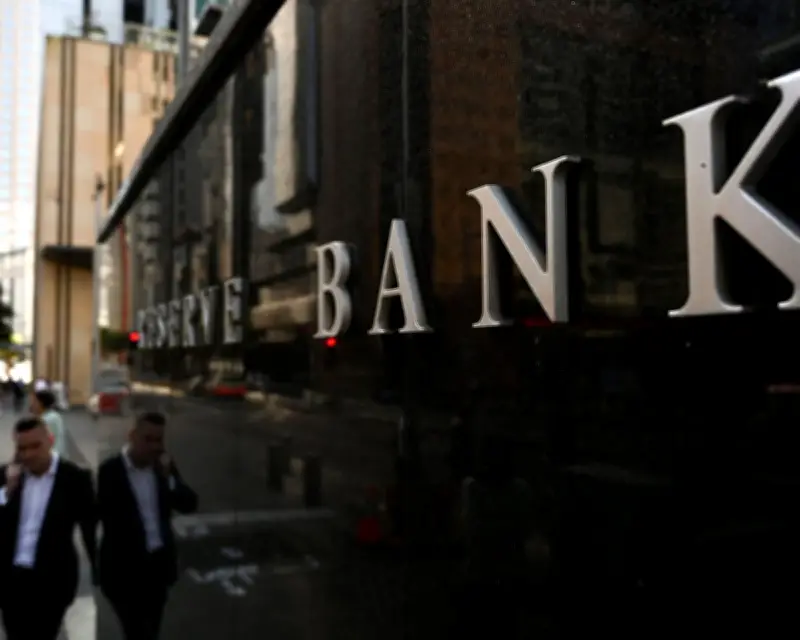
Underlying inflation in Australia climbed to 3.1% in May, marking the first increase in four months and reinforcing expectations that the Reserve Bank of Australia (RBA) may need to raise interest rates again. The monthly consumer price index (CPI) indicator, released by the Australian Bureau of Statistics on Wednesday, showed annual headline inflation held steady at 3.6%, but the trimmed mean — the RBA's preferred measure of underlying inflation — rose from 3.0% in April to 3.1%.
Core inflation moves above RBA target band
The rise in the trimmed mean pushes underlying inflation back above the RBA's 2-3% target band, complicating the central bank's efforts to bring inflation under control. Economists had expected the trimmed mean to remain unchanged at 3.0%. The data comes ahead of the RBA's next board meeting in August, where the cash rate currently stands at 4.35%.
"Today's data confirms that the disinflation process has stalled," said Sarah Hunter, chief economist at KPMG Australia. "The RBA will be concerned that inflation is proving more persistent than anticipated, and the risk of another rate hike has increased."

Services inflation remains sticky
The ABS report highlighted that services inflation, which includes rents, insurance, and medical services, continued to run hot at 4.9% annually, while goods inflation eased to 2.4%. Rents rose 7.4% over the year, and insurance costs surged 14.2%, reflecting higher reinsurance costs and natural disaster claims.
"Services inflation is the key problem for the RBA," said Diana Mousina, deputy chief economist at AMP. "It's being driven by strong demand for services and rising labour costs, and it's not coming down as quickly as the RBA would like."
Market reaction and rate hike expectations
Financial markets responded by pricing in a higher probability of a rate hike at the August meeting. According to the ASX 30-day interbank cash rate futures, the implied probability of a 25-basis-point increase rose to 36% from 28% before the data release.
"The market is now pricing in a one-in-three chance of a hike next month," said Tony Sycamore, market analyst at IG Australia. "If the upcoming quarterly CPI print for the June quarter, due in late July, also comes in above expectations, that probability could rise further."
Households under pressure as mortgage stress mounts
For households already struggling with elevated borrowing costs, the prospect of another rate hike adds to financial strain. Mortgage stress is already at elevated levels, with data from Roy Morgan showing that 1.6 million mortgage holders were at risk of missing repayments in the three months to May.
"Another rate hike would be devastating for many families," said Angela Jackson, an economist at Impact Economics. "We're already seeing a rise in distressed sales and a slowdown in consumer spending. The RBA needs to be careful not to tip the economy into a recession."
Government spending adds to inflationary pressure
Some economists have pointed to government spending as a contributing factor to persistent inflation. The federal budget, which included cost-of-living relief measures such as energy bill rebates and increased rent assistance, may be adding to demand-side pressures.
"Fiscal policy is working at cross-purposes with monetary policy," said Stephen Koukoulas, a former economic adviser to the government. "The government's spending is keeping inflation higher than it would otherwise be, forcing the RBA to keep rates higher for longer."
Outlook: RBA faces difficult decision
The RBA board will have access to the June quarter CPI data, due on July 31, before its August 6 meeting. If that data shows a further acceleration in underlying inflation, a rate hike is likely.
"The RBA has been clear that it will do what is necessary to bring inflation back to target," said Hunter. "If the data continues to surprise on the upside, they will have no choice but to hike again."
However, some economists argue that the RBA should hold fire, noting that the economy is already slowing. GDP growth in the March quarter was just 0.1%, and retail sales have been weak.
"The RBA needs to look through the monthly noise and focus on the trend," said Mousina. "The economy is clearly softening, and further tightening could cause unnecessary damage."

The RBA's next decision will be closely watched by markets, businesses, and households alike, as the central bank navigates the delicate balance between taming inflation and supporting economic growth.