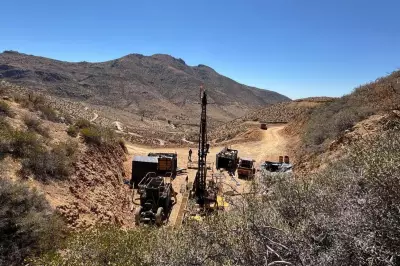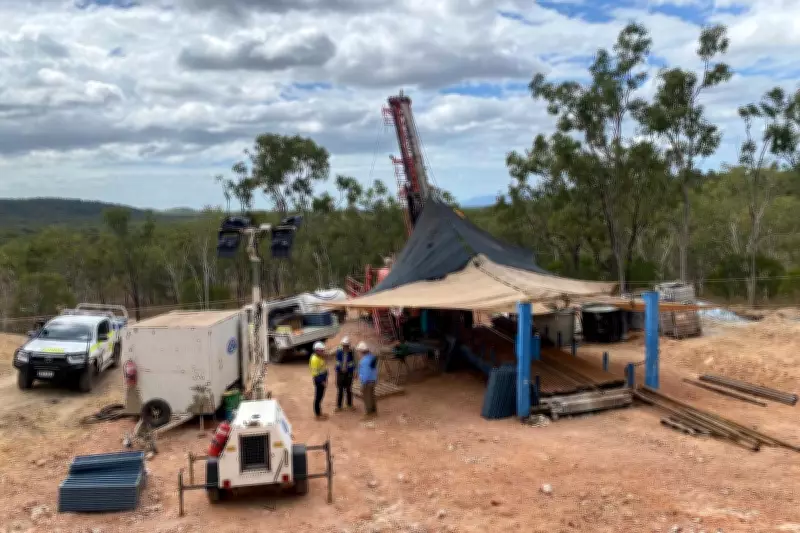
Gold Fields and Great Southern Mining are gearing up to resume diamond drilling operations at their expansive Edinburgh Park gold project in north Queensland. The highly anticipated program is scheduled to commence once the wet season concludes in May, marking a significant step forward in the exploration of this promising region.
Joint Venture and Exploration Targets
The project is being explored under a joint venture agreement, with Gold Fields positioned to earn up to a 75 percent interest by investing $15 million in exploration activities. This collaboration aims to unlock the mineral potential of the vast Edinburgh Park area, which spans an impressive 1565 square kilometres and is located 75 kilometres west of Bowen in Queensland.
Focus on Mt Dillon Target
The upcoming drilling campaign will initially target the Mt Dillon site, where geophysical surveys have identified a compelling induced polarisation chargeability anomaly. This anomaly is situated beneath a preserved silicified lithocap, a silica-rich alteration zone that typically forms above porphyry copper-gold systems. Gold Fields believes this feature could indicate an intrusive-related gold system, making it the most advanced drill target generated at the project to date.

Geological mapping at Mt Dillon has revealed widespread argillic-style low-temperature alteration, converting key rock-forming minerals into distinctive clays over several square kilometres. This alteration style is a critical indicator of mineral deposits and is often associated with the marginal zones of porphyry copper or epithermal gold-silver systems.
Historical Context and Regional Significance
The Edinburgh Park project lies within a region renowned for its major gold deposits, including the 10-million-ounce Ravenswood mine, Mount Leyshon with three million ounces of gold, and the Mount Carlton gold project, which hosts two million ounces. This historical context underscores the area's potential for significant mineral discoveries.
Previous diamond drilling conducted last year tested several targets in the northern part of the project, such as Leichhardt Creek, Molongle, and Megan Veins. While these initial holes did not define economic mineralisation, they revealed extensive quartz-sulphide veining and pervasive hydrothermal alteration. These findings reinforce the likelihood of multiple large mineralised systems, sharpening the focus on untested targets like Mt Dillon.
Funding and Future Plans
Great Southern Mining recently completed a $4.6 million placement in March, providing full funding for exploration across its joint venture ground in Queensland and other wholly owned gold projects in Western Australia. This financial backing supports the planned drilling at Mt Dillon, where the first five holes are designed to penetrate the core of the geophysical anomaly and assess whether the alteration system extends into a mineralised intrusive at depth.
In addition to drilling, the joint venture plans to conduct further geophysical and geochemical surveys across the project area. These efforts aim to build a pipeline of large-scale drill targets, positioning the partnership for potential discoveries as Edinburgh Park approaches a possible defining phase.
Expert Insights and Outlook
Great Southern Mining managing director Matthew Keane highlighted that multiple targets within Edinburgh Park display attributes consistent with large-scale gold systems, including deep-seated structures with pervasive hydrothermal alteration from surface and coincident geochemical anomalies. With funding secured, a major joint venture partner, and a queue of high-impact targets lined up for drilling, Gold Fields and Great Southern Mining are well-positioned for a notable discovery at the compelling Mt Dillon geophysical target.
As 2026 shapes up to be an exciting year for the Edinburgh Park joint venture, the renewed drilling efforts could edge the project closer to a breakthrough, potentially unlocking new gold resources in this prolific Queensland region.