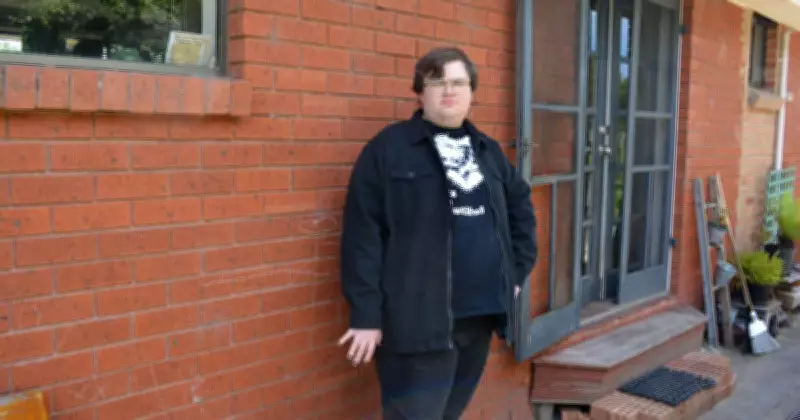
This is branded content. The transition from high school to university is often portrayed as a linear, predictable journey. For many, however, the traditional classroom is not a sanctuary of learning, but a barrier to it. Thomas Rixon, a 20-year-old from Bega, is a striking example of how a 'one-size-fits-all' education system can fail a bright student — and how TAFE NSW, an institution renowned for its adult learning environment and supportive mentors, provides the vital second chance needed to reclaim a future.
This week, as universities across Australia throw open their doors to a new cohort, Thomas isn't just another face in the crowd; he is a testament to the power of alternative study and career pathways. After completing the Certificate IV in Tertiary Preparation (11225NAT) at TAFE NSW Bega, Thomas has secured a place at the prestigious Australian National University (ANU). He will begin a Bachelor of Arts, focusing on philosophy, sociology, gender studies, and German — a combination that reflects his newfound passion for complex, academic inquiry. It is a transformation he describes as nothing short of 'unimaginable.'
The breaking point: why traditional schooling fails
For Thomas, the traditional high school experience was defined by stagnation and social friction rather than academic growth. He reflects on those years with a sense of stifled potential, citing a toxic mix of bullying, isolation, and a rigid curriculum that felt more like a 'chore' than an invitation to learn. 'I faced a lot of bullying and loneliness. What I hated most was how caged I felt,' Thomas recalls. 'Even when you wanted to learn, it was hard because you were constantly dealing with immature kids who didn't want to be there and caused havoc in the classroom.'

This sentiment is echoed by many who leave the school system early. According to recent Australian Bureau of Statistics (ABS) data, approximately one in four students leave school before completing Year 12. While the NSW retention rate saw a slight uptick to 74.5% in 2024, a significant portion of the youth population remains at risk of being left behind without a viable alternative to the standard Higher School Certificate (HSC). For Thomas, the issue wasn't a lack of ability, but an environment that prioritised 'wrangling' students over teaching them. 'I feel like I learned almost nothing in high school — I just went through the motions and nothing stuck,' he says. For those in regional areas like the Bega Valley, where local opportunities can sometimes feel limited, finding a path out of this educational deadlock is essential for long-term career success.
TAFE NSW: a bridge to higher education
The turning point came when Thomas enrolled in the Certificate II in Pathways to Further Study, a foundational course that allowed him to rebuild his confidence before progressing to the Certificate IV in Tertiary Preparation (TPC). The TPC is a nationally recognised qualification designed specifically for adults and school-leavers who require an ATAR-equivalent score for university entry. Unlike the high school environment, TAFE NSW offers a mature, self-driven atmosphere that Thomas found transformative. He describes the difference as 'night and day':
- Purposeful Learning: Every student in the room has made a conscious choice to be there, fostering a culture of mutual respect.
- Adult Environment: The absence of 'social games' and playground politics allowed Thomas to focus entirely on his intellectual development.
- Specialised Teacher Support: With fewer behavioral distractions, TAFE NSW's experienced educators can provide the personalised guidance necessary for students to master complex concepts.
'The people at TAFE wanted to be there. It was more mature... You were there with a purpose,' Thomas explains. This shift in culture allowed him to move from a state of academic apathy to falling in love with the 'academic ideal' — a world of cross-disciplinary work and the pursuit of progress.

The Certificate IV (TPC): a comprehensive academic launchpad
The Certificate IV in Tertiary Preparation is more than just a bridge; it is a rigorous academic program that prepares students for the specific demands of a university degree. The course is structured around core units that build essential academic skills, such as advanced research, critical thinking, and formal essay writing. Students can tailor their study pathways to align with their future goals through various streams, including:
- Humanities: Perfect for students like Thomas heading into Arts or Social Sciences.
- Science and Health: Covering subjects like biology, physics, and chemistry.
- STEM: Focusing on advanced mathematics and statistics.
By developing these high-level research skills, students are often better prepared for the independent nature of university study than those coming straight from a standard secondary school environment. The TPC is respected by universities nationwide, and many graduates use the qualification to gain credit transfer or even guaranteed entry into specific degree programs.
The economic imperative: why education matters now
The success of students like Thomas is a necessity for the Australian economy. The Jobs and Skills Report 2025 forecasts a seismic shift in the labor market: more than 90% of new jobs created by 2035 will require post-school education or training. As the demand for highly skilled workers grows, the role of Vocational Education and Training (VET) providers in bridging the gap becomes critical. TAFE NSW Managing Director Chloe Read emphasises that these courses ensure no one is left behind.
'We are proud to provide a flexible alternative pathway that works for students who have the potential to thrive outside a traditional school environment,' Ms. Read said. 'With higher-skilled jobs being the engine room of Australia's future workforce, TAFE NSW helps students build confidence and take their next step toward university or employment.'
How to start your own journey: understanding entry requirements
For those inspired by Thomas's story, the path to TAFE NSW is designed to be accessible but structured. To ensure students are placed in the right level of study, the enrollment process typically involves:
- Evidence of Previous Study: Such as the Record of School Achievement (ROSA) for Year 10.
- LLN Profile: A Language, Literacy, and Numeracy assessment to identify if any extra support is needed.
- Teacher Interview: A brief chat to confirm the course aligns with the student's career goals.
Financial support options and scholarships are often available to ensure that a student's background does not dictate their future.
TAFE NSW tertiary pathways at a glance
TAFE NSW offers a range of tertiary preparation courses, from Certificate II to Certificate IV, designed to help students meet university entry requirements. These pathways are flexible, with options for full-time, part-time, and online study, making them accessible to a wide variety of learners.
A message to the 'early leaver'
As Thomas prepares to move to Canberra to begin his degree at ANU, his perspective on intelligence has been fundamentally rewritten. He is no longer the 'hopeless' teenager who struggled in Bega; he is a future academic with a clear vision. His journey serves as a powerful message to the thousands of Australians who may have 'flopped' school. The stigma of leaving school early is a barrier Thomas is eager to tear down.
'Through my journey, I've learned you're not stupid because you flopped school,' Thomas says. 'You aren't limited in what you can become, no matter when you dropped out.' For Thomas Rixon, the 'hopeless' days are firmly in the rearview mirror. As he steps onto the ANU campus this week, he does so with the hard-earned confidence that there is always more than one way to reach the top.