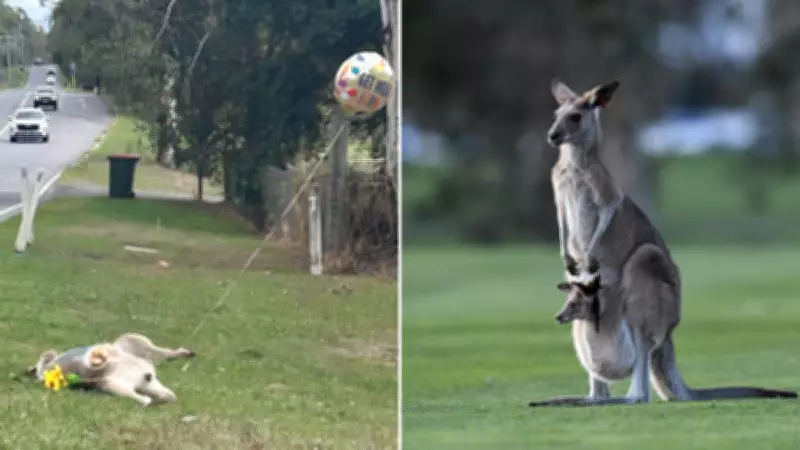
Drivers have been warned after a disturbing image emerged showing a 'get well soon' balloon tied to the carcass of a kangaroo in Queensland. The photograph, shared on social media on Tuesday, depicts the dead animal just metres from a major road in River Heads, south of Hervey Bay.
While the image has sparked fury among locals, it has also raised serious concerns about a potential spike in kangaroo fatalities on Australian roads this winter.
Wildlife Experts Sound Alarm
Leanne Taylor, CEO of Wildlife Information, Rescue and Education Service (WIRES), expressed dismay at the incident. 'Whilst we appreciate that this was someone's attempt at humour, the harsh reality is that the increasing number of deaths of native animals on Australian roads is concerning,' she told 7NEWS.com.au.

Taylor revealed that WIRES has experienced a 400 per cent increase in kangaroo car strike fatalities since the end of daylight saving. She urged motorists to take extra care at dusk and dawn when driving in known wildlife areas.
Winter Vulnerability
Kangaroos are particularly vulnerable during colder months as more cars are on the road during dusk and dawn, when the animals are most active. Dr Catherine Herbert, Professor of Wildlife Management at Sydney University, explained: 'In winter, the period of dusk when kangaroos are more active coincides with people moving around a lot more in local streets and on major roads.'
She added that the quality of grass available to kangaroos decreases in winter, attracting them to roadsides where runoff from the road surface increases grass growth.
Compounding Factors
While there is a predictable rise in road deaths for kangaroos, this year is proving especially challenging. A historically dry March across most of New South Wales and southern Queensland has left grasslands depleted, making it harder for kangaroos to find food.
The Bureau of Meteorology expects warmer and drier conditions with the onset of El Nino, which could worsen the situation. 'That's going to increase those drought conditions,' Herbert said. 'So the reduction in rainfall means, if anything, it's only going to get worse.'
Driver Safety Advice
With more kangaroos forced closer to roads, Herbert stressed the importance of driver caution. 'The most important message is that you don't want to swerve,' she said. 'Kangaroos can turn on a dime, so even if you try to swerve you're still likely to hit the animal. But worse still, you might hit a tree on the side of the road.'
She advised drivers to brake as quickly and safely as possible while staying within their lane.
What to Do If You Hit a Kangaroo
If a driver hits a native animal like a kangaroo or comes across an injured one, they are urged to stop when safe and contact WIRES or a local vet. WIRES may ask drivers to perform a 'pouch check' to ensure the injured animal does not have a joey, which would die without its mother.
'Always approach any animal with care as injured animals will be very scared and may lash out,' WIRES said. 'If you do find a young animal in a pouch, it will need to be kept warm and quiet. A box and a blanket or spare clothing can be invaluable in saving a life.'