
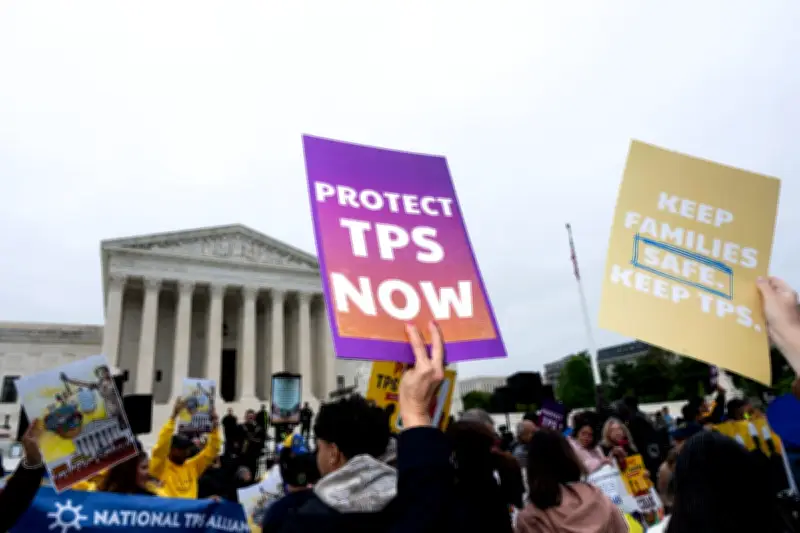
The United States Supreme Court delivered two landmark immigration rulings on Thursday, upholding a federal law that facilitates the deportation of non-citizens convicted of certain crimes and limiting the ability of some immigrants to challenge their removal orders in court. The decisions, both decided by 6-3 conservative majorities, represent a significant shift in immigration enforcement and judicial oversight.
Deportation Law Upheld
In the first case, United States v. Hansen, the Court ruled that a statute allowing for the deportation of non-citizens convicted of aggravated felonies, including crimes involving moral turpitude, is constitutional. The law, which has been used to deport hundreds of thousands of individuals over the past decade, was challenged on the grounds that it violates due process rights. Writing for the majority, Justice Samuel Alito argued that the statute provides sufficient procedural protections and falls within Congress's broad authority over immigration.
The decision overturns a lower court ruling that had found the law overly broad and unconstitutional. According to government data, approximately 250,000 non-citizens have been deported under this provision since 2014. The Biden administration had defended the law, emphasizing its role in public safety.

Limits on Judicial Review
In the second case, Garland v. Cordova, the Court held that non-citizens who have been ordered removed for certain criminal convictions cannot seek judicial review of their deportation orders if they fail to raise their claims during administrative proceedings. The ruling narrows the scope of habeas corpus petitions for immigrants in removal proceedings.
Justice Brett Kavanaugh, writing for the majority, stated that the Immigration and Nationality Act clearly bars courts from reviewing final removal orders when the non-citizen has not exhausted administrative remedies. Dissenting Justice Sonia Sotomayor argued that the decision strips vulnerable immigrants of their day in court, calling it 'a dangerous erosion of judicial oversight.'
Impact on Immigrants
Immigration advocates condemned the rulings, warning that they will lead to increased deportations and reduced legal protections. 'These decisions will have devastating consequences for thousands of families,' said Omar Jadwat, director of the ACLU's Immigrants' Rights Project. 'The Court has effectively greenlit the deportation of people without meaningful review.'
The rulings come amid a contentious election year, with immigration policy remaining a central issue. The Supreme Court's decisions are likely to further polarize debate, as both conservative and liberal groups interpret the outcomes as victories or setbacks for their respective positions.
Reactions and Analysis
Conservative legal scholars praised the rulings as a proper interpretation of federal immigration law. 'The Court correctly recognized that Congress has broad power over immigration and that the judiciary should not second-guess executive enforcement decisions,' said Professor John Yoo of the University of California, Berkeley.
In contrast, immigrant rights groups have vowed to seek legislative remedies. 'We will continue to fight for a fair and humane immigration system,' said Marielena Hincapié, executive director of the National Immigration Law Center. 'These rulings underscore the urgent need for Congress to act.'