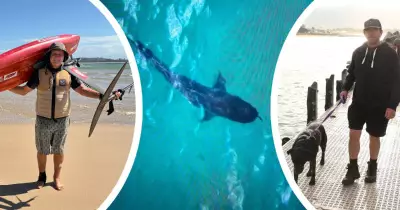
Calls for enhanced shark protection measures have intensified dramatically across Australia after four separate shark attacks were recorded within a mere 48-hour period last week. This alarming series of incidents has reignited national concern about swimmer safety in coastal waters, prompting urgent discussions about more effective mitigation strategies.
NSW Authorities Ramp Up Surveillance Efforts
As New South Wales authorities escalate drone patrols, shark tagging initiatives, and comprehensive surveillance programs, a groundbreaking magnetic barrier system is emerging as a potential long-term solution. This innovative technology aims to protect swimmers at the state's most frequented beaches without harming marine ecosystems.
How the Magnetic Barrier Technology Works
Inventor Neil Laurenson explained the system's mechanism during a recent television interview. The barrier creates what developers describe as a solid wall of magnetism that specifically interferes with the electroreceptors located on a shark's head. This interference effectively prevents the animals from approaching the shoreline, acting as an invisible deterrent.

The system incorporates three distinct types of magnets arranged within an array of pipes, configured so they don't interfere with each other while collectively forming this magnetic barrier. Additionally, the barrier's design mimics the appearance of a kelp forest—an environment sharks instinctively avoid due to potential entanglement risks.
Development and International Success
This technology represents over a decade of research and development, with intellectual property owned by the University of Stellenbosch in South Africa. After extensive testing phases, the first two permanent installations were successfully deployed in the Bahamas, where resort operators have reported complete absence of shark sightings since implementation.
Unlike conventional shark nets that often result in significant bycatch, the magnetic barrier allows swimmers, surfers, boats, and other marine life to pass through safely. This represents a major advancement in environmentally conscious beach protection methods.
Financial Considerations and Implementation Challenges
While New South Wales recently allocated an additional $4.2 million toward shark safety initiatives, experts caution this amount would only suffice to protect a small bay area. The magnetic barrier system carries substantial installation costs estimated at approximately $9,000 per metre, meaning protecting a major beach like Bondi could require an investment of roughly $9 million.
Laurenson advocates viewing this expense as long-term infrastructure investment rather than temporary mitigation. "The way to approach this shark issue, in our opinion, is you could throw hundreds of millions—which represents the combined budgets of New South Wales and Queensland—on more nets," he stated. "We just ask that authorities consider a different perspective and allocate funds beach by beach in this year's budget, actually accomplishing something substantial rather than minimal impact."
Growing Public Concern and Policy Implications
The recent cluster of attacks has prompted beachgoers nationwide to question whether current shark mitigation measures provide adequate protection. As summer approaches and coastal activities increase, the debate about balancing swimmer safety with marine conservation continues to evolve.
This magnetic barrier technology represents one of several innovative approaches being considered alongside traditional methods like drone surveillance and community education programs. The coming months will likely see increased discussion among policymakers, marine biologists, and coastal communities about implementing comprehensive, sustainable solutions to this persistent challenge.