Sydney's Shark Summer Shows No Signs of Abating
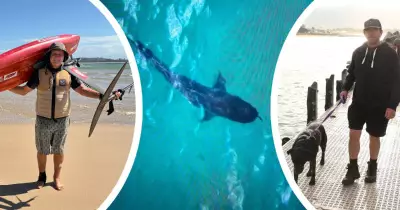
Sydney's summer of sharks appears to be continuing unabated, with multiple iconic beaches forced to close over the weekend following a series of shark alarms that have left swimmers and surfers questioning whether this heightened marine activity represents the city's new coastal reality.
Widespread Beach Closures Across Sydney
Beaches across Sydney's northern beaches, harbour precincts, and eastern suburbs were affected by closures, including popular destinations such as Palm Beach, Bungan Beach in Newport, Mona Vale, Manly, Balmoral, and South Maroubra. These closures have disrupted summer activities and raised significant concerns among the beachgoing public about water safety protocols.
Expert Declares This the "New Normal"
University of Sydney shark and public policy expert, Dr Chris Pepin-Neff, addressed the situation on Monday, stating that Sydneysiders need to accept this increased shark presence as the new normal. "I think this is the new normal," Dr Pepin-Neff told Sunrise, acknowledging the community's understandable concern while cautioning against simplistic solutions.

The expert specifically addressed calls for shark culls, stating unequivocally that such measures "don't work." He explained that "in other countries, when they do the culls, if there's an attractant in the water, that's the issue. It's not the number of sharks."
Ecological Balance and Safety Measures
Dr Pepin-Neff highlighted the important ecological role played by bull sharks, which are not protected species, in maintaining marine ecosystem balance by controlling populations of dusky sharks and bronze whalers. "If you over-cull the bull sharks, then maybe you get a dusky shark... where does it end?" he questioned, emphasizing the complexity of marine management.
Regarding safety measures, the expert revealed significant technological investments, noting that "we've got more drones going to be deployed... So now we know they're going to be 90 per cent more drones than we have this summer" with government investment totaling $4.2 million.
Shark Alarms as Positive Safety Indicators
Contrary to public perception, Dr Pepin-Neff framed the increased shark alarms as a positive development for beach safety, demonstrating that technological investments are functioning effectively. "I love shark alarms. I want a trigger-happy surf lifesaver when it comes to the shark alarm," he stated. "It's a positive thing. But it is going to be a new normal that we're going to have to get used to."
Persistent Marine Conditions
Despite Sydney's waters clearing up after weeks of major storms that caused sewerage runoff and murky conditions, Dr Pepin-Neff warned that the danger hasn't completely passed. "The conditions are better, and they look better to us, but they're not exactly resettled. The ocean hasn't completely resettled from the big storm," he explained. "It's still summer in Sydney, and the bull sharks are still here, and the water temperature is still elevated."
Warning Against Shark Fishing
Despite recent catches of large bull sharks in waters around Sydney, Dr Pepin-Neff strongly cautioned against fishing for these predators. "I think fishing for bull sharks is a bad idea," he stated. "The weather conditions created attractants. There's an underlying number of bull sharks that are in the harbour, but more attractants is a problem. Fishing for sharks and putting bait in the water is a bad idea."
Renewed National Safety Debate
The renewed debate over shark mitigation measures comes as beachgoers question whether current safety protocols are sufficient, following a string of attacks that have reignited national concern over swimmer safety in Australia's waterways. Among these incidents was the tragic death of 12-year-old Nico Antic, who was attacked while swimming in Sydney.
The Department of Primary Industries is currently conducting a comprehensive assessment of shark stocks in Sydney waters, which will inform future policy decisions regarding marine safety and conservation measures.