Cyclone Narelle's Impact Eases in Western Australia, Yet Storm Risks Persist
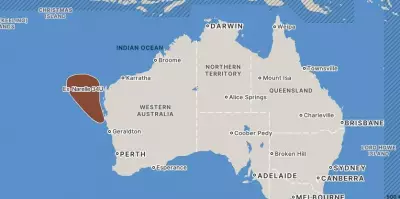
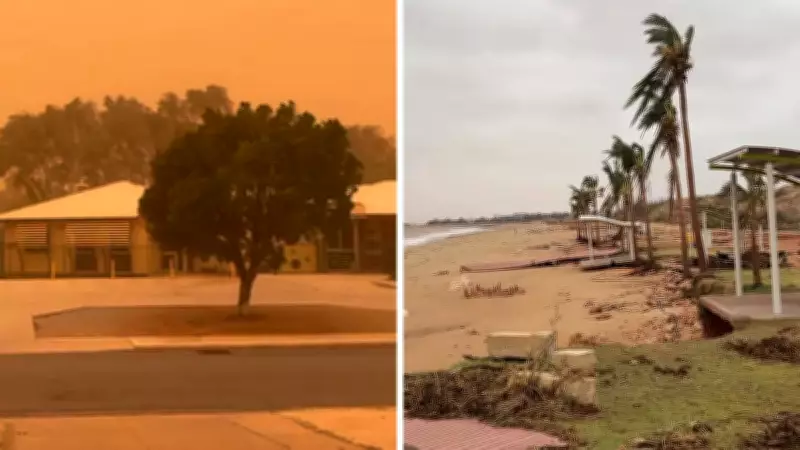
The turbulent journey of ex-tropical cyclone Narelle is gradually subsiding, but not before delivering a series of unpredictable strikes across Western Australia. As the system weakened after making landfall near Coral Bay, focus has shifted to the chaotic and lingering weather conditions it left behind.
Storm's Rapid Weakening Averts Greater Disaster
Amateur weather forecaster Joshua Toohey, who operates the CyclonesOZ YouTube channel, noted that the storm's swift collapse likely prevented more severe consequences for coastal communities. "It was still a massive impact but it could have actually been a whole lot worse," he explained in an interview with 6PR. After arriving as a category 3 cyclone, Narelle moved inland and began to disintegrate rapidly.
"It lost its inner core, the structure eroded and the thunderstorms became disorganised," Mr Toohey detailed. "When that happens, the wind speeds begin to reduce and that was actually a very good thing for places like Coral Bay and Carnarvon." Despite this, the system retained significant force as it traversed the Gascoyne region and entered the Wheatbelt before downgrading to a low-pressure system.

Lingering Thunderstorms Pose Ongoing Threats
Attention is now directed at persistent storm activity, including a severe thunderstorm warning for areas in Perth's south and extending into Mandurah. The Bureau of Meteorology has identified a slow-moving cell near Ravenswood, heading towards Pinjarra. Mr Toohey indicated that while the heaviest rainfall has passed, atmospheric conditions remain unstable.
"There'll be the odd rumble of thunder over the next couple of hours but for the most part, the rain is beginning to pull away," he remarked. Perth has already experienced substantial rainfall, with some locations, particularly in the Hills, recording over 100mm overnight. "Everything's saturated, it'll go green in the next 24 hours. It was beautiful to see," Mr Toohey added, highlighting the positive environmental effects.
Rainfall Benefits Inland Agricultural Areas
Further inland, the precipitation has provided a timely boost to agricultural regions. Parts of the Wheatbelt have received 20mm to 40mm of rain, with forecasts predicting up to 50mm as the system moves southward. "It's exactly what they're after this time of year — it's loosened the ground up nicely and topped up tanks," Mr Toohey observed.
Importantly, the rainfall has avoided extreme levels seen in northern areas. "We're not seeing massive flooding rainfall but we're also not seeing too little. It's really good news for the Wheatbelt," he concluded, underscoring the balanced benefits for farming communities. The overall situation reflects a mix of relief and ongoing vigilance as Western Australia navigates the aftermath of Cyclone Narelle.