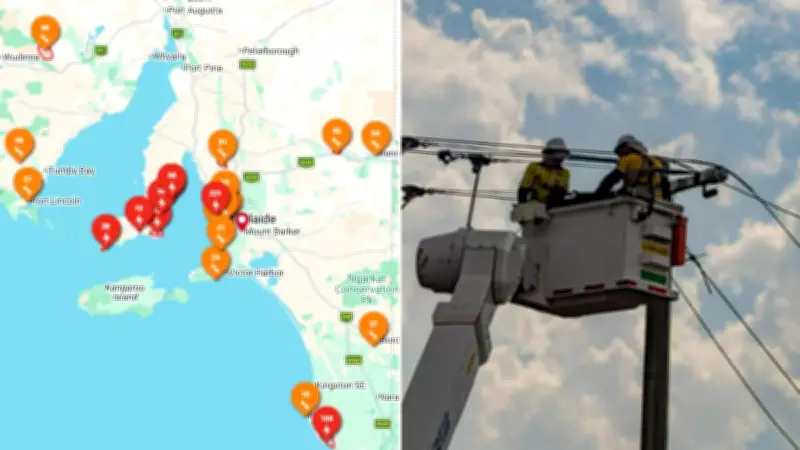
More than one thousand South Australian residents have been plunged into darkness on a sweltering Wednesday, as ten separate power outages sweep across the state. The Yorke Peninsula has been identified as the hardest-hit region, with the blackout zone extending from Minlaton down to Marion Bay, encompassing towns such as Stansbury and Yorketown.
Widespread Disruption Amid Rising Temperatures
According to SA Power Networks, crews are actively working to restore electricity to affected areas. An initial estimated fix time was set for 12.45pm local time, but the utility has cautioned that some residents may face significantly longer waits. Online outage maps indicate that several areas might not see power return until as late as 5pm, leaving many without essential services during the heat.
Root Cause: Insulator Pollution and Flashovers
SA Power Networks spokesperson Cecilia Schultz explained to FIVEAA radio that the outages stem from a critical issue known as insulator pollution. This contamination has triggered a spike in what are termed flashovers – electrical discharges that can cause significant damage.

Schultz detailed the problem, stating, "We observed this issue escalate for the first time last year, and we now have a better understanding of the underlying mechanisms. What we've learned is that flashovers occur when insulators become polluted. These events are accelerating the degradation of certain insulators, making them more susceptible to repeated failures, which explains the severity of the problem this year."
Temporary and Long-Term Solutions
In response, crews are currently washing and replacing damaged insulators in an effort to reconnect customers. However, Schultz warned that a permanent solution will not be swift. "Washing the insulators provides only a temporary fix," she noted. "The infrastructure will ultimately require replacement – a process that could take several years to complete."
SA Power Networks has assured the public that crews will remain on site throughout the day as temperatures continue to climb, prioritising restoration efforts in the most affected zones.