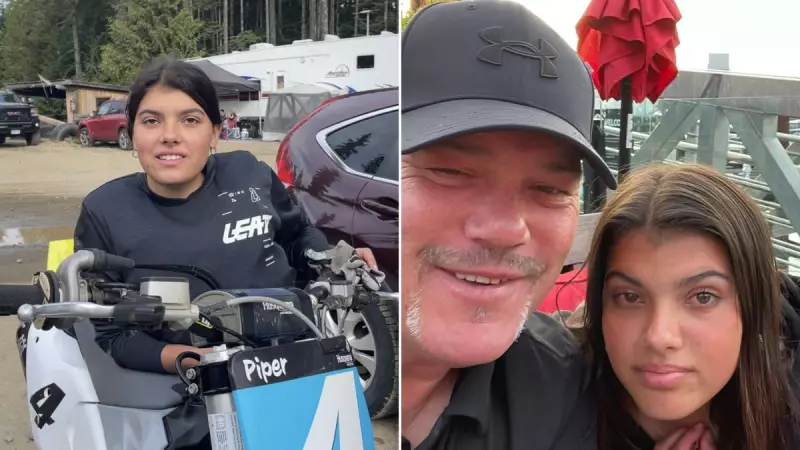
The body of a young Canadian backpacker discovered deceased at a renowned Queensland tourist destination will soon be returned to her grieving family in Canada. Piper James, aged just 19, was found dead early on Monday morning near the surf at Maheno Wreck on K'gari, surrounded by dingoes, merely an hour after she was believed to have gone for a swim.
Repatriation and Family's Heartbreak
While the official cause of death may take months to be fully determined, her devastated father, Todd James, has confirmed that her body is scheduled for repatriation next week. In a heartfelt social media post, Todd shared, "Next week Piper's body will be repatriated home back to Campbell River in the Canadian province of British Columbia, where a celebration of her life will be held." He expressed profound gratitude for the overwhelming support received during this "very dark" time, stating, "We are so very grateful for the overwhelming amount of support that Angela, Piper's mother, and I are receiving. It truly helps knowing we are not alone in the heartbreak. She was an incredible human."
Autopsy Findings and Ongoing Tests
The Queensland Coroner's Court has provided initial findings from the autopsy, revealing that Piper's body showed signs of contact with dingoes. The report indicated physical evidence consistent with drowning and injuries consistent with dingo bites. Importantly, it noted that pre-mortem dingo bite marks are not likely to have caused immediate death, and there are extensive post-mortem dingo bite marks. The court also confirmed there is no evidence that any other person was involved in the incident.

Todd James has disclosed that further tests are still required to conclusively determine if "the fluid found in her lungs was inhaled or not." He explained, "These tests should be able to tell us whether or not it was a drowning." This ongoing investigation underscores the complexity of the case as authorities work to piece together the exact circumstances of her tragic death.
Family's Call for Safety Improvements
In the wake of this tragedy, Todd James is advocating for significant safety enhancements on K'gari to prevent similar incidents in the future. He plans to meet with the Queensland Premier to push for changes, emphasizing that Piper, who adored nature and animals, would never have supported a dingo cull. Instead, he believes urgent safety measures are necessary.
Among the proposals he wants considered are:
- Stronger training for island staff to better manage wildlife interactions.
- Mandatory carrying of dingo sticks for visitors as a deterrent.
- A potential ban on children under 13 visiting the island to reduce risks.
Community Concerns and Visitor Numbers
Local community members have expressed fears that Piper's death might lead to a culling of the island's dingo population. Queensland Premier David Crisafulli has not ruled out any options, adding to the uncertainty. Traditional owners of the land have argued against a cull, instead advocating for a cap on visitor numbers and the introduction of periodic island closures to better manage the environment and wildlife.
K'gari reportedly attracts approximately 500,000 visitors annually, though traditional owners estimate the real figure is closer to 800,000. This high volume of tourism raises questions about the balance between promoting natural beauty and ensuring visitor safety in sensitive ecosystems.
As the investigation continues and Piper's family prepares for her return, this incident has sparked a broader conversation about wildlife management and safety protocols in Australia's popular tourist destinations.