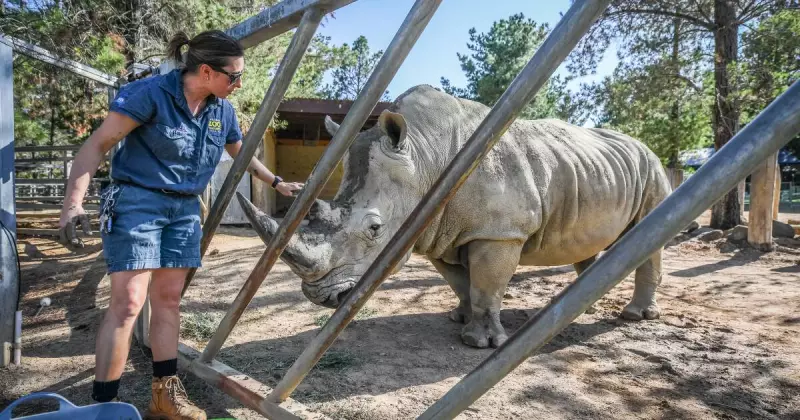
Rhinos Receive Mud Sunscreen as Canberra Zoo Prepares for Extreme Heat
As Canberra braces for scorching temperatures predicted to reach 43 degrees Celsius, the National Zoo and Aquarium is implementing specialised cooling strategies to protect its animal residents. Among the most notable measures is the application of mud sunscreen to sensitive-skinned creatures like white rhinos, ensuring they remain comfortable and safe during the severe heatwave.
Mud as Protective Layer for Vulnerable Skin
Animal care manager Sophie Dentrinos was observed early this morning applying a thick layer of mud to the back of 15-year-old white rhino bull Ubuntu. This natural sunscreen serves a dual purpose, shielding the animal's large surface area from harmful UV rays while also repelling biting insects. "They are susceptible to things like sunburn, and also biting insects so a nice thick layer of mud helps to protect that really large surface area that they have, and keep them protected and cool," Dentrinos explained.
The technique requires precision, as an improperly applied rub can irritate the rhino's hide. Ubuntu, who arrived from New Zealand nearly fifteen years ago alongside another male named Eco, is accustomed to Canberra's climatic extremes. Rhinos naturally regulate their activity during hot periods, becoming more active during cooler morning and evening hours. They are known as enthusiastic wallowers, frequently coating themselves in mud to achieve cooling and protection.

Comprehensive Heat Management Protocols Activated
With the Bureau of Meteorology issuing a severe heatwave warning through Friday, zoo staff have initiated a series of additional measures to safeguard animal welfare. Volunteers arrived early to rake out enclosures before temperatures peaked. When the mercury climbs above 40 degrees, the zoo deploys misting systems, provides cooler shaded areas, and offers air-conditioned dens for animals to retreat into.
Keepers remain on high alert, monitoring all species for signs of distress. They distribute ice blocks and ensure adequate hydration across the facility. "Most of summer our freezers are stockpiled full of lots of different types of ice blocks for our animals to utilise," Dentrinos noted. The evaporation rate has increased significantly, requiring manual topping up of water features like the alligator pond to compensate for systems struggling to keep pace.
Forecasted Temperature Patterns and Historical Context
Canberra's forecast indicates a peak of 43 degrees at 3pm today, approaching the city's record high of 44 degrees set in 2020. While Thursday is expected to cool slightly to 35 degrees, temperatures will rise again to 40 and 39 degrees on Friday and Saturday respectively. Relief is anticipated on Sunday with predicted rainfall continuing into Monday and Tuesday.
The zoo's proactive approach demonstrates how modern wildlife facilities adapt to increasingly extreme weather events. By combining natural behaviors like mud wallowing with technological interventions such as misting and air conditioning, they ensure that even heat-sensitive species like white rhinos can thrive during Australia's intense summer conditions.