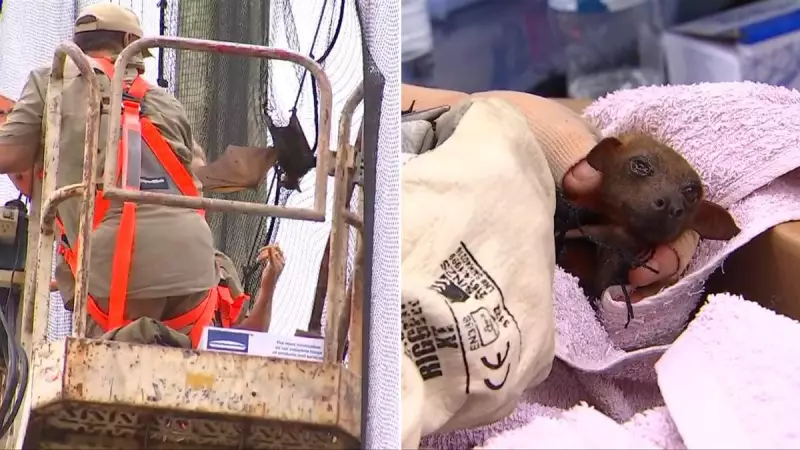
A major wildlife rescue operation is currently unfolding on Queensland's Sunshine Coast after dozens of little red flying foxes became severely entangled in netting at the Noosa Golf Club's driving range. This distressing incident marks the third time this month that bats have been trapped at the same location, raising serious concerns about the safety of the netting used.
Urgent Rescue Efforts Underway
Volunteers from Bat Rescue Inc and Wildlife ACQ, alongside dedicated staff from the Australia Zoo Wildlife Hospital, have been working tirelessly since early morning to free the colony. Rescuer Katrina Odgers reported that more than 20 bats were caught overnight, adding to the more than 40 that were entangled just days earlier on Tuesday.
"We rescued 10 since 8am, and we're still trying to get the rest down before dark," Odgers told reporters. "It's heartbreaking. The ones that come down now are alive, but they've been struggling since last night. The ones still up there are fighting for their lives."

Critical Care for Trapped Bats
The rescue process involves carefully cutting the nets, hydrating the dehydrated bats, and administering glucose to stabilise them before they are transported to Australia Zoo for further medical treatment. The driving range has been closed to the public while these delicate operations continue, with rescuers working at height to reach bats caught high in the nets.
Netting Safety Under Scrutiny
Wildlife experts have identified the specific inch-by-inch netting installed at the golf course as particularly dangerous for flying foxes. The netting has been in place for approximately six months and poses a significant threat during migratory periods when bat activity increases.
"It should be illegal to put up this much netting that is not bat safe," Odgers emphasised. "Flying foxes are a protected species and play a vital role in keeping our environment healthy through pollination and seed dispersal."
Official Investigations and Responses
The Department of Environment, Tourism, Science and Innovation (DETSI) has confirmed it is investigating the incidents. A department spokesperson stated that wildlife officers attended the site and were satisfied with actions being taken to prevent future occurrences.
However, the department noted there is currently no evidence suggesting the incidents constitute offences under the Nature Conservation Act 1992. Meanwhile, RSPCA Queensland reported they received initial calls about the situation but referred the rescue to Australia Zoo as the location falls outside their usual operational area.
Golf Club's Position and Community Concerns
The Noosa Golf Club maintains it has all necessary approvals for the netting and is working toward a solution that would allow the nets to remain while preventing further wildlife entanglements. This position has sparked renewed calls from conservation groups and local residents for complete removal of the hazardous netting.
Community members are encouraged to report wildlife incidents to the dedicated hotline at 1300 130 372. As rescue efforts continue into the evening, the fate of the remaining trapped bats hangs in the balance, highlighting the ongoing conflict between human infrastructure and wildlife protection in urban environments.