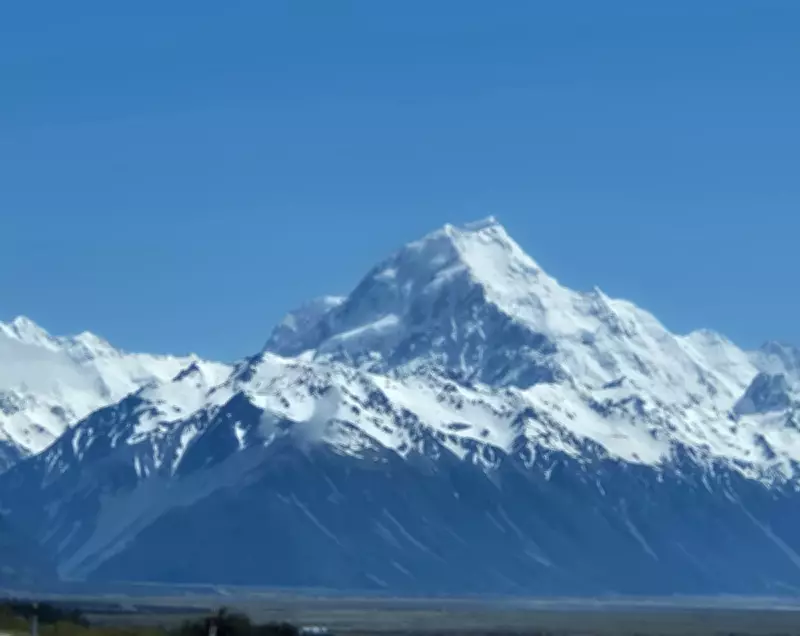
The moment I laid eyes on Aoraki/Mt Cook while driving through the Mackenzie Region during a three-week self-drive tour of New Zealand’s South Island, I was utterly captivated. I have hundreds of photographs of the Southern Alps mountain, New Zealand’s highest at 3724 metres, to attest to my fascination, or perhaps obsession.
Two days exploring Lake Tekapo, Lake Pukaki, and Aoraki/Mt Cook were among the highlights of our holiday. We based ourselves in Fairlie, a 30-minute drive from Lake Tekapo, as accommodation closer to the lake and mountain was expensive and scarce when we booked. It turned out to be a wise decision, as the drive to Lake Tekapo was itself an interesting journey.
Discovering Burke’s Pass and Lake Tekapo
A stop at the historic village of Burke’s Pass, just 10 minutes from Fairlie, is a must. The quirky and fascinating Three Creeks general store, 1950s service station, and blacksmith shop are perfect for a wander, overflowing with retro collectables, artworks, and gifts. Also worth exploring is the charming St Patrick’s Church across the road, the first pioneer church built in the region in 1872.

As we drove on to Lake Tekapo, the wind picked up and clouds began to move, revealing a stunning vista of the bright turquoise waters of the lake and its mountain backdrop, with majestic Aoraki peeping out from the clouds. We visited in early November, just as the colourful lupins began to make a fledgling appearance around the lake, with vibrant pops of pink, purple, and blue. The lupins are at their best from mid-November to mid-December, so we were a bit early for their prime. Though they are an invasive weed that threatens the local ecosystem, they beautifully complement the natural view.
According to tourist guides, a trip to Lake Tekapo must include a visit to the Church of the Good Shepherd on its shore. The simple but striking stone church opened in 1935 as a place of worship for residents and is also a memorial to the pioneers of the district. Its design represents quiet strength and simplicity—qualities of the early settlers. The original roof was made of wooden shingles but had to be replaced with slates in 1957. Church services are held every Sunday.
One of the highlights of our Lake Tekapo trip was to be a stargazing experience, but the weather had other ideas, with low cloud and rain forcing its cancellation. Lake Tekapo is part of the Aoraki Mackenzie International Dark Sky Reserve, New Zealand’s largest dark-sky reserve, with numerous stargazing opportunities available, including at Tekapo Springs, where you can view the night sky while floating in a hammock in the hot pools.
Venturing to Aoraki/Mt Cook
Our disappointment was forgotten the next day when we ventured on to Aoraki/Mt Cook, a one-hour-and-15-minute drive from Lake Tekapo. The view improved the closer we travelled, and I became transfixed. The route took us the length of Lake Pukaki, the largest lake in the region and even more turquoise than Lake Tekapo thanks to glacial flour from fine rock particles from the surrounding glaciers. Aoraki looked stunning, framed beautifully by the turquoise waters of Lake Pukaki. Fortunately, there are many places to stop on the way to capture the perfect shot, including the Lake Pukaki Visitor Centre, where you can pop into the Mt Cook Alpine Salmon shop and take in the view while enjoying delicious salmon.
We were blessed with a clear day, perfect for walking some of the trails in the Mt Cook National Park, which covers 70,696 hectares and is home to the country’s highest mountains and largest glaciers. Glaciers cover 40 per cent of the park, and there are 21 peaks more than 3000 metres high, including Aoraki. The mountain was originally named Aoraki by the Ngai Tahu, the first settlers in the area, with its European name, Mt Cook, following in 1851 when Captain J. L. Stokes saw the mountain’s peak as he sailed down the west coast, naming it after Captain James Cook.
Walks in the park range from 10 minutes to four hours. We took the Kea Point Track, a two-hour return walk from the village, although it took us less than that. The track follows subalpine grasslands and scrub to the Mueller Glacier moraine wall. A viewing deck at the end provides fabulous views of Mt Sefton, the Footstool, the Hooker Valley, the Mueller Glacier Lake, and, of course, Aoraki/Mt Cook.

We also started the Hooker Valley Track, a three-hour return walk through the Hooker Valley. The track was only partially open and remains so until later this year due to the construction of a new bridge. The open part of the track passes Freda’s Rock, commemorating Freda du Faur who, in 1910, became the first woman to climb Aoraki/Mt Cook; the Mueller Glacier viewpoint; and the first swing bridge. At the start of the track, you will also find the Alpine Memorial, recognising lives lost, with more than 240 deaths recorded in the Aoraki/Mt Cook National Park. Just weeks after our visit, two climbers became the latest victims of the mountain’s difficult terrain and weather, falling to their deaths.
We ran out of time and energy to do the more demanding three-to-four-hour return Sealy Tarns Track, which is known as the Stairway to Heaven thanks to its 2200 steps that take you to the freshwater lakes of Sealy Tarns. We’ll save that trek for next time.