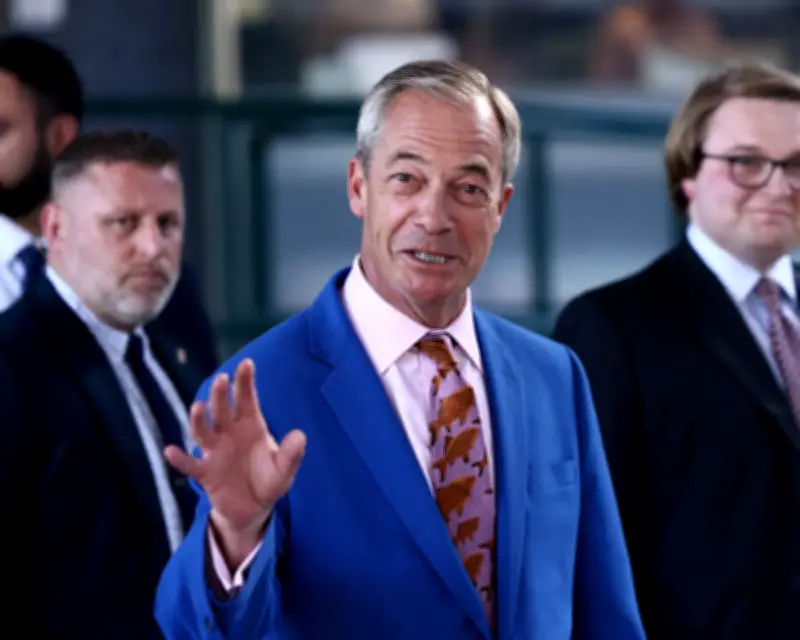
Nigel Farage has rejected calls to submit to standard parliamentary scrutiny during his campaign for the upcoming byelection, asserting that he represents the people against the political establishment. Speaking at a rally in Clacton-on-Sea, the Reform UK leader dismissed demands for transparency on his financial interests and policy positions, claiming they are part of a smear campaign by the establishment to silence him.
Farage's Defiant Stance
Farage, who is standing as the Reform UK candidate in the Clacton byelection, said he would not engage with what he called the 'Westminster circus' of scrutiny. 'I answer to the people, not to the political class,' he told supporters. 'They want to trap me in their rules and regulations, but I am here to break the system, not to play by its rules.'
The former UKIP and Brexit Party leader has refused to publish his tax returns, declare his earnings from GB News, or submit to a full interview with the BBC's 'Panorama' programme. His campaign team has also declined requests for a public debate with other candidates.

Reaction from Political Opponents
Labour candidate Jovan Owusu-Nepaul criticised Farage's approach, saying: 'It is unacceptable for anyone seeking public office to avoid basic accountability. The people of Clacton deserve to know who they are voting for.' The Conservative candidate, Giles Watling, also expressed concern, stating that 'transparency is the bedrock of our democracy.'
Liberal Democrat candidate Callum Robertson accused Farage of 'arrogance and contempt for democratic norms.'
Byelection Context
The Clacton byelection was triggered by the resignation of Conservative MP Giles Watling, who stepped down after being diagnosed with a serious illness. Farage's decision to stand has electrified the campaign, with Reform UK polling at around 30% in the constituency, putting them in a close race with Labour and the Conservatives.
Farage has focused his campaign on immigration, the cost of living, and what he calls the 'betrayal' of Brexit. He has promised to 'take on the establishment' and 'give power back to the people.'
Criticism and Support
Political analysts have noted that Farage's strategy of rejecting scrutiny mirrors his previous campaigns, where he positioned himself as an outsider. Professor Tim Bale of Queen Mary University of London said: 'Farage has always thrived on being the anti-politician. By refusing to play by the rules, he reinforces his image as a disruptor.'
However, some supporters at the rally defended Farage. Retired nurse Margaret Collins, 67, said: 'We're sick of politicians who say one thing and do another. Nigel says it like it is. He doesn't need to justify himself to the media.'
Implications for UK Politics
The byelection is seen as a test of Reform UK's electoral strength ahead of the next general election. If Farage wins, it could embolden other populist candidates to adopt similar anti-establishment tactics. Conversely, a loss might diminish his influence.
Farage's refusal to engage with parliamentary scrutiny has also raised questions about the effectiveness of existing accountability mechanisms. The House of Commons Standards Committee has yet to comment on whether any rules have been breached.