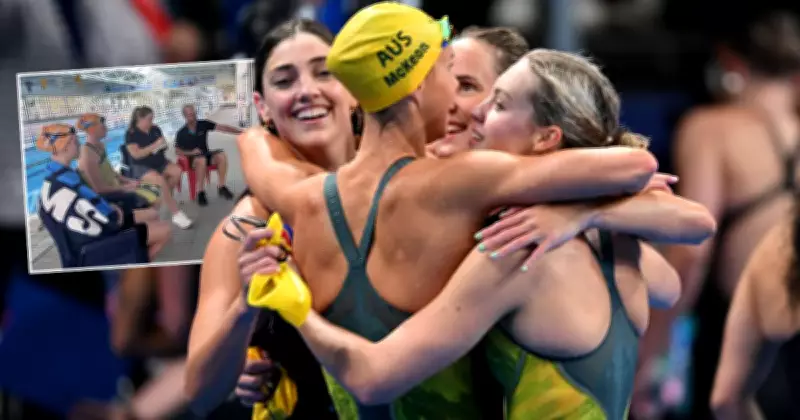
The Australian Institute of Sport (AIS) has once again proven its prowess in sports technology, this time powering Olympic gold medalist Olivia Wunsch to victory. The swimmer, who recently clinched gold at the Tokyo Olympics, credits the innovative technology provided by the AIS for her remarkable performance.
Revolutionary Training Techniques
The AIS has been at the forefront of integrating technology into athletic training. For Wunsch, this meant access to state-of-the-art equipment and data analysis tools that fine-tuned her strokes, turns, and starts. The technology included underwater cameras, motion sensors, and real-time feedback systems that allowed her coaches to make immediate adjustments.
Underwater Camera Systems
One of the key technologies was the underwater camera system, which captured every nuance of Wunsch's swimming technique. This allowed for detailed analysis of her body position, arm movements, and kick efficiency. By reviewing footage frame by frame, her team could identify areas for improvement that were invisible to the naked eye.

Motion Sensors and Wearables
Wunsch also wore motion sensors during training sessions. These devices tracked her movements in the water, providing data on acceleration, deceleration, and stroke rate. The information was then used to optimize her energy expenditure and maintain peak performance throughout races.
Data-Driven Coaching
The integration of technology extended beyond just hardware. The AIS developed custom software that aggregated all the data from various sources, presenting it in an easily digestible format for coaches and athletes. This data-driven approach allowed for personalized training plans that targeted Wunsch's specific weaknesses.
Real-Time Feedback
During training, Wunsch received real-time feedback via a waterproof earpiece. Coaches could relay instructions instantly, correcting her technique on the fly. This immediate response mechanism accelerated her learning curve and ensured that she was always performing at her best.
Psychological Edge
The technology also provided a psychological boost. Knowing that she had the best possible support and data at her fingertips gave Wunsch confidence. She could visualize her performance metrics and see tangible evidence of her progress, which motivated her to push harder.
Competitive Analysis
Another advantage was the ability to analyze competitors. The AIS technology allowed Wunsch's team to study the techniques of her rivals, identifying patterns and weaknesses. This intelligence was used to develop race strategies that gave her an edge over the competition.
Future of Swimming
The success of Wunsch has paved the way for broader adoption of AIS technology in swimming and other sports. The institute is already working on next-generation tools, including artificial intelligence-driven analytics and virtual reality training simulations. These innovations promise to further elevate Australian athletes on the world stage.
In conclusion, Olivia Wunsch's Olympic gold medal is a testament to the power of technology in sports. The AIS's commitment to innovation has not only helped an individual athlete achieve her dreams but has also set a new standard for athletic training in Australia. As technology continues to evolve, the future of swimming looks brighter than ever.