St George Mining continues to report impressive drilling results from its wholly owned Araxá rare earths and niobium project in Brazil, with the latest assays highlighting grade, scale, and continuity. From a batch of 13 diamond drill holes, the company has spotlighted three top intercepts, all starting from surface.
Key Intercepts
The headline intercept delivered 43 metres at 8.02 per cent total rare earth oxides (TREO) and 0.74 per cent niobium pentoxide, including 21 metres at 10.61 per cent TREO and a 4.4-metre spike at 20.14 per cent TREO. The second best hole returned 41 metres at 4.01 per cent TREO and 0.40 per cent niobium pentoxide from 7 metres, within a broader 150.85-metre mineralised run at 2.48 per cent TREO. Another hole added 31 metres at 4.59 per cent TREO and 0.83 per cent niobium pentoxide from surface, within a massive 96.25-metre run going 2.82 per cent TREO.
Expanding the Footprint
The mineralised system appears to be stretching beyond the current mineral resource estimate. A northern step-out hole, drilled 200 metres further north-northeast of the existing pattern, intersected 19.35 metres at 5.65 per cent TREO and 0.76 per cent niobium pentoxide from 7.75 metres. This result, within a broader 100.35-metre interval assaying 1.73 per cent TREO and 0.33 per cent niobium pentoxide from surface, extends the known mineralised footprint 240 metres northwards and confirms the system is still growing. The ground to the northeast remains untested, with mineralisation open, indicating potential for further resource growth through step-out drilling.

Executive Chairman John Prineas said: "These results continue to confirm a very large volume of mineralisation with exceptionally thick mineralised intercepts. It is exciting to also see these thick, high-grade intercepts outside the existing footprint of the MRE, which emphasises that we have not yet reached the limit of the mineral system."
Resource and Development
The Araxá deposit already hosts a world-class JORC 2012 resource of 70.91 million tonnes at 4.06 per cent TREO and 0.62 per cent niobium pentoxide, with mineralisation from surface and within 120 metres vertical depth. Most drilling has been above the base of oxidation, though a few holes have pierced upper bedrock levels, revealing lower-grade end-of-hole mineralisation. The project is located in Brazil's mining-friendly state of Minas Gerais, adjacent to CBMM's long-running niobium mine and infrastructure, which helps de-risk development.
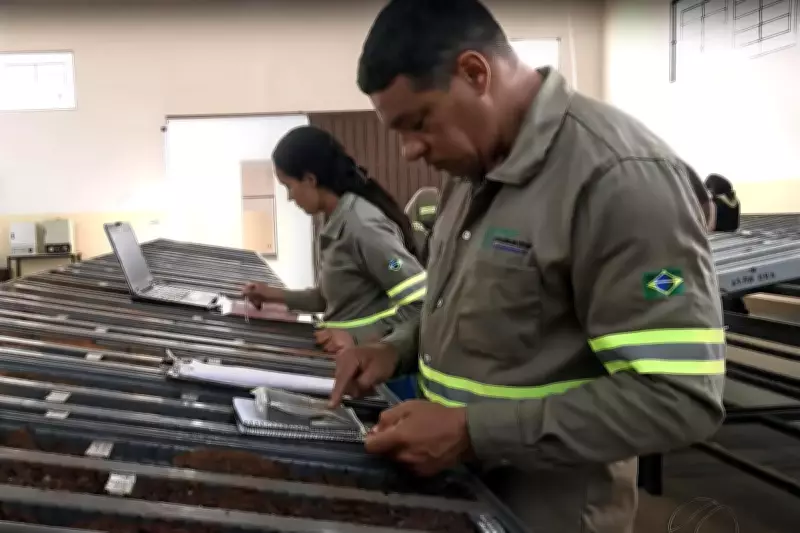
St George has completed 13,700 metres of drilling in its current campaign at Araxá, running rigs around the clock to tighten drill spacing for grade continuity and future reserves modelling. The campaign has already achieved a 75 per cent increase in the maiden resource estimate and a 218 per cent increase in combined measured and indicated resources. Alongside drilling, the company is advancing metallurgy and development studies, with economic findings targeted for the June and September quarters, and an additional resource update planned for the September quarter.
With thick intercepts from surface and step-outs expanding the envelope, Araxá is shaping up as a drilling story that can keep the market's attention. If northern extension drilling continues to deliver, the next resource upgrade could be significantly enlarged.