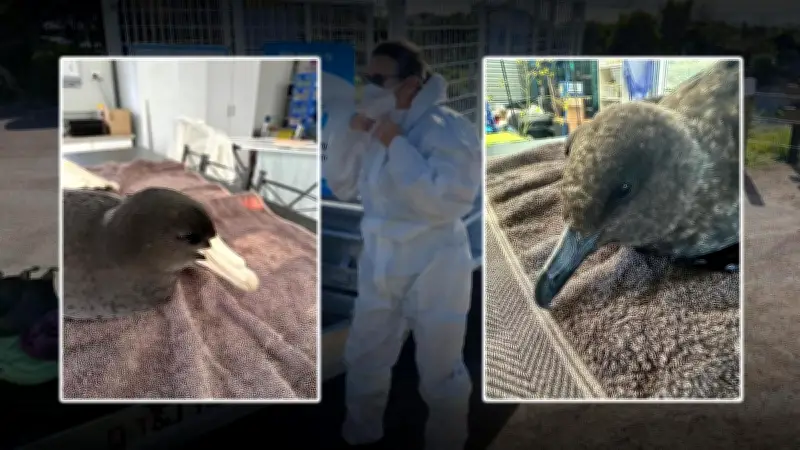
Suspected H5N1 Detection in WA Petrel
Samples taken from a petrel found among a beach graveyard of birds will be sent for further testing to confirm if it died from a disease that has wiped out huge avian populations around the world. The latest suspected detection of H5N1 bird flu was reported by a member of the public who stumbled upon the bodies of five giant petrels at Roses Beach near Esperance on WA’s south coast.
Samples from one giant petrel common to the sub-Antarctic returned a positive result for H5 influenza during preliminary testing, and the CSIRO in Geelong is now working to confirm the case. The four other birds tested negative to the strain of concern.
Current Confirmed Cases in WA
The number of confirmed cases of H5 stands at two in WA — a brown skua and northern giant petrel both found in Esperance. There is now a waiting game to find if a southern giant petrel found at Quindalup in WA’s South West and the Roses Beach case will officially bump that up to four.

H5 bird flu was also confirmed to have landed in South Australia, when a giant petrel surfaced struggling at Knights Beach on the Fleurieu Peninsula. A skua and northern giant petrel found in WA were confirmed to have H5N1 bird flu, according to the Esperance Wildlife Hospital and Sanctuary.
Public Reporting and Testing Efforts
Since June 19, close to 400 reports have been made to the Emergency Animal Disease hotline from WA, and 43 have been sent for testing, the state’s Department of Primary Industries and Regional Development said on Friday. “There is no suggestion any of these additional reports will be H5 bird flu,” the department said. “There are no detections in poultry and no evidence of large-scale deaths in any wildlife.”
The bird flu has wiped out huge numbers of birds and mammals globally. Despite some experts predicting it is only a matter of time before it takes hold in some capacity, WA Agriculture Minister Jackie Jarvis said that is not currently the case. “We have seen absolutely no evidence of any spread of this disease. It is only single migratory birds that are being found on beaches,” she said Friday.
Government and Industry Response
WA Premier Roger Cook said Thursday there was always an expectation the strain would eventually arrive on mainland Australia, the last continent to have H5N1 reach its shores. “In other countries, it’s got into their poultry industry before they even knew it was their area,” he said. “So the fact that we’ve got these early lines of sight is really important.”
Federal Agriculture Minister Julie Collins said chicken products remain safe to consume. “Chicken meat and eggs, as prepared normally, are perfectly safe to eat,” she said. Some in the poultry industry, including Inghams, have locked down their WA facilities to mitigate any risk, while some vets have stopped admitting wildlife patients.
Anyone who sees sick or dead birds or marine mammals should not handle the animals but make a report to the Emergency Animal Disease Hotline on 1800 675 888.