

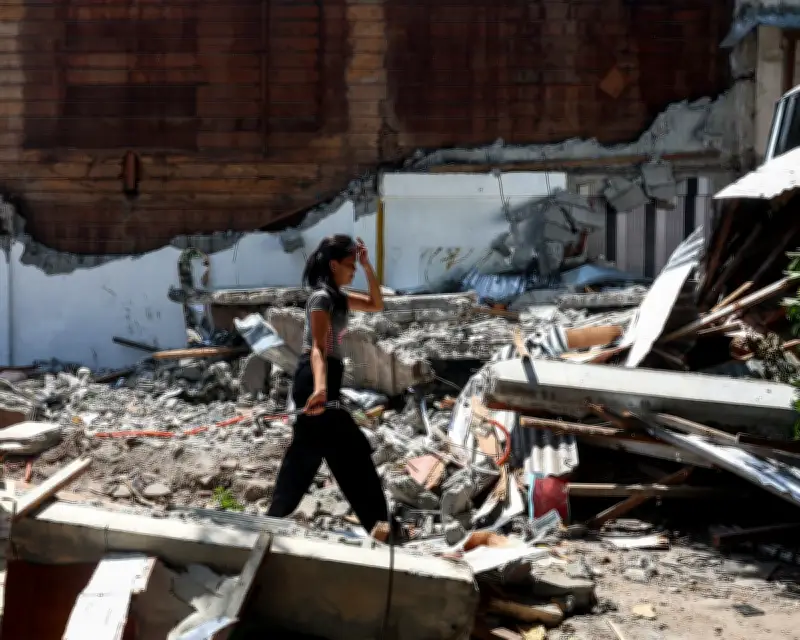
Cleanup operations are in full swing across the southern Philippines after a powerful earthquake struck the island of Mindanao, leaving a trail of destruction. The earthquake, which hit on Tuesday, has caused significant damage to infrastructure and homes, with authorities now focusing on search and rescue efforts and assessing the full extent of the damage.
Impact and Response
The earthquake, measured at magnitude 6.8 by the Philippine Institute of Volcanology and Seismology, struck near the coastal town of Governor Generoso in Davao Oriental province. The quake was felt across several provinces in Mindanao, triggering panic and causing buildings to sway. At least 10 people have been reported dead, and dozens more are injured, according to local officials. Rescue teams are working tirelessly to reach affected areas, some of which have been isolated by landslides and damaged roads.
The Philippine government has mobilized disaster response teams, including the military and police, to assist in the cleanup and provide aid to affected communities. Emergency shelters have been set up for those displaced by the quake, and relief goods are being distributed. The Department of Social Welfare and Development has reported that over 5,000 families have been affected, with many homes either destroyed or damaged.

Infrastructure Damage
Critical infrastructure has been severely impacted. Several bridges and roads have been rendered impassable, hampering relief efforts. The Davao City International Airport was temporarily closed for inspection but has since resumed operations. Power outages have been reported in several areas, and telecommunications services have been disrupted, complicating coordination. The Department of Public Works and Highways is deploying equipment to clear debris and restore access to remote villages.
Schools and government offices in affected areas have been closed until further notice as safety inspections are conducted. Hospitals are on high alert, treating the injured and preparing for potential aftershocks. The Philippine Red Cross has deployed volunteers and resources to support the response, including first aid kits, water, and food supplies.
Community Resilience
Despite the devastation, communities are coming together to support each other. Local residents have been helping with the cleanup, clearing debris from roads and assisting neighbors in need. The spirit of bayanihan, or communal unity, is evident as people share what little they have. One resident, Maria Santos, said, "We lost our house, but we are grateful to be alive. Our neighbors have been helping us find shelter and food."
The government has assured the public that aid is on its way and that all necessary resources are being mobilized. President Ferdinand Marcos Jr. has expressed condolences to the victims and ordered a swift response. The National Disaster Risk Reduction and Management Council is coordinating with local governments to ensure a comprehensive recovery effort.
Looking Ahead
As cleanup continues, the focus is shifting to recovery and rebuilding. Engineers are assessing the structural integrity of buildings, and geologists are monitoring seismic activity for potential aftershocks. The Philippines, located on the Pacific Ring of Fire, is prone to earthquakes, and authorities are emphasizing the importance of preparedness. The government is also reviewing building codes to ensure future structures are more resilient to seismic events.
The international community has offered support, with the United Nations and neighboring countries pledging assistance. The Philippine government has thanked these offers but stated that it is currently managing the situation with domestic resources. The cleanup is expected to take weeks, with full recovery likely to take months. The resilience of the Filipino people is once again being tested, but their spirit remains unbroken.