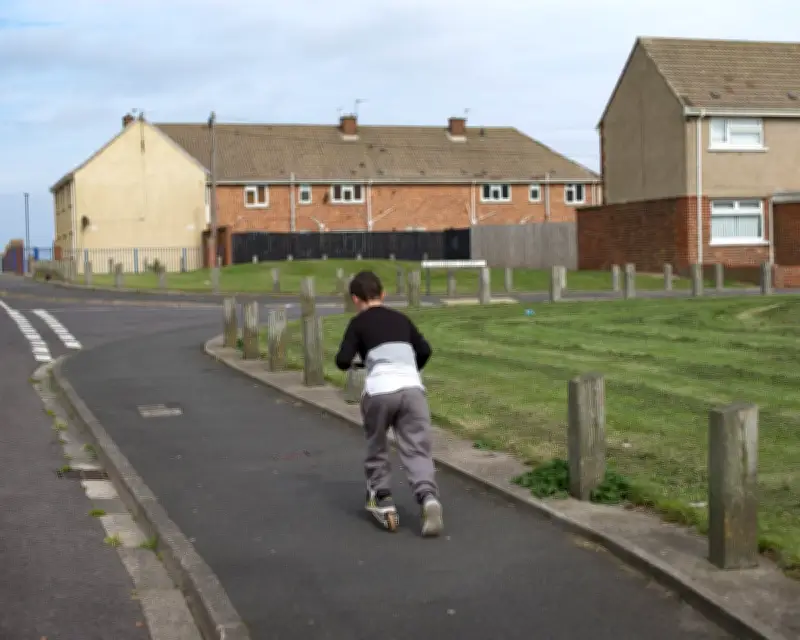
England's poorest communities are facing the deepest cuts to green space under proposed changes to planning laws, a new report has found. The report, commissioned by a coalition of wildlife and environmental NGOs, warns that new loopholes for developers will exacerbate extreme environmental disparities.
More than 7.4 million people in England already live in areas completely devoid of immediate biodiversity, including 1.42 million children under 15. The severe nature poverty is driven not by the rural-urban divide, but by extreme environmental disparities within towns and cities, the report says.
Biodiversity Net Gain Rules Under Threat
Biodiversity net gain rules, introduced in 2024, made it mandatory for most new developments in England to deliver at least a 10% increase in biodiversity value. The UK is one of the most nature-depleted countries in the world, and the landmark policy was intended to help nature recovery. It was considered world-leading and was referenced at COP16 in Cali, Colombia, and replicated in countries such as Saudi Arabia, the Netherlands, and India.

However, the Labour government, which has a target to build 1.5 million homes by the end of this parliament, introduced a series of exemptions for housebuilders after lobbying from the sector. These include an exemption for sites of 0.2 hectares (0.5 acres) and under, and a proposed exemption for brownfield sites up to 2.5 hectares, which is currently out for consultation.
Impact on Poorest Communities
The coalition of charities warns that the exemptions will hit the poorest communities in England, depriving them of access to nature while more affluent people continue to enjoy green environments. The report, published on Thursday, shows that in the most deprived areas, four in five (82%) planning applications are for small sites under 0.2 hectares. Over one year, the exemption for small sites could mean the loss of biodiversity equivalent to nearly 11,000 mature trees or 400 football pitches of wildflower meadow.
In addition, four times as many potential brownfield homes are concentrated in the poorest fifth of England's population compared with the richest fifth.
Richard Benwell, CEO of Wildlife and Countryside Link, said: "Nature should not be a luxury reserved for the wealthy. England's poorest communities are already being left with the worst access to nature, and biodiversity net gain loopholes are further exacerbating this problem. If ministers are serious about tackling inequality and improving people's health, they must stop weakening nature protections and make sure every community benefits from greener, healthier places to live. If ministers weaken these rules, it is ordinary people in poorer communities who lose out."
Calls for Action
The charities are calling for the brownfield site exemption to be scrapped and for the government to enact a legally binding five-year policy lock to protect biodiversity net gain from further detrimental changes.
Jason Reeves, head of policy at the Chartered Institute of Ecology and Environmental Management, said: "This report shows the government's proposed brownfield exemptions double down on that inequality: brownfield housing capacity is four times more concentrated in deprived areas than wealthy ones. Our members see every day how nature-integrated development reduces flood risks, protects property values, and brings positive health outcomes. Denying the nation's poorest communities those benefits isn't just bad for the environment, it risks undermining the government's own housing ambition of safe and decent homes for all."
Across England, the most deprived 20% of neighbourhoods have almost a third of people facing highly restricted biodiversity access, nearly three times the rate of the most affluent communities. In London, Croydon shows the most extreme inequality in access to nature, with its most affluent neighbourhoods enjoying 73% biodiversity access against just 24% in the most deprived, a 48 percentage point gap within a single local authority.

Carl Bunnage, the RSPB's head of nature policy, said: "It is time for the government to stop dismantling what should have been a world-leading policy, especially as those in society already missing out will be hit hardest. The biodiversity net gain system must be restored so it delivers nature on everyone's doorsteps as originally intended."
The Department for Environment, Food and Rural Affairs has been approached for comment.