Margot Robbie's Red-Carpet Fashion Stuns at Wuthering Heights Premiere
Australian actress Margot Robbie has transformed the red-carpet premieres for her upcoming film Wuthering Heights into a personal fashion showcase, captivating audiences with a series of daring looks that reflect the movie's gothic aesthetic. Collaborating once again with stylist Andrew Mukamal, known for orchestrating her highly publicised Barbie press tour wardrobe, Robbie has embraced a darker and more dramatic vision for these events.
Controversial Necklace Takes Center Stage
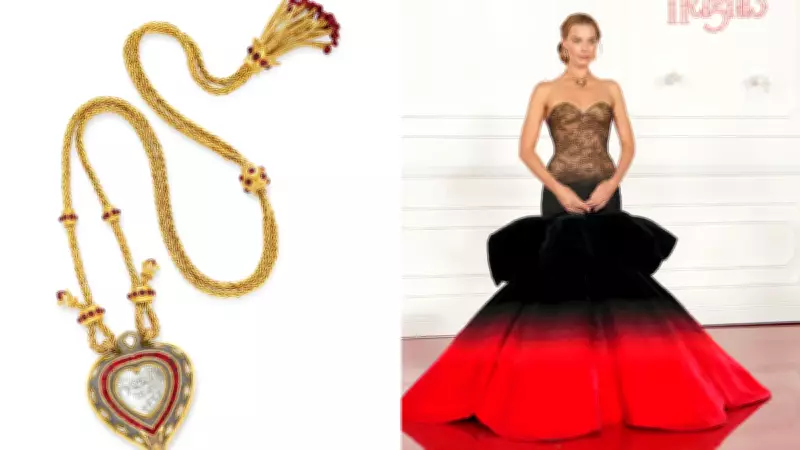
However, it was Robbie's debut appearance at the first premiere in Los Angeles that has sparked the most intense debate. The actress made a grand entrance in a striking Schiaparelli gown, featuring a black lace bodice and a voluminous mermaid skirt that transitioned from black to red. Yet, the couture dress was overshadowed by the historic diamond necklace she wore around her neck.
Robbie adorned the Taj Mahal diamond necklace, currently owned by the renowned jewellery brand Cartier. Often regarded as one of Hollywood's most famous pieces, this necklace gained widespread fame through actress Elizabeth Taylor, who received it as a gift for her 40th birthday. On the red carpet, Robbie described the $US8 million (approximately $12 million) jewel as having "a lot of romantic history" and feeling "appropriate for tonight."

Unpacking the Necklace's Complex History
Despite Robbie's remarks, critics have argued that the deeper origins of the necklace were largely overlooked in the media coverage. The heart-shaped, table-cut diamond, set within a red stone and jade mount, dates back to the early 17th century. It was first owned by Empress Nur Jahan, who received it from her husband, Mughal Emperor Jahangir.
The diamond was later inherited by their son, Emperor Shah Jahan, who gifted it to his wife Mumtaz Mahal. After her death, Shah Jahan commissioned the Taj Mahal in her honour, which inspired the name by which the jewel is now known. Following this period, the history of the gem becomes unclear, but most historians believe it remained in India until it transferred into private hands during British colonisation.
In 1971, Cartier acquired the stone and remounted it in its current form: a heart-shaped pendant framed by rubies and diamonds in a jade-accented setting. House designer Alfred Durant created the woven gold and ruby-studded chain, reportedly referencing the cord that Nur Jahan was said to have worn. The following year, Richard Burton purchased the necklace from Cartier as a gift for Elizabeth Taylor, cementing its association with the Hollywood icon.
Criticism Over Historical Erasure
While Robbie mentioned the "woman who was buried at the Taj Mahal" as the original owner, some critics have asserted that this acknowledgment did not go far enough. Indian fashion magazine Khush commented: "It's wild that even in 2026, Western narratives still take centre stage, while the past is reduced to a footnote or, worse, quietly erased. It's time to get familiar."
Reddit users also contributed to the debate, with one noting: "What's uncomfortable is how casually this history is glossed over. Hollywood continues to celebrate and take pride in objects made famous by celebrity ownership, while ignoring the fact that many of these 'icons' are the result of colonial plunder. Calling it an Elizabeth Taylor necklace may be convenient but it erases centuries of South Asian history and that's something worth acknowledging, not applauding."
This controversy highlights ongoing discussions about cultural appropriation and the importance of recognising the full historical context of significant artefacts, especially in high-profile events like film premieres.