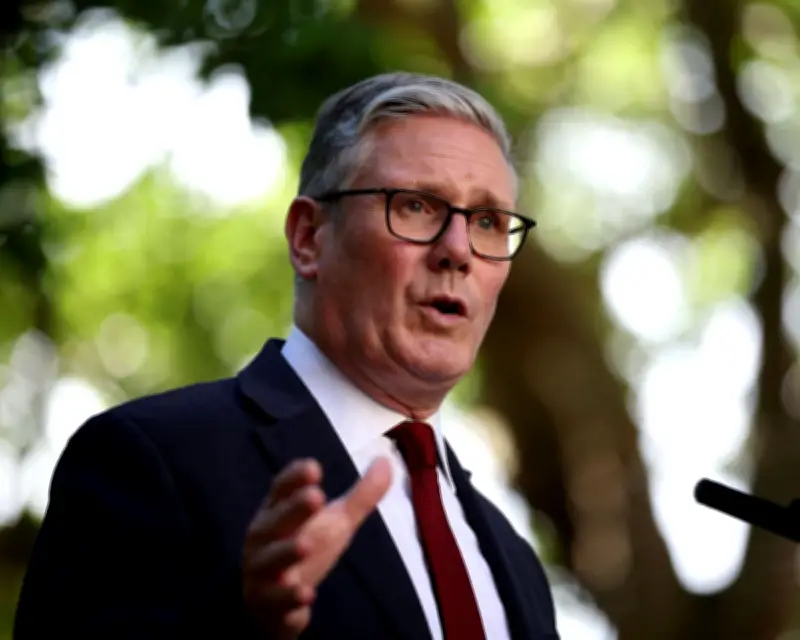
UK Prime Minister Keir Starmer has urged European NATO members to ramp up defence spending to 3% of their GDP, warning that the United States may not always guarantee Europe's security. Speaking at the Ankara summit on Monday, Starmer said Europe must take greater responsibility for its own defence, especially as the war in Ukraine enters its third year.
Starmer's Call for Increased Defence Investment
In his address to NATO leaders, Starmer emphasised that the alliance must adapt to a more dangerous world. 'We cannot rely on the United States to carry the burden indefinitely,' he said. 'Every European member must step up and meet the 3% target.' Currently, only a handful of NATO members meet the existing 2% guideline, and Starmer's proposal would require significant increases from countries like Germany, Italy, and Spain.
US Commitment Under Scrutiny
The prime minister's remarks come amid growing concern that a future US administration could reduce its military footprint in Europe. With the US presidential election approaching, some European leaders fear that a return to isolationist policies could leave the continent vulnerable. 'We have to be prepared for any scenario,' Starmer added. 'The best way to deter aggression is to show we are willing to invest in our own security.'

Ukraine and NATO Expansion
Starmer also reiterated the UK's support for Ukraine's eventual membership in NATO, though he acknowledged that this would not happen until the conflict with Russia ends. 'Ukraine’s future is in NATO,' he stated. 'But we must first ensure that the war ends on terms that respect Ukraine's sovereignty.' The summit also discussed Sweden's recent accession to the alliance, which Starmer called 'a historic step' that strengthens NATO's northern flank.
Reactions from European Leaders
European leaders have given mixed responses to Starmer's 3% target. Polish President Andrzej Duda, whose country already spends over 4% of GDP on defence, welcomed the call. 'Poland has been a model for defence spending,' Duda said. 'I hope others follow our example.' However, German Chancellor Olaf Scholz was more cautious, noting that Berlin has already committed to reaching 2% by 2028. 'We need to be realistic about what is achievable,' Scholz commented.
Impact on NATO's Future
Analysts say that Starmer's push could reshape the alliance's financial dynamics. According to a recent NATO report, European members and Canada collectively spent about 1.7% of GDP on defence in 2025, far short of the 2% target. Raising the bar to 3% would require an additional €200 billion annually across the alliance. 'This is a significant ask,' said Dr. Emily Thornberry, a defence expert at the Royal United Services Institute. 'But it reflects the gravity of the security environment.'
Next Steps
The summit is expected to conclude with a communiqué reaffirming NATO's commitment to collective defence, but without a binding agreement on the 3% target. Starmer acknowledged that the goal is ambitious but necessary. 'History will judge us not by our intentions, but by our actions,' he said. 'We must act now to secure our future.'