Strait of Hormuz Reopens Under Fragile Ceasefire with Strict Conditions
The Strait of Hormuz has been declared open to commercial vessels under a fragile ceasefire, marking a significant shift after weeks of disruption to one of the world's most critical shipping routes. This move comes with strict conditions on vessel movements and the US naval blockade still in place, as global markets and supply chains continue to respond to the ongoing uncertainty.
First Cruise Ship Departs Persian Gulf After Month-Long Shutdown
A cruise ship has become the first passenger vessel to leave the Persian Gulf after 47 days stranded due to the Middle East conflict, passing through the Strait of Hormuz following its reopening under the ceasefire. Tracking data showed Greece-based Celestyal Cruises' Discovery departing Dubai and clearing the strait, marking the first cruise ship in the region to begin the journey back to open waters.
The reopening has cleared a path for cruise ships that had been unable to leave since late February, when escalating conflict forced vessels to remain docked across ports in Dubai, Abu Dhabi, and Doha. Cruise ships had been stranded in the region alongside hundreds of other vessels, with an estimated 20,000 seafarers waiting to pass through the critical waterway.

Despite this breakthrough, uncertainty remains, with operators still cautious about sending ships through the strait as security concerns persist. Many shipping companies are hesitant to re-enter the region due to ongoing risks, including potential mine threats and concerns over the stability of the ceasefire.
Iran Agrees to Reopen with Specific Limitations
Iran has agreed to reopen the Strait of Hormuz to commercial shipping following the announcement of a ceasefire in Lebanon, easing pressure on global fuel supply, but with strict conditions still in place. The strait is limited to commercial vessels only, with no naval assets permitted, and all ships required to receive pre-approval from Iranian forces and travel along designated routes.
Iranian Foreign Minister Abbas Araghchi said the passage was "declared completely open" under coordinated routes set by Iran's Ports and Maritime Organisation. He posted on X: "In line with the ceasefire in Lebanon, the passage for all commercial vessels through Strait of Hormuz is declared completely open for the remaining period of ceasefire, on the coordinated route as already announced by Ports and Maritime Organisation of the Islamic Rep. of Iran."
US Response and Ongoing Tensions
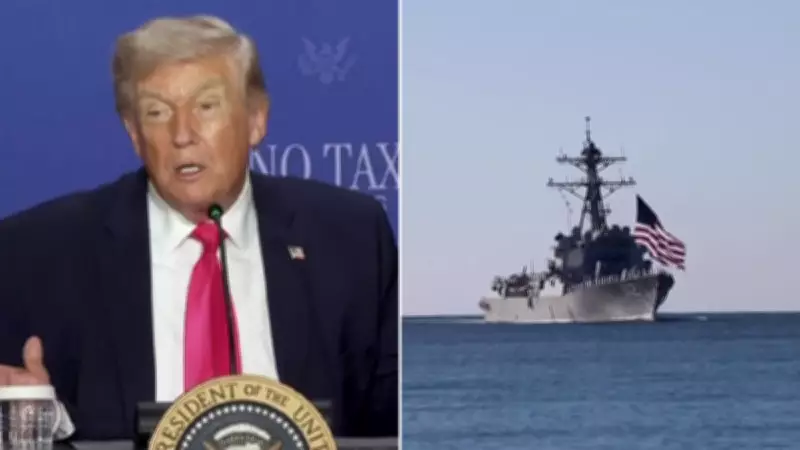
US President Donald Trump acknowledged the announcement, writing "THANK YOU!" on Truth Social, while confirming the US naval blockade would remain in place. He added: "UNTIL SUCH TIME AS OUR TRANSACTION WITH IRAN IS 100% COMPLETE. THIS PROCESS SHOULD GO VERY QUICKLY IN THAT MOST OF THE POINTS ARE ALREADY NEGOTIATED."
However, Tehran warned it would consider closing the strait again if the US blockade of Iranian ports remained in place, setting up a potential clash between the two positions. This tension adds to the fragility of the situation, with global observers closely monitoring developments.
The reopening, while a positive step, leaves many questions unanswered for the shipping industry and international trade, as the delicate balance between ceasefire terms and geopolitical pressures continues to unfold.