US Declares Victory Over Iran as Two-Week Ceasefire Takes Effect
The United States has officially declared a historic victory in its military conflict with Iran, asserting that Operation Epic Fury has largely destroyed Iran's military capabilities. This announcement coincides with the start of a two-week ceasefire between the two nations, brokered under intense pressure.
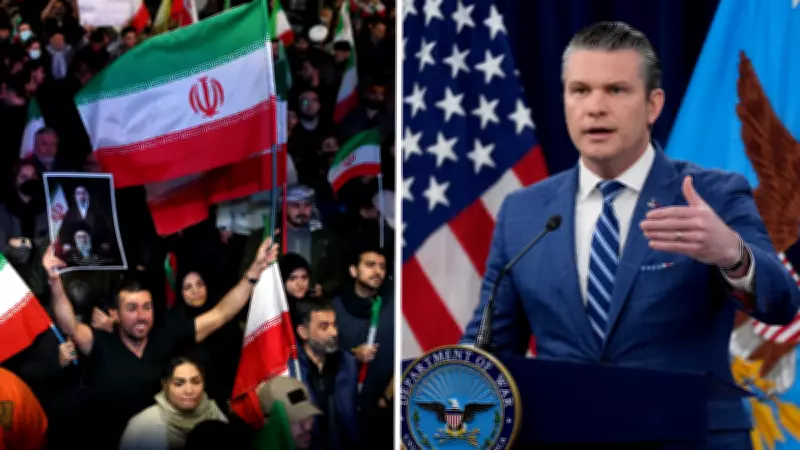
US Defence Secretary Pete Hegseth, speaking at a Pentagon press conference, described the operation as a decisive triumph. "Operation Epic Fury was a historic and overwhelming victory on the battlefield, a capital V military victory," Hegseth stated. He emphasized that the campaign has rendered Iran's military "combat ineffective for years to come."
Ceasefire Terms and Contradictory Intelligence
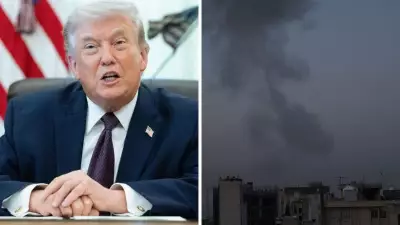
The ceasefire, announced by former President Donald Trump via Truth Social, is described as a "double-sided ceasefire" contingent on Iran opening the Strait of Hormuz. "Subject to the Islamic Republic of Iran agreeing to the COMPLETE, IMMEDIATE, and SAFE OPENING of the Strait of Hormuz, I agree to suspend the bombing and attack of Iran for a period of two weeks," Trump declared.

However, this declaration of victory is met with conflicting intelligence reports. Sources from CNN indicate that US intelligence assessments show approximately half of Iran's missile launchers remain operational, and thousands of attack drones are still in Iran's arsenal. Hegseth acknowledged these remnants but downplayed their significance, stating, "What little they have left, buried in bunkers, is all they will have."
He added that while Iran "can still shoot," its command and control systems are so severely degraded that coordinated attacks would be "very, very unwise." The US military will remain in the region during the ceasefire, with Hegseth affirming, "We'll be hanging around, we're not going anywhere."
Iran's Response and Regional Demands
Iran's Revolutionary Guards (IRGC) have stated they will observe the temporary ceasefire but issued a stern warning. The IRGC declared readiness to resume hostilities if the "enemy makes another miscalculation," boasting of extensive experience from previous conflicts. Iran claims victory from the ceasefire, asserting that Trump has accepted Tehran's conditions.
A key Iranian demand for a permanent end to hostilities is the complete withdrawal of US military forces from all bases in the region, a condition likely unacceptable to Washington. The IRGC has also called on US allies in the Middle East to cease cooperation with the United States.
Strait of Hormuz and Nuclear Concerns
The status of the Strait of Hormuz, a critical global shipping lane, remains a focal point. Trump suggested a "joint venture" with Iran to control the strait, a proposal that experts warn could undermine international maritime law. Joint Chiefs Chairman General Dan Caine and Hegseth both stated they believe the strait is now open, with commercial traffic beginning to flow. MarineTraffic data confirms at least two vessels have transited safely since the ceasefire began.
On the nuclear front, Hegseth announced that any nuclear material Iran "should not have" will be removed under the ceasefire terms, a claim not confirmed by Iranian officials. "The president has been clear from the beginning — there will be no Iranian nuclear weapons. Period, full stop," Hegseth asserted, referencing plans to secure uranium stockpiles.
Ongoing Regional Conflict with Lebanon
While the US-Iran ceasefire holds, regional tensions persist. The Israeli military has launched its largest wave of strikes across Lebanon since the invasion began, targeting over a hundred Hezbollah command centers and military sites. The Israel Defense Forces (IDF) stated these strikes, conducted in Beirut, Beqaa, and southern Lebanon, were meticulously planned to "deepen the damage" while attempting to minimize civilian casualties, though much of the infrastructure hit was located within civilian areas.

The situation remains fluid, with the two-week ceasefire providing a temporary respite but underlying issues unresolved. The declarations of victory from both sides highlight the complex and contentious nature of this conflict, with significant military, diplomatic, and humanitarian implications for the Middle East and beyond.