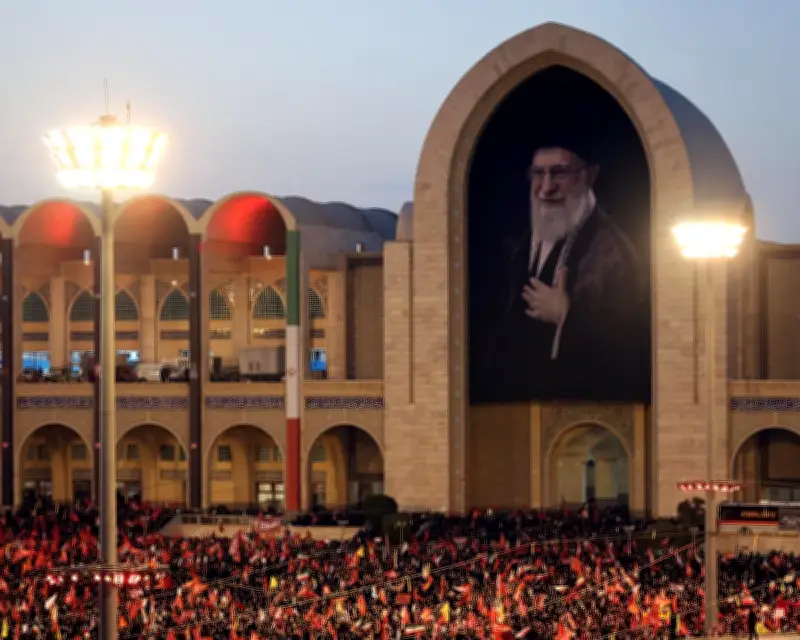
Millions of mourners flooded the streets of Tehran on Monday for the funeral of Iran's Supreme Leader Ayatollah Ali Khamenei, who died at the age of 85 after a prolonged illness. The event, one of the largest public gatherings in Iran's history, drew crowds that stretched for kilometers along the main procession route from Tehran University to Azadi Square.
Massive Turnout and Security
State media reported that over 5 million people participated in the funeral, with many traveling from provinces across the country. Security forces were deployed in large numbers, but no major incidents were reported. The government declared a national holiday and closed schools and businesses for the day.
According to official statements, the funeral procession lasted over six hours, with mourners chanting slogans and carrying portraits of Khamenei. The atmosphere was a mix of grief and reverence, as many saw him as a pivotal figure in Iran's post-revolutionary history.

International Reactions
World leaders offered condolences, with Russian President Vladimir Putin calling Khamenei an "outstanding statesman." China's Xi Jinping praised his role in strengthening Iran-China relations. However, Western reactions were more measured; the US State Department issued a brief statement acknowledging his influence while reiterating concerns over Iran's human rights record.
Analysts note that Khamenei's death marks the end of an era, as he had been Supreme Leader since 1989. His successor, President Ebrahim Raisi, is expected to assume interim leadership until the Assembly of Experts appoints a new Supreme Leader.
Impact on Domestic Politics
The funeral also served as a platform for political messaging. Hardline factions used the event to call for continuity of Khamenei's policies, while reformist voices were largely absent. "The Leader's legacy will guide us through these turbulent times," said Hossein Salami, commander of the Islamic Revolutionary Guard Corps, in a speech at the ceremony.
Economic challenges, including inflation and sanctions, remain pressing issues for the new leadership. The transition period is seen as critical for Iran's future direction, both domestically and in its foreign policy.