
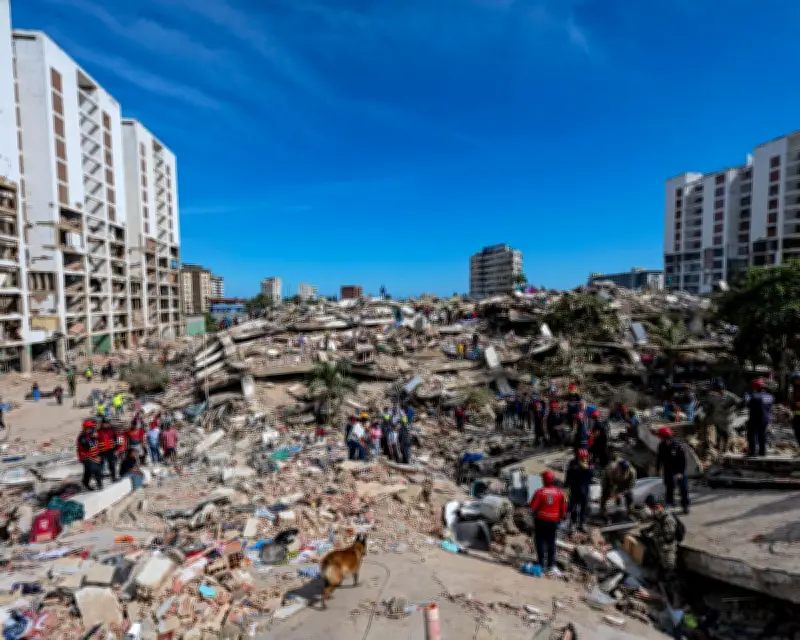
Rescue teams are racing against time in Venezuela after a powerful 7.3 magnitude earthquake struck the country's northern coast, killing at least 12 people and injuring dozens more. The quake, which hit at 2:45 a.m. local time on Tuesday, caused widespread damage in the states of Sucre, Anzoátegui, and Miranda, collapsing buildings and triggering landslides that have hampered rescue efforts.
Casualties and Damage
According to the Venezuelan interior ministry, at least 12 people have been confirmed dead, with 35 others injured. The death toll is expected to rise as search and rescue operations continue. The hardest-hit area appears to be the town of Cumaná in Sucre state, where several older buildings collapsed. "We are working tirelessly to find survivors under the rubble," said Interior Minister Carmen Meléndez in a televised address. "Every minute counts."
Rescue Operations
More than 1,000 emergency personnel, including firefighters, police, and military units, have been deployed to the affected regions. International aid offers have poured in from neighboring countries, including Colombia and Brazil. The Venezuelan government has declared a state of emergency in the three affected states and is coordinating relief efforts. However, rescue teams face significant challenges due to damaged roads and landslides that have cut off access to some communities.

Seismic Context
The earthquake, which occurred at a depth of 10 kilometers, was felt across much of northern Venezuela, including the capital Caracas, where buildings swayed and residents fled into the streets. The United States Geological Survey (USGS) reported that the quake was followed by several aftershocks, the largest measuring 5.2 magnitude. Venezuela lies in a seismically active region along the Caribbean plate boundary, but earthquakes of this magnitude are rare. The last major quake in the country was a 6.3 magnitude event in 2018.
Impact on Infrastructure
In addition to the human toll, the earthquake has caused significant damage to infrastructure. Reports indicate that at least 50 homes have been destroyed, and hundreds more have been damaged. Power outages have been reported in several areas, and the country's already fragile electricity grid is under strain. Hospitals in the affected regions are treating the injured, but some have reported damage to their facilities, complicating medical care.
Government Response
President Nicolás Maduro has visited some of the affected areas and pledged full government support for the rescue and recovery efforts. "We are with our people in this difficult time," he said in a statement. "All resources will be made available to help those in need." However, critics have pointed to the government's slow response in previous natural disasters and the ongoing economic crisis, which may hamper relief efforts. The country is also grappling with hyperinflation and shortages of basic goods, including fuel and medical supplies.
International Assistance
Several countries have offered assistance, including the United States, which has offered humanitarian aid despite the lack of diplomatic relations between the two countries. The United Nations has also expressed readiness to provide support. The Venezuelan government has accepted offers from some countries but has yet to respond to others, citing logistical challenges.
Looking Ahead
As rescue efforts continue, the focus is on finding survivors and providing medical care to the injured. The full extent of the damage is not yet known, but it is clear that the earthquake has dealt a severe blow to a country already in crisis. The coming days will be critical in determining the scale of the disaster and the effectiveness of the response.