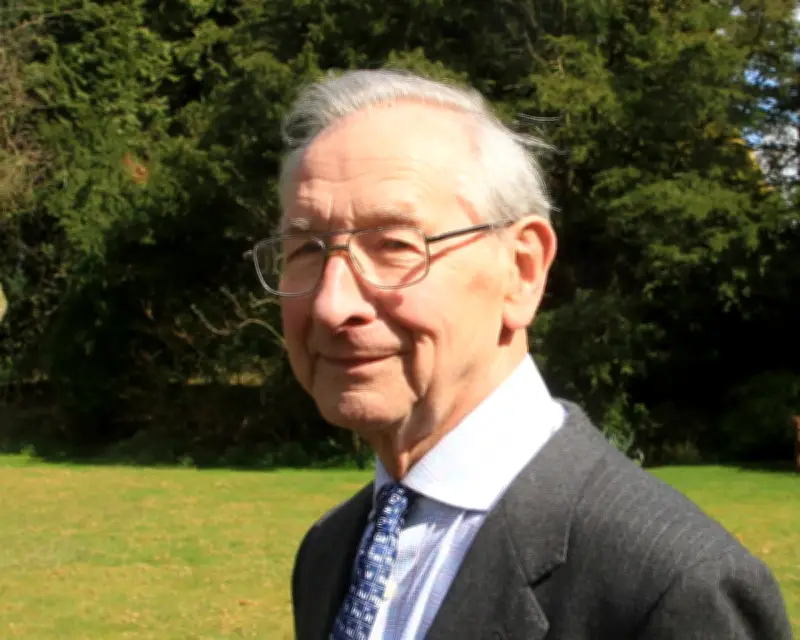
Peter Checkland, the British management scientist who created soft systems methodology (SSM), has died at the age of 95. His approach revolutionised how organisations tackle messy, ill-defined problems involving human behaviour.
Early life and career
Born in 1930 in Birmingham, Checkland studied chemistry at the University of Oxford before working for ICI. He later moved to academia, joining the University of Lancaster in 1969, where he developed SSM as a response to the limitations of traditional 'hard' systems thinking in dealing with human and organisational complexity.
Soft systems methodology
SSM emerged from action research projects with real organisations. Unlike hard systems approaches that assume clear objectives, SSM acknowledges that different stakeholders have different worldviews. The methodology uses rich pictures, root definitions, and conceptual models to explore and negotiate shared understanding. Checkland's seminal book, 'Systems Thinking, Systems Practice', published in 1981, remains a cornerstone text.

According to Professor John Mingers of the University of Kent, 'Checkland's work was a paradigm shift. He showed that systems thinking could be applied to the soft, messy problems that managers actually face.'
Impact and legacy
SSM has been adopted worldwide in fields from healthcare to information systems. Checkland continued refining the methodology until his retirement in the late 1990s. He received numerous awards, including an honorary doctorate from the Open University. Colleagues remember him as a rigorous thinker who insisted on practical relevance.
He is survived by his wife, two children, and four grandchildren. A memorial service will be held at Lancaster University later this year.