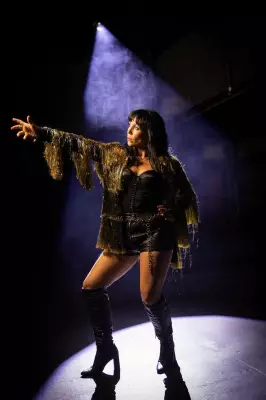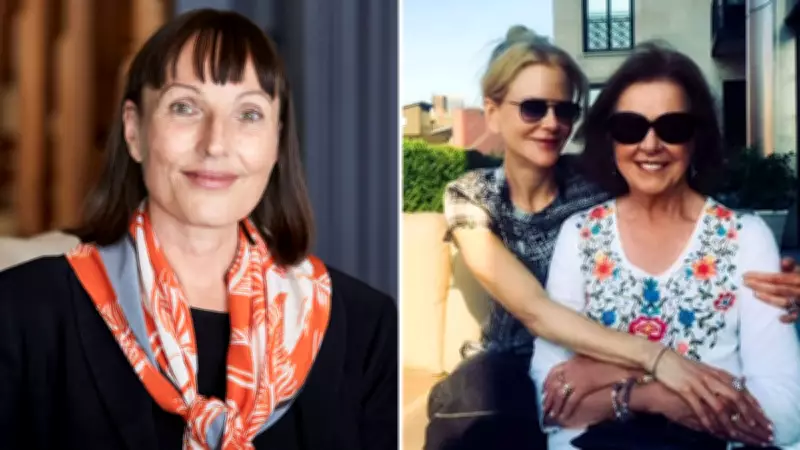
Hollywood actress Nicole Kidman has revealed she was inspired to explore the world of death doulas after losing her mother, Janelle, who felt lonely during her final days despite her family's best efforts.
Kidman told journalist Hoda Kotb at a HISTORYTalks event in Philadelphia earlier this month that her mother's experience highlighted a gap in care.
"Between my sister and I, we have so many children and our careers and our work, and wanting to take care of her because my father wasn't in the world anymore," Kidman said.

"And that's when I went, 'I wish there were people in the world who were there to sit impartially and just provide solace and care'.
"So that's part of my expansion and one of the things I will be learning."
The Babygirl star admitted the concept "sounds a little weird" but her experience made her realise how much easier the process could have been if she had known about doulas — not only for her mother but for the whole family.
What is a death doula?
Sydney-based doula Victoria Spence, 60, told 7NEWS.com.au her team at Life Rites provides focused, personalised services to guide people through end-of-life and after-death care.
Services can include care planning, emotional support, home vigils and funeral planning.
"A doula is a non-medical, but medically literate, professional who can help you navigate the death systems," Spence said.
"We support your family and support you with your shock, your grief and your fear.
"Provide a really reassuring presence."
'It shapes how well people can grieve'
The first thing Spence wants to clarify is she doesn't use the term "death" doula, because the care she and her team provide begins before death, continues through every practical decision and extends long after the funeral concludes.
Spence has been helping people for more than 20 years across the many stages before and after death, and prefers to describe herself as a mortality or end-of-life doula.
She was drawn to this work after losing her father when she was in her 20s.
"His death was magnificent, but the funeral was just a travesty," Spence explained.
"It was just one of those really bad funeral experiences."
After later losing friends, Spence realised she had a "weirdly disproportionate level of exposure to death, dying and grief".
"Over the years I started to see how vital it was for people to get the support they needed at the time they're dying and for the people that love them," Spence said.
"Because it really shaped how well people could or couldn't grieve."
Eight years after her father's death, Spence's mother died and she was able to honour her end-of-life wishes. That experience prompted her to formally integrate end-of-life and after-death care through Life Rites.
Helping to reduce trauma that comes with loss
Now, Spence and her team are independent funeral directors, mortality, dementia and end-of-life doulas, counsellors and celebrants based in Sydney.
Spence said while doulas are not medical professionals, many are trained counsellors with a strong understanding of the healthcare system, allowing them to offer practical support during what can be an overwhelming time.
They can attend doctor's appointments, help interpret medical jargon and guide families through the shock of a diagnosis. It's not all "woo-woo", as some might assume.
"We can hold hands and make cups of tea," Spence said.
"It all helps towards navigating the existential realities of their mortality.
"I often say a doula is someone that's your scout that can be three steps ahead of where you are, so you can be in what's happening.
"We've got you. We've got your back."
Spence has seen firsthand the difference these services can make for families, helping to reduce the trauma that often accompanies loss.
Most doulas are very practical people
So why is there still so little understanding of what doulas do?
"People still think it's all sort of new agey and touchy, feely," Spence said.
"But I'm probably one of the most practical, down-to-earth people you're ever going to meet."
Most doulas are skilled and trained, often coming from a medical profession, like a nurse or a midwife.
"They bring a whole lot of incredible, already existing skills," Spence said.

"Most are very practical people.
"Of course you will get your 'woo-woos', doulas who read Tarot cards, read tea leaves and talk to your dead, but I don't endorse any of that.
"It's fine to have a place but doulas are professional counsellors."
Spence said greater awareness among medical professionals could also lead to more referrals for patients and their families.
She also wants people to understand the service isn't just for the wealthy — having worked with people in prison and lower-income communities.
"That's a lot of what we do, supporting people in their most vulnerable moments," Spence said.