Brisbane Deemed 'Too Hard' to Navigate Without a Car Amid Rising Fuel Costs
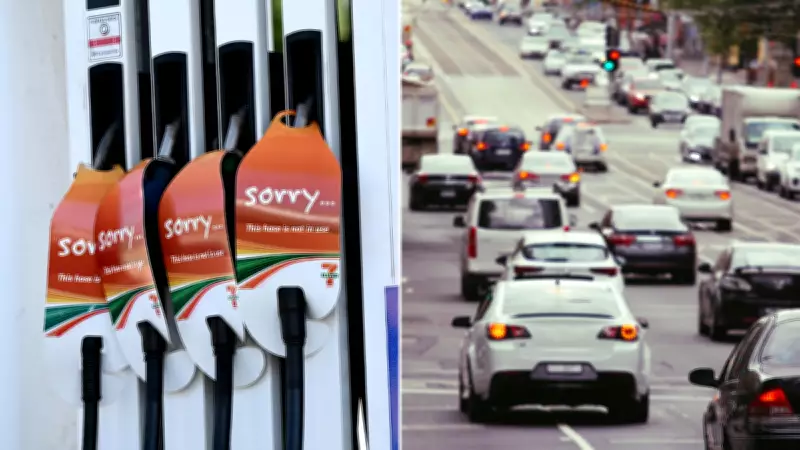
One of Australia's largest cities, Brisbane, has been found to be "too hard" to navigate without a car, as escalating fuel costs driven by conflict in the Middle East intensify pressure on household budgets. The US-Israeli conflict involving Iran has triggered a global energy shock, pushing oil prices higher and reigniting discussions around fuel rationing not seen since the 1979 oil crisis. Reducing reliance on private vehicles, including shifting to public transport or cycling, is increasingly being debated as a strategy to manage fuel demand and protect essential services.
University of Queensland Study Highlights Car Dependence
A University of Queensland (UQ) study has uncovered that Brisbane residents struggled significantly to maintain everyday life without a car, shedding light on a broader national challenge in low-density cities. Urban planning researchers Associate Professor Dorina Pojani and PhD scholar Sufian Almubarak recruited 10 Brisbane car owners and instructed them to abandon their vehicles for 20 days, relying instead on public transport, walking, cycling, scooters, and ride-share services as needed.
Most participants resided within two kilometres of the CBD, while others were situated further out in suburbs like Manly, Indooroopilly, and Oxley. All but one were employed or studying during the trial, representing a mix of inner-city and suburban travel conditions. Despite support such as public transport cards and reimbursements for emergency trips, participants found the experience increasingly arduous, with all reporting relief when it ended and dismissing the idea of a permanent shift away from driving.

"The overwhelming feedback was that it's just too hard to live without a car in Brisbane," Pojani stated. "It's ultimately a sprawling, low-density city with a lack of integrated transport options — obstacles that have been shaped by historic planning decisions."
Broader National Pattern of Car Reliance
Brisbane's struggles mirror a wider national trend, but car dependence is even more pronounced in sprawling urban areas. In 2025, approximately 61–64 per cent of Australians commuted by car, according to the Bureau of Infrastructure and Transport Research Economics (BITRE). More than half of Australians drive daily, while two-thirds of children living over three kilometres from school travel by car, underscoring how the nation's transport system remains heavily centered on private vehicles.
Over the three-week study period, initial enthusiasm waned as participants described the experience as confusing and disruptive, with transport limitations adversely affecting their daily routines and overall quality of life. "Active and public transport took precedence in lieu of cars, although the experience with public transport in Brisbane was mixed due to major service gaps outside the inner city," Pojani explained.
She noted that Queensland's 50-cent fares have enhanced public transport accessibility, reflected in rising usage. "Still, our study indicates that even with cheaper travel, many people feel they can't rely on public transport alone and continue to depend on their cars."
Financial and Practical Impacts on Households
This dependence is also straining household finances. Australians travel an average of 37 kilometres and spend about $19 daily on commuting, according to the Real Insurance 2025 Commuter Report. Congestion compounds the burden, costing commuters an estimated $2788 annually, as families, particularly in outer suburbs, remain tethered to cars for work, school runs, and daily activities.
Parents in the study discovered that transporting children to school and extracurricular activities was nearly impossible without a car. They frequently relied on others with vehicle access, while family outings and trips out of town were largely abandoned. Although a few participants expressed willingness to use public transport more for short inner-city trips, none believed entirely giving up their car was feasible.

"It demonstrates that in low-density, sprawling cities like Brisbane, people cannot be expected to permanently give up driving unless there is significant investment in public transport," Pojani emphasized.
Government Responses and Future Implications
In response to these challenges, Prime Minister Anthony Albanese recently announced a temporary cut to fuel excise, while Victoria and Tasmania have introduced free or heavily subsidised public transport initiatives to alleviate cost-of-living pressures. These measures aim to address the dual issues of affordability and accessibility in Australia's transport landscape.
The figures underscore the scale of car reliance: Australians travelled 264 billion kilometres on roads in 2024–25 and consume about 59 billion litres of transport fuel annually, according to BITRE. As global conflicts and economic factors continue to influence fuel prices, the need for sustainable transport solutions becomes increasingly urgent, highlighting the critical role of urban planning and policy reforms in shaping future mobility.