
Chalmers Slams Ley's 'Inappropriate' Attack on Treasury Secretary Over RBA Rate Hike
Chalmers Slams Ley's Attack on Treasury Secretary Over RBA Rate Hike

Chalmers Condemns Ley's 'Entirely Inappropriate' Attack on Treasury Secretary

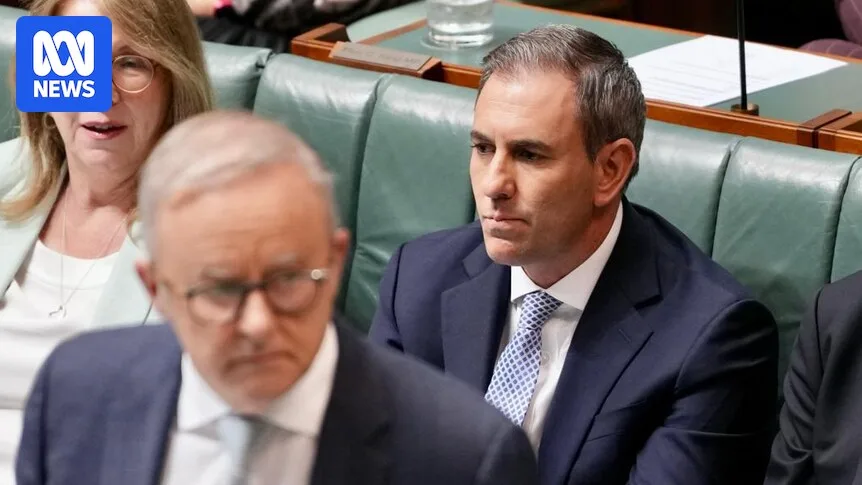
Treasurer Jim Chalmers has publicly chastised Opposition Leader Sussan Ley for what he described as an "entirely inappropriate" political jibe targeting Treasury Secretary Jenny Wilkinson. The criticism came in response to Ms Ley's comments during parliamentary question time, which sought to link Ms Wilkinson to the Reserve Bank of Australia's recent decision to increase interest rates.

Political Sparring Over Economic Management

The controversy erupted as the Liberal Party capitalised on the RBA board's move to lift the cash rate for the first time in over two years, following an unexpected surge in inflation. In her remarks, Ms Ley directly implicated Ms Wilkinson, stating: "The Prime Minister's hand-picked Secretary of the Treasury, Jenny Wilkinson, joined every other RBA board member in voting to raise interest rates. Labor spends, Australians pay ... What does it say about Labor's economic incompetence when its own Treasury secretary is voting to lift rates?"

Dr Chalmers swiftly defended Ms Wilkinson, a former deputy RBA governor who made history in June by becoming the first woman ever appointed to lead the Treasury. He characterised Ms Ley's attack as demonstrating "a level of desperation" and praised Ms Wilkinson as "one of the finest public servants that this country has ever seen."

The Role of Treasury in RBA Decisions

Emphasising the non-partisan nature of the Treasury Secretary's position, Dr Chalmers clarified: "The Treasury secretary, under governments of both political persuasions, attends these board meetings as a representative of the Treasury, not the Treasurer, not the government, and they play an important and a meaningful role there." He argued that dragging a senior public servant into partisan political disputes undermines the integrity of Australia's economic institutions.

Undeterred, Ms Ley continued her assault on the government's economic credentials in a statement to the chamber after question time, accusing Labor of making "the Reserve Bank's job harder with its reckless spending."

Debating the Drivers of Inflation

Dr Chalmers countered this claim by pointing to the RBA's published decision, which raised the cash rate by 25 basis points to 3.85 per cent. He noted that the statement highlighted "growth in private demand has strengthened substantially more than expected" and did not mention government spending as a contributing factor. "In fact, it makes it very clear that the pressure on inflation is coming from private demand," he told Parliament.

However, RBA Governor Michele Bullock provided additional context during her press conference, explaining: "We base our forecasts on total demand, which is public and private." She acknowledged that private demand had "turned out to be much stronger than we had been forecasting ... over the last six months or so," but refrained from commenting on fiscal policy, stating: "I'm not going to comment on fiscal policy, because it's an independent policy."

Governor Bullock further elaborated: "Governments have to supply services ... they have to build infrastructure, they have to make those policy decisions. We take that as given and, together with private demand, look at whether or not it means that inflation is going to be under upward pressure or not."

This exchange underscores the ongoing political battle over economic management, with the opposition seeking to blame government spending for inflationary pressures while the government points to robust private sector activity as the primary driver.