Liberal Party at a Crossroads: Calls for Split Intensify After Election Shellacking
The Liberal Party finds itself at a critical juncture, with its recent rightward shift, heavily influenced by Murdoch media, leading to a devastating defeat in the 2024 election. Over successive elections, the number of moderates within the party has dwindled to such an extent that they are now considered an endangered species. This decline raises serious questions about the party's future viability and electoral appeal.
Leadership Drift and the Struggle for Middle Australia
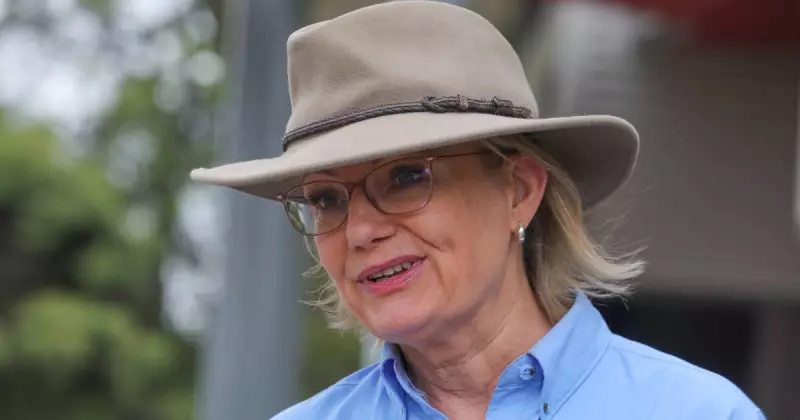
Under the leadership of Sussan Ley, the party has continued to drift further to the right in an attempt to placate the conservative wing and maintain harmony with the National Party. However, this strategy appears to be backfiring, as the party struggles to regain the trust of middle Australia. Many observers view this as a forlorn hope, particularly if potential future leaders like Andrew Hastie and Angus Taylor represent the alternatives on offer.
To have any realistic chance of returning to government, the Liberal Party may need to consider a formal split. This would allow moderates to develop credible and appealing policies on pressing issues such as housing affordability, climate action, and energy security. Such a move could help the party reconnect with voters who feel alienated by its current trajectory.

Herzog Visit Raises Questions About Hate Speech Legislation
Prime Minister Anthony Albanese has navigated a delicate path between critics of his proposed hate speech legislation from both the left and the right, arriving at a position he finds comfortable. However, whether the broader nation is on board with this approach remains uncertain. Much about the legislation's implications and implementation is still unclear, leaving room for confusion and debate.
Some clarity may emerge early next month if the planned visit from Israeli President Isaac Herzog proceeds as scheduled. As head of state, Herzog is inextricably linked to Israel's devastating war on Gaza and its ongoing actions in the Occupied Territories. Public protests at his official welcome are expected, raising critical questions about whether such demonstrations will be deemed unlawful under the new legislation. If claims that Herzog is complicit in war crimes or genocide are considered breaches, many argue the law would be fundamentally flawed.
Climate Change Whiplash: From Bushfires to Flash Flooding
Recent extreme weather events on Victoria's Great Ocean Road highlight the alarming reality of climate change. Flash flooding created chaotic scenes just days after the same region was rocked by bushfires, a phenomenon some describe as "climate whiplash." This rapid succession of disasters is far from normal and underscores the urgent need for action.
There is growing sentiment that coal and gas companies, which contribute significantly to atmospheric pollution and exacerbate extreme weather events, should be held financially responsible for the damage they cause. It is seen as deeply unfair that everyday Australians bear the brunt of corporate pollution while these companies profit from activities that harm the environment.
Australia Day Honour Sparks Controversy Over Service to the People
The decision to award Mathias Cormann a Companion of the Order of Australia for services to the people and Parliament has been met with widespread disgust. Critics point to a 2014 incident where Cormann and then-Treasurer Joe Hockey were photographed smoking expensive cigars shortly after announcing savage cuts to aged care, the Pharmaceutical Benefits Scheme, the public service, and welfare.
This image was perceived as a slap in the face to ordinary Australians, symbolising extreme arrogance and a disconnect from the hardships imposed by austerity measures. Many argue that such behaviour hardly constitutes a genuine "service to the people," calling into question the criteria for these honours.

Ball Kid Payment Debate Highlights Inequity at Australian Open
While the Australian Open offers a massive financial winners pool of $111.5 million, ball boys and girls receive no monetary payment for their contributions. Instead, they are provided with perks such as apparel, shoes, and family tickets. This stands in stark contrast to events like the US Open and Wimbledon, where young participants are paid hourly wages or fixed sums.
The defence for non-payment in Australia is that it provides valuable experience and the opportunity to work with top professional players. However, critics argue that this principle is inconsistently applied, noting that the CEO of the Open receives a salary of $2.35 million. They contend that as a commercial event, the Open should pay its young workers fairly, decrying the current arrangement as unacceptable humbug.
International Affairs: Aid to Ukraine and Board of Peace Controversy
Australia has contributed $10 million to the Ukraine Energy Support Fund, providing crucial assistance to keep lights on, homes heated, and essential services running amid Russian attacks on civilian infrastructure. This aid is particularly vital as temperatures plummet to extreme lows. Additionally, Australia has supplied RBS-70 anti-aircraft systems, which, while outdated here, remain usable and supportable in Ukraine.
In a separate development, questions have been raised about Anthony Albanese joining Trump's "Board of Peace." Some argue this could undermine the UN and contravene Labor's policy on a two-state solution. However, others point out that the UN Security Council tasked the board with Gaza's reconstruction and implementation of the Trump peace plan, which aligns with Australia's conditions for recognising a Palestinian state. The key issue is whether Australia will withdraw its recognition if the Palestinian Authority fails to deliver on reforms.
Broader Commentary: From Summernats to Honours System
Further letters to the editor touch on a range of topics, including criticism of the Summernats festival for environmental and health impacts, frustration with the honours system for rewarding people merely for doing their paid jobs, and scepticism about the "international rules-based order" promoted by Defence Minister Richard Marles. Many argue this order often serves American interests rather than Australia's, calling for greater clarity on how it benefits the nation.
These diverse perspectives reflect a vibrant public discourse on political, social, and environmental issues, highlighting the complexities facing Australia today.