Sussan Ley Advocates for National Unity Under Single Flag at NSW Council Event
Federal Opposition Leader Sussan Ley has made a significant statement regarding national symbols during an Australia Day ceremony in regional New South Wales. While attending festivities in the Federation Council area, which encompasses the border town of Corowa, Ms Ley emphasised the importance of the Australian flag as a unifying emblem for all citizens.
Council's Controversial Flag Proposal Draws National Attention
The Federation Council has recently attracted widespread scrutiny for its draft proposal to remove Aboriginal and Torres Strait Islander flags from its council chambers, retaining only the Australian national banner. This planned change has sparked considerable debate about representation and civic neutrality in local government settings.
Council mayor Cheryl Cook has defended the proposal by noting that approximately 97 percent of the local population does not identify as Indigenous. She argues that displaying only the Australian flag would provide "a clear expression of civic neutrality" within council proceedings.

Ley's Careful Positioning on the Flag Issue
When directly questioned about whether she supports the council's plan to exclude Indigenous flags, Ms Ley offered a carefully worded response that avoided explicit endorsement or rejection of the specific proposal. Instead, she focused on broader themes of national unity.
"We should unite under one flag as Australians," Ms Ley stated during her Australia Day address to an audience exceeding 250 people at Corowa's Memorial Hall. "We have just seen millions of Australians do just that on Australia Day."
The Liberal Party leader further elaborated on her perspective, describing the Australian flag as representing democracy, freedoms, and shared values that bind the nation together. She emphasised that the flag "is not a symbol of hate and it is not up for redefinition by anyone."
Community Response and Historical Context
The Federation Council's proposal has generated unprecedented public engagement, with approximately 800 submissions received during the consultation period leading up to Christmas Eve. Council general manager Adrian Butler noted this response far exceeds the typical 100 comments received for most matters open for public input.
The heightened attention has been attributed to extensive media coverage across multiple platforms, including The National Indigenous Times, The Guardian, ABC radio in Sydney, and The Noticer website.
Local councillor David Harrison has expressed concerns about how the flag decision might be perceived in light of recent community events. He referenced white supremacist demonstrations that occurred in Corowa's Sanger Street during October 2024, suggesting the flag removal could be seen as part of a troubling pattern.
"I can understand how someone can see it cascading," Cr Harrison told The Guardian. "We need to draw a line here and say that this is not what our community is about."
Visual Symbolism at the Australia Day Event
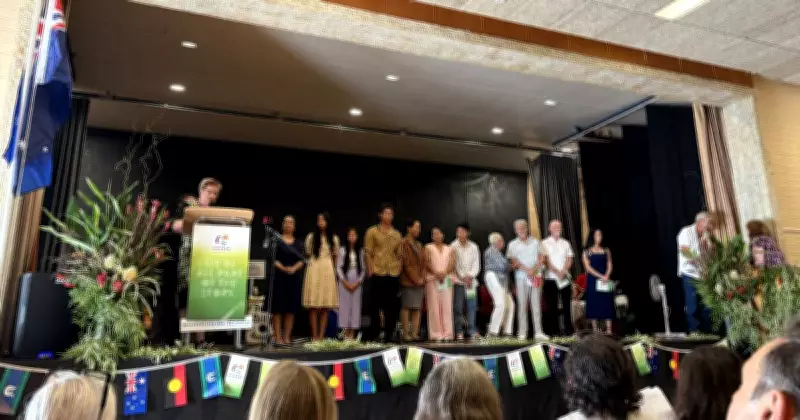
During the Australia Day ceremony where Ms Ley spoke, visual arrangements reflected the ongoing debate about flag representation. An Australian flag was prominently displayed on a mast beside the Opposition Leader as she addressed the gathering. Meanwhile, a three-flag holder at the rear of the stage featured the Australian flag alongside both the Aboriginal and Torres Strait Islander banners.
This configuration occurred even as bunting along the stage apron incorporated Indigenous flags, creating a complex visual landscape that mirrored the broader national conversation about symbolic representation.
Next Steps in the Flag Decision Process
The Federation Council will review redacted copies of the substantial public feedback at its March meeting, where a final determination regarding flag displays in council chambers will be made. This decision will occur against the backdrop of Ms Ley's comments and the significant public interest the proposal has generated.

The controversy highlights ongoing national discussions about reconciliation, representation, and how Australia's diverse history is symbolically acknowledged in public institutions. As the council moves toward its decision, the broader implications for community cohesion and national identity remain subjects of considerable public debate.