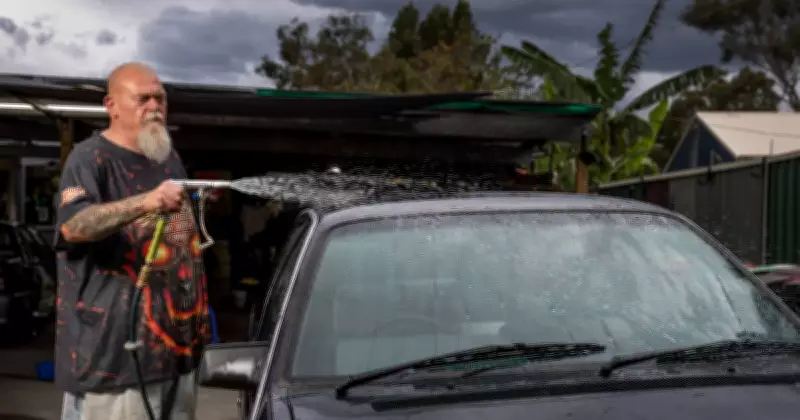
For decades, residents of the historic Wyee paper subdivision at Lake Macquarie have lived with a persistent sense of uncertainty, feeling their homes could be taken away at any moment. Fred Lewis, who purchased his property around 1997, embodies this struggle, having learned to accept life in the cracks of development regulations.
A Legacy of Unfulfilled Plans
The Wyee paper subdivision consists of nearly 200 residential parcels of land originally subdivided in 1890. These lots were intended for homes and urban expansion but never progressed beyond the drawing board. Paper subdivisions like this are scattered sparsely across New South Wales, typically representing historic plans for future towns or estates adjoining existing villages.
These collections of small blocks generally lack essential infrastructure including roads, water and drainage systems, power connections, and sewerage services. While the Wyee lots are zoned for residential development under the council's local environmental plan, building consent remains prohibited until essential services are connected.

Living Without Basic Services
Despite the lack of critical infrastructure, residents have lived on these paper subdivisions for years, sometimes decades. Some go without power and other essentials, while others have managed to install services periodically as planning rules change over time. However, approvals for more permanent development are nearly impossible to secure without connected essential services.
Residents are expected to pay for these connections themselves in the absence of developer contributions, with costs potentially running upwards of $150,000. Lake Macquarie City Council acknowledges it lacks the operating budget to meet the estimated $25 million required to bring the subdivisions up to code.
Health Concerns and Government Response
The situation reached a critical point late last year when residents petitioned the NSW government to intervene after two cases of dysentery were reported. The Wyee Progress Association linked these cases to the absence of a proper sewerage system.
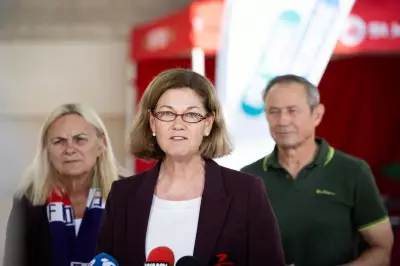
Judith Adam, president of the association, described raw sewage entering her backyard from illegal septic tanks and residents carrying buckets of effluent to dispose of at nearby camping grounds. "I can't build on my block because there's no infrastructure," she explained.
Passing the Buck Between Governments
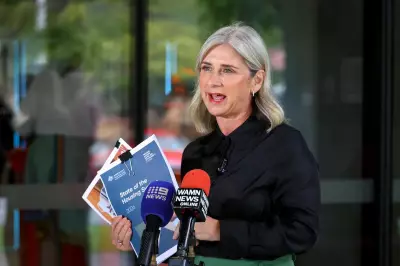
Last week, NSW Planning Minister Paul Scully responded by effectively returning the issue to the local council's doorstep. While acknowledging the "challenges" and "practical difficulties" faced by landowners over time, Minister Scully stated that resolving service arrangements for paper subdivision areas involves "multiple stakeholders and significant investment."
He declared the council to be "the most appropriate level of government to lead these matters" and encouraged residents to seek updates from local government authorities.
In response, Lake Macquarie City Council reiterated that responsibility for providing required infrastructure rests with landowners. A council spokesman emphasized that "Council is not responsible for delivering these services within the Wyee paper subdivision" and lacks funding sources for this activity.
Frustration and Resignation Among Residents
Council staff have sought funding and support from multiple higher government agencies including the departments of Planning, Housing and Infrastructure, Communities and Justice, Homes NSW, the Hunter and Central Coast Development Corporation, Hunter Water, and Landcom. None have agreed to intervene.
Fred Lewis described the government response as disheartening but not unexpected. "It's their banter between each other," he observed. "They just keep passing the buck on whose responsibility it is. They just seem to keep going back and forth."
Mr. Lewis acknowledged that landowners should reasonably contribute to connecting needed services but found estimates exceeding $100,000 to be extreme. "A lot of people just haven't got that sort of money," he said. "They just want a place to live and to be comfortable."

Living in the Cracks
Despite the uncertainty, Mr. Lewis has reached a point of resignation. "I'm comfortable here, and I'm lucky," he reflected. "I've got used to waiting for the day when they say, 'Righto, Mr. Lewis, it's time for you to move out.'"
He considers himself fortunate to have power and telecom connections along with an on-property septic system, circumstances that mean he would never be able to meet the costs of a conventional mortgage. While wishing authorities would "work out what they were doing," he remains content "as long as they don't come and kick me out."
The council has committed to continuing representations and advocacy to both the NSW and Australian governments for a solution, promising to consider suitable grant programs should they become available in partnership with the state government.