In a surprising twist of political fate, there emerges a compelling argument that Angus Taylor might just be the ideal candidate to lead the Liberal Party. That is, of course, if you happen to be sitting on the government benches of the Labor Party. The prospect of Taylor ascending to the opposition leadership has sparked considerable discussion, with many viewing it as a development that would bring continuous amusement and strategic advantage to the incumbent administration.
A Comedy of Errors in Parliament
The atmosphere in Canberra has recently been filled with colorful television analogies regarding the opposition's internal dynamics. Liberal moderate Andrew Bragg cautioned his colleagues about resembling a dramatic episode of Days of Our Lives if they continued airing their internal conflicts publicly. Meanwhile, the Prime Minister drew parallels between the opposition's behavior and the reality show Married At First Sight, predicting inevitable failure and dishonesty.
From an observational standpoint, the situation appears more akin to comedy gold than serious political drama. This perception intensifies with the growing likelihood of Angus Taylor assuming the Liberal leadership, especially after Andrew Hastie withdrew from contention. The transition from speculation to near-certainty has government members quietly delighted.

The Gift That Keeps on Giving
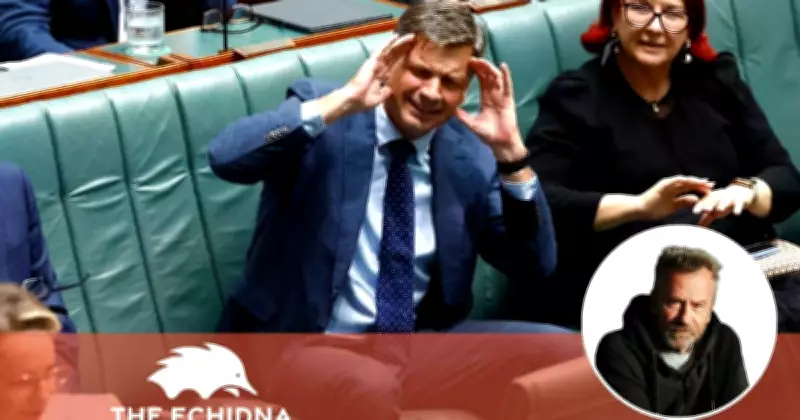
Since Labor took office in 2022, ministers have particularly enjoyed moments when Angus Taylor rises during parliamentary question time. Treasurer Jim Chalmers famously described Taylor as "the gift that keeps giving" back in 2023, following a particularly confused question about budget matters. Chalmers struggled to maintain composure during that exchange, his broad smile reportedly visible in the reflection of glasses worn by those opposite him before he systematically dismantled Taylor's premise.
Throughout the previous parliamentary term, Chalmers consistently outmaneuvered Taylor during their exchanges as shadow treasurer. Each question from Taylor seemed to invite ridicule, often leaving him returning to his seat shaking his head in visible frustration, as if comprehension remained just beyond his reach.
A Record of Notable Missteps
Taylor's parliamentary performances have included several memorable errors that even Coalition-friendly media outlets have documented. These include incorrectly claiming Vegemite prices had risen eight percent in a month, confusing monthly and annual inflation rates, asserting incorrectly that half of Australia's mortgage holders were transitioning from fixed to variable rates, and contradicting his own previous statements about supporting energy bill relief legislation.
Even during his time in government, Taylor made significant errors, most notably the controversial smear campaign against Sydney Lord Mayor Clover Moore that utilized questionable statistics and prompted police investigation. Another memorable moment included the awkward self-praise of posting "Well done, Angus" on his own Facebook page.
Changing Dynamics in the Current Term
This parliamentary term has seen less of Taylor's characteristic missteps, largely because his role as shadow defence minister provides fewer opportunities for the kind of high-profile errors that marked his time as shadow treasurer. However, as Liberal leader, he would necessarily return to the forefront of parliamentary debate, ensuring regular appearances that would likely continue to provide material for government amusement.
While this scenario promises easy laughs during question time for government members, it raises serious questions about the quality of parliamentary discourse. Those who believe politics should involve more substantive debate than comedy routines and canned laughter from government benches might view Taylor's potential leadership differently.
The Broader Political Context
The discussion about Liberal leadership occurs against a backdrop of ongoing political developments. David Littleproud maintains his position as Nationals leader following an unsuccessful spill motion. Meanwhile, political spending records reveal that major parties and interest groups invested hundreds of millions during the recent federal election, with Clive Palmer's Mineralogy leading third-party spending at nearly fifty-three million dollars.

Additionally, internal conflicts within former Coalition partners appear to be benefiting Pauline Hanson's One Nation, which has reached new popularity heights. These factors combine to create a complex political landscape where leadership decisions carry significant consequences.
The fundamental question remains whether Angus Taylor's documented parliamentary performance would make him an effective opposition leader or simply continue providing what Labor ministers have described as ongoing gifts to the government. As the political drama unfolds, observers watch to see whether the Liberals will opt for a leader who might please their opponents more than their own constituents.