WARNING: Aboriginal and Torres Strait Islander readers are advised this story contains images of people who have died.
Attention has returned to court orders designed to protect people from domestic violence as police investigate another tragic case where a woman was allegedly killed by her former partner.
Tragic Incident in Lake Cargelligo
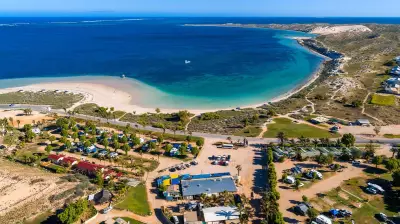
Sophie Quinn, aged 25, was just weeks away from giving birth when she was allegedly shot dead alongside her friend John Harris, 32, in a vehicle on Bokhara Street in Lake Cargelligo, located in New South Wales' Central West region. The incident occurred around 4:30pm on January 22.

Police allege the gunman is Quinn's former boyfriend, Julian Ingram, 37, who is then accused of driving to another part of the small country town before shooting her 50-year-old aunt Nerida Quinn and 19-year-old friend Kaleb MacQueen. Nerida Quinn did not survive the attack, while MacQueen remains hospitalised with injuries.
Week-Long Manhunt and Previous Orders
A large-scale search operation has been ongoing for a week, with authorities later revealing that Ingram had been granted bail by both police and the courts on domestic violence-related allegations prior to the incident. Reports indicate he reported his whereabouts to police just eight hours before the shootings occurred.
Ingram was also subject to an apprehended violence order (AVO) from the court, which had been applied for by police on behalf of Sophie Quinn. This marked the sixth AVO granted against him from five separate women since 2014.
Understanding Apprehended Violence Orders
AVOs are intended to prevent a protected person from being assaulted, threatened, stalked, harassed, intimidated, or having their property deliberately damaged by the subject of the order. Additional restrictions can be imposed, limiting contact or specifying how far the subject must stay from the person's home, workplace, or educational institution, and can even restrict firearm ownership.
However, domestic violence survivor and advocate Jo Cooper told media outlets that AVOs are insufficient to protect alleged victims from domestic violence. "I'm a victim survivor, I've seen the worst of what happens, I've dealt with the systems, police courts, AVOs, and that was over 20 years ago," she explained.
Systemic Concerns and Recent Cases
"I've been advocating ever since, I work with victim survivors and I just don't believe anything has changed to a standard that we're saving lives. I feel like we are in a crisis management situation," Cooper added.
The effectiveness of domestic violence deterrents faced scrutiny in New South Wales last year following two separate cases where men pleaded guilty to murdering their former partners. Tyrone Thompson received a sentence of at least 15 years imprisonment last May after admitting to stabbing his 21-year-old former partner Mackenzie Anderson 78 times in her Newcastle unit on March 25, 2022.
Then in November, Daniel Billings admitted to the domestic violence murder of 28-year-old mother and childcare educator Molly Ticehurst at her Forbes home in the early hours of April 22, 2024. Billings will be sentenced later this year. Both men had been released on bail for domestic violence-related offences and had AVOs against them at the time of their crimes.
Statistical Context and Legislative Response
These high-profile court cases coincided with an increase in domestic violence-related murder charges recorded by NSW Police from October 2024 to October 2025, according to the state's Bureau of Crime Statistics and Research (BOCSAR). The cases prompted calls for stronger legislation, leading the NSW Government to raise the minimum non-parole period for domestic violence murders to 25 years.
Cooper acknowledged the increased sentencing was "not nothing" but urged authorities to shift focus from just sentencing guidelines toward prevention measures. "We need tougher consequences, preventative tools, because at the moment abusers know the consequences aren't really that tough," she stated.
Personal Experience with System Gaps
"And I'm not saying that if they're tougher, we are going to shut this crisis down. But over time, if there are consequences, they may think twice," Cooper continued.

She shared an example involving one of her clients who had been granted a one-year AVO against her former partner, who breached it before moving interstate. Because they were no longer in NSW, police couldn't take action and had to wait for his return. When an extension of her order was denied, the former partner arrived at her doorstep the day the original order expired.
"AVOs haven't been effective for years ... it's a token," Cooper asserted. "Abusers know the consequences aren't really that tough. I'm not saying that if they're tougher we are going to shut this crisis down overnight, but over time, if there are consequences, they may think twice."
Proposed Solutions and Government Response
Cooper has petitioned both NSW and federal governments to introduce a "disclosure scheme" that would allow individuals to ask police to search a national database if their partner, or potential partner, has a violent history. South Australia has already implemented such a scheme, which Cooper reports is "working really well." She advocates for expanding it into a comprehensive national database.
While the NSW Parliament rejected the petition, Cooper argues that without a national database, abusers will continue to fall through systemic gaps. A NSW Government spokesperson responded that "existing evidence indicates that a disclosure scheme could create a false sense of security and was not necessarily an effective preventative measure in supporting women's safety."
The spokesperson added that "the Government would continue to monitor new and emerging evidence to ensure New South Wales laws meet community expectations and prioritise women's safety. We will carefully examine all available options to strengthen protections for victim-survivors."
Federal Engagement and National Initiatives
Cooper's federal petition gathered more than 100,000 signatures and is currently before parliament awaiting government response. A spokesperson for Federal Attorney-General Michelle Rowland stated the government is "committed to an Australia that is free from domestic, family and sexual violence."
"All Australian Governments are working to deliver on the National Plan to End Violence against Women and Children 2022-2032," the spokesperson explained. "On 6 September 2024, National Cabinet agreed to a $4.7 billion package to accelerate action to deliver the plan and end gender-based violence in a generation."
The spokesperson noted that "primary responsibility for family violence, criminal matters and bail laws rests with the states and territories, with each managing their own law enforcement and justice systems. The Attorney-General is continuing to work closely with state and territory counterparts, including through the Standing Council of Attorneys-General, to drive decisive action on responses to family, domestic and sexual violence."
If you or someone you know is impacted by sexual assault, domestic or family violence, call 1800RESPECT on 1800 737 732 or visit 1800RESPECT.org.au. In an emergency, call 000. Advice and counselling for men concerned about their use of family violence: Men's Referral Service, 1300 766 491.