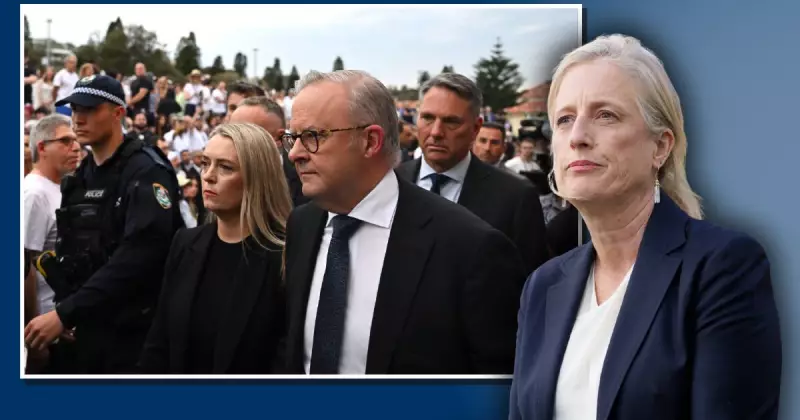
Senior Labor minister Katy Gallagher has mounted a strong defence of Prime Minister Anthony Albanese, as his government faces intense criticism over its response to the recent anti-Semitic terrorist attack at Bondi Beach.
Public and political backlash grows
The Prime Minister's handling of the crisis has come under fire from multiple fronts. Mr Albanese was booed by sections of the crowd at a memorial site on Sunday, a stark display of public sentiment. This was compounded by a Resolve Political Monitor poll released on Monday, which found approximately half of the Australians surveyed were dissatisfied with the federal government's response to the attack.
Criticism has also emerged from within the Prime Minister's own party. Two federal Labor MPs, Sydney's Mike Freelander and former minister Ed Husic, have broken ranks to call for a national inquiry or royal commission. Mr Husic emphasised the need to root out extremism "whichever form it comes in", while Dr Freelander argued the attack raised issues that required a national government-led response.

Gallagher's staunch defence and security committee actions
In the face of this mounting pressure, Senator Gallagher, who sits on the powerful National Security Committee (NSC) of Cabinet, offered a full-throated endorsement of the Prime Minister's leadership. She revealed that the NSC had met daily since the attack and would continue to focus on ongoing security threats.
"I have spent every day with the Prime Minister in the last week [and] I have seen him not only lead the nation, but lead the national security committee and lead the response," Senator Gallagher told reporters in Canberra on Monday. "I think he's done an incredible job in very, very difficult circumstances." She urged an end to political point-scoring over the tragedy.
Clash over the form of inquiry
The political battle is now centred on the appropriate form of investigation into the attack and the performance of security agencies. Opposition Leader Sussan Ley is pushing for a royal commission to examine the role of federal agencies, namely the Australian Federal Police (AFP) and the Australian Security Intelligence Organisation (ASIO).
The government, however, has backed a New South Wales-led inquiry and announced a separate, more limited federal review. This review will be led by former intelligence chief Dennis Richardson and will focus on federal intelligence and law enforcement agencies. Ms Ley dismissed these proposals on Monday, stating they were "too little, they're too late, and they will take too long".
Further context to the AFP's challenges was revealed, with reports that its counter-terrorism unit was short by around 100 personnel. In response, Mr Albanese announced extra funding for the AFP on Friday. AFP Commissioner Krissy Barrett confirmed that Operation Avalite, targeting threats to the Jewish community, was ongoing with 161 continuing investigations and 10 people charged.
Community reaction and policy responses
The fallout extends to the community level. ALP national president Wayne Swan criticised members of the Jewish community who booed the Prime Minister, saying he was "not happy about it" and that the serious event should not be politicised.
Amid the criticism, the Prime Minister has acted on some recommendations from the Special Envoy to Combat Anti-Semitism. On Thursday, he committed to legislating stronger hate speech laws, making it easier to deport preachers who spread anti-Semitism, and establishing a new taskforce to address hate on university campuses. This followed criticism that he had taken too long to respond to the envoy's report, which was handed to the government in July.
The Bondi attack and the government's response have ignited a fierce debate about national security, political leadership, and community cohesion, with the pressure showing no signs of abating as the new year approaches.