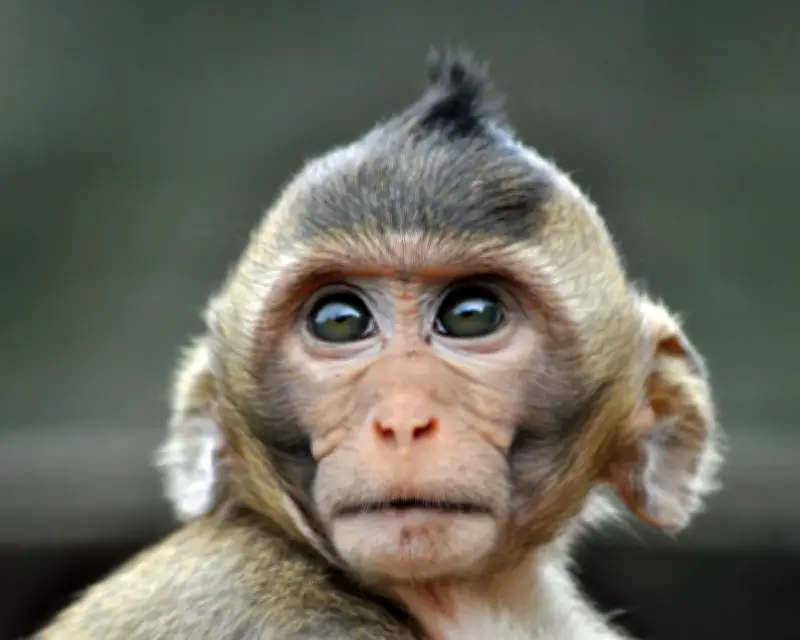
New research has shed light on how different animals perceive the passage of time, revealing that their experience is closely linked to their size and metabolic rate. The study, published in the journal Animal Behaviour, suggests that smaller animals with faster metabolisms perceive time more slowly than larger animals. This means that for a fly, a human hand moving to swat it appears to move in slow motion, allowing the fly to evade capture.
The Science Behind Time Perception
The research, led by Dr. Kevin Healy from Trinity College Dublin, analyzed data from over 100 species, including mammals, birds, reptiles, and insects. The key measure was the critical flicker fusion frequency (CFF), which is the rate at which a flashing light appears to be constant. Animals with a higher CFF can perceive more frames per second, effectively seeing the world in slow motion.
According to the study, animals with higher metabolic rates, such as flies and small birds, have higher CFF values. For example, the common housefly has a CFF of about 250 Hz, meaning it can process visual information at a rate of 250 frames per second. In contrast, humans have a CFF of around 60 Hz, while some larger animals like elephants have even lower values.

Implications for Animal Behavior
This difference in time perception has significant implications for how animals interact with their environment. Predators and prey, for instance, may experience the same event differently. A cheetah chasing a gazelle may perceive time faster to coordinate its movements, while the gazelle may perceive time slower to react quickly to the predator's actions.
Dr. Healy explained, "Time perception is a fundamental aspect of how animals experience the world. Our findings suggest that animals with fast metabolisms, like insects and small birds, experience time in a more detailed way, which helps them avoid predators and catch prey."
Evolutionary Adaptations
The ability to perceive time differently is an evolutionary adaptation that helps animals survive in their specific ecological niches. For example, insects that need to navigate complex environments and avoid threats benefit from a higher temporal resolution. Conversely, larger animals with slower metabolisms may not require such rapid processing, as their size and strength offer other advantages.
The study also highlights the trade-offs involved. Higher temporal resolution requires more energy, which is why it is more common in animals with high metabolic rates. This energy demand may limit the evolution of such capabilities in larger animals.
Future Research Directions
Researchers hope to expand this work to understand how time perception affects other aspects of animal behavior, such as communication and learning. Additionally, they aim to explore whether similar principles apply to other senses, like hearing and touch.
"Understanding how animals perceive time can help us better appreciate their unique experiences and may even inform the design of technologies that mimic these abilities," added Dr. Healy.